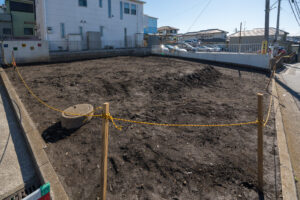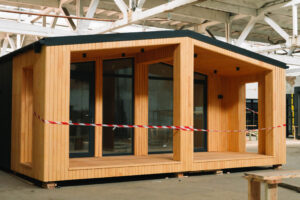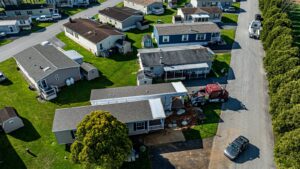
Concrete slab quotes can be hard to compare because “a slab” can mean a lightly loaded shed floor, a granny flat slab or a fully engineered house slab on reactive clay. This guide sets out published Australian slab prices from named sources, what changes the price on your block, when piers, stumps or screw piles may be used instead for transportable homes and tiny homes, and how slab and site costs fit into your finance budget. It is a budgeting guide, not a quote, and Little Home Loans does not pour slabs. For the bigger picture, see how much a granny flat costs in Australia and the cost to build a house.
Short answer: what does a concrete slab cost?
Published figures for standard concreting mostly fall between about $75 and $150 per square metre, with engineered house slabs quoted higher on reactive soils. The Quote Yard lists granny flat slabs in New South Wales at $110 to $180 per square metre and house slabs at roughly $90 per square metre for the most stable sites up to $220 per square metre for highly reactive ones, before engineering and soil testing. Compare like for like, because each source prices a different job.
Published Australian concrete slab prices, by source
| Source | Date shown | What it lists |
|---|---|---|
| The Quote Yard, concrete slab NSW | Published 23 September 2026 | NSW, per square metre: granny flat slab $110 to $180; house slab (waffle pod) $90 to $150; house slab (raft, Class M) $120 to $200; patio or shed slab $80 to $140. Example 200 square metre house slab in Western Sydney: waffle $17,500 to $26,500, raft $22,500 to $33,000. House slabs from Class A to Class H sites roughly $90 to $220 per square metre, excluding engineering and soil testing. Soil test $1,200 to $3,500; engineering design $1,500 to $4,000. Termite protection, pump, plumbing and excavation are listed as extras without a price. |
| The Quote Yard, concrete slabs SA | Adelaide metropolitan rates for April 2026; published 3 April 2026 | Adelaide, per square metre: stiffened raft $110 to $145; waffle pod $145 to $185; post-tensioned $165 to $210. Example 150 square metre house slabs: stiffened raft on a Class M site $17,500 to $22,000; waffle pod on a Class H1 site $23,000 to $30,000; post-tensioned on a Class H2 site $27,000 to $38,000. |
| Yellow Pages, how much does a concrete slab cost | Published 22 February 2025, updated May 2026 | Standard slab $75 to $110 per square metre for materials, with labour additional; house foundation slabs $75 to $110 per square metre depending on thickness, location and site conditions. Extras: site preparation $20 to $35 per square metre; reinforcement $5 to $15 per square metre if priced separately; formwork and finishing $10 to $30 per square metre; concrete pumping $500 to $1,500 or more per job. |
| Oneflare, concreting cost guide | No date shown | Most standard concreting $75 to $100 per square metre, with premium finishes and difficult sites above $170. House slab of 150 to 250 square metres $11,250 to $42,500. City ranges include Brisbane $75 to $135, Sydney and Melbourne $80 to $150 and Perth $80 to $170 per square metre. Steel mesh (SL72 or SL82) adds $10 to $12 per square metre; pumping $170 to $230 per hour. |
| What’s The Damage, concreting cost | Last verified November 2026 | National, plain concrete slab $75 to $150 per square metre (typical $110); shed slab of about 20 square metres $1,500 to $3,500; ready-mix 25 MPa concrete, supply only, $300 to $480 per cubic metre. |
These are third-party publishers and the figures are their own estimates or collected pricing. They are not an Australian average, because each covers a different slab, location, date and set of inclusions. Note that the two Quote Yard pages differ on whether waffle pod or raft slabs cost more; in the Adelaide examples the waffle slab is priced for a more reactive site class, so the comparison is not like for like.
A quick worked example for a granny flat slab
Using The Quote Yard’s NSW granny flat rate of $110 to $180 per square metre, a 60 square metre slab works out at about $6,600 to $10,800 for the slab itself. That is a simple multiplication for illustration only. It does not include the soil test, engineering, termite protection, under-slab plumbing, pump hire or extra excavation, which The Quote Yard lists separately, so your total site cost can be well above the slab figure.
What drives the cost of a slab on your block
- Site classification and soil. Under AS 2870, the Australian Standard for residential slabs and footings, sites are classed by how much the soil is expected to move. Intrax, a geotechnical firm, describes the classes as A (mostly sand and rock), S (slightly reactive clay), M (moderately reactive), H1 and H2 (highly and very highly reactive), E (extremely reactive) and P (problem sites such as soft soils or loose sands), and says a geotechnical engineer sets the class and a structural engineer designs the footing from it. Intrax says H1, H2, E and P sites are likely to raise costs (Intrax, site classification FAQs; updated 13 May 2025).
- Slab type. The HIA notes AS 2870 covers slab on ground, stiffened rafts, waffle slabs, strip and pad footings and piled footings (HIA, residential slabs and footings; 25 January 2022). Your engineer chooses the system for your site class, and the published prices above show it can move the per square metre rate considerably.
- Slope, cut and fill. Yellow Pages says sloping sites push costs towards the higher end because preparation takes more time. A steep block may also need retaining; see retaining wall cost.
- Thickness and reinforcement. Yellow Pages lists 100mm as standard residential thickness and 150mm to 200mm or more for heavy-duty slabs, and Oneflare lists mesh and post-tensioning as add-ons.
- Access and pumping. Tight backyard access, common with granny flats, can mean the concrete has to be pumped, which Yellow Pages and Oneflare price separately.
- Services under the slab. Plumbing and drainage must be in place before the pour. On rural blocks you may also need wastewater treatment; see septic tank cost.
- Termite protection and inspections. The Quote Yard lists termite protection as an extra and an independent pre-pour inspection at $400 to $1,200.
Slab or piers, stumps and screw piles for transportable and tiny homes?
Not every small home sits on a slab. Imagine Kit Homes, a kit home supplier, says a slab generally suits flat or gently sloping blocks, while stumps and bearers suit sloping sites and allow under-floor access for later plumbing and electrical work, and bored or screw piers can be used on reactive Class H or E soils (Imagine Kit Homes, choosing your foundation; updated 29 April 2026). Before you budget for a full slab, ask your manufacturer and engineer whether your transportable or modular home is designed for a slab, piers or stumps.
For piers, The Quote Yard lists Adelaide prices of $280 to $600 for a 300mm bored concrete pier, $900 to $2,500 per screw pile and $4,500 to $14,000 for a typical six-pier residential system, installed (The Quote Yard, pier foundations SA; Adelaide rates for March 2026). See modular home cost, financing a relocatable or transportable home and tiny home loans.
How slab and site costs fit into your finance budget
Slab, footings and site works are often quoted separately from a granny flat kit or a transportable home, so build them into your total budget from the start rather than treating them as extras. Canstar explains that construction loan drawdowns follow the build stages, and lists “slab down, foundations, or base” as the first stage (Canstar, how much does a concrete slab cost; 18 November 2026); see how construction loans work and land and construction loans. For a backyard build, compare granny flat finance with using home equity, and if you are buying a kit, see granny flat kits and prefab granny flat finance. Lending is subject to approval and criteria vary by lender.
Questions to ask before you compare slab quotes
- What site class does the soil report give, and is the price based on an engineer’s design for that class?
- Does the price include the soil test, engineering, pump hire, termite protection and any cut and fill?
- Who arranges under-slab plumbing and drainage, and is it in this quote?
- What thickness, reinforcement and slab system is being quoted?
- What happens to the price if rock, fill or poor access is found on the day?
- Is the contractor licensed for this work in your state?
Other cost guides: granny flat cost in Australia, modular home cost, retaining wall cost and septic tank cost.
Frequently asked questions
How much does a concrete slab cost per m2?
Published figures for standard concreting mostly sit between about $75 and $150 per square metre, with engineered house slabs on reactive sites quoted up to about $220 per square metre. These are third-party estimates, not quotes.
How much is a slab for a granny flat?
The Quote Yard lists granny flat slabs in NSW at $110 to $180 per square metre. A 60 square metre slab at that rate is about $6,600 to $10,800 before soil testing, engineering and other extras.
Is a waffle pod slab cheaper than a raft slab?
It depends on the site. The Quote Yard prices waffle pod below raft in its NSW guide, but above raft in its Adelaide guide, where the waffle slab is priced for a more reactive site. Your engineer’s design decides which applies.
Do I need a soil test before pouring a slab?
Under AS 2870, footing design is based on a site classification, which Intrax says is set by a geotechnical engineer after testing soil samples. The Quote Yard lists a soil test at $1,200 to $3,500 in NSW.
Does a transportable or tiny home need a slab?
Not always. Imagine Kit Homes says stumps suit sloping sites and piers can be used on reactive soils, so a slab is one option among several. Check what the manufacturer and your engineer specify.
Can slab costs be included in a construction loan?
Slab and site costs are often part of the build budget, and Canstar lists the slab or base as the first construction loan drawdown stage. See how construction loans work. Lending is subject to approval.
This article is general information only and does not constitute credit, financial, building, engineering or legal advice. Prices are published examples from the sources named and are not quotes; actual costs depend on your site, soil classification, engineering design and contractor. Lending is subject to approval, lending criteria, terms, conditions and fees. Little Home Loans is powered by Alpha390 Finance, which operates under ACL 506065 (Five Tees Pty Ltd).
Sources: The Quote Yard, concrete slab NSW (published 23 September 2026); The Quote Yard, concrete slabs SA (published 3 April 2026); The Quote Yard, pier foundations SA (published 10 March 2026); Yellow Pages, how much does a concrete slab cost (published 22 February 2025, updated May 2026); Oneflare, concreting cost guide (no date shown); What’s The Damage, concreting cost (last verified November 2026); Intrax, site classification FAQs (published 10 March 2022, updated 13 May 2025); HIA, residential slabs and footings (25 January 2022); Imagine Kit Homes, choosing your foundation (published 3 February 2026, updated 29 April 2026); Canstar, how much does a concrete slab cost (18 November 2026). All accessed 18 November 2026.
Written and reviewed by the Finance Director at Little Home Loans.
Planning a granny flat, modular or tiny home build? Call 1300 391 390 or speak to a broker.