
Granny Flat Finance
How do you finance a granny flat? Most owners fund it from savings or by drawing on home equity, or through a construction or home-loan pathway where the flat is fixed to the land. Other lending options can apply depending on circumstances. Lender, property and project requirements vary, so the right structure depends on your equity, income and the build.
Thinking about adding a granny flat for rental income, family, or a smarter first step onto the property ladder? The build is the easy part — the finance is where most people get stuck. Little Home Loans arranges granny flat finance across Australia, matching you to the lenders and loan structures that suit a secondary dwelling on land you already own.
Your enquiry will be handled by the Alpha390 Finance broker team.
Who granny flat finance is for
Granny flat finance suits homeowners adding a second dwelling for rental income or family, investors lifting a property’s yield and value, and buyers weighing a granny flat against a tiny house. Because a granny flat is fixed to land you own, it’s generally easier to finance than a moveable tiny home — but the right structure still depends on your equity, income and the build.
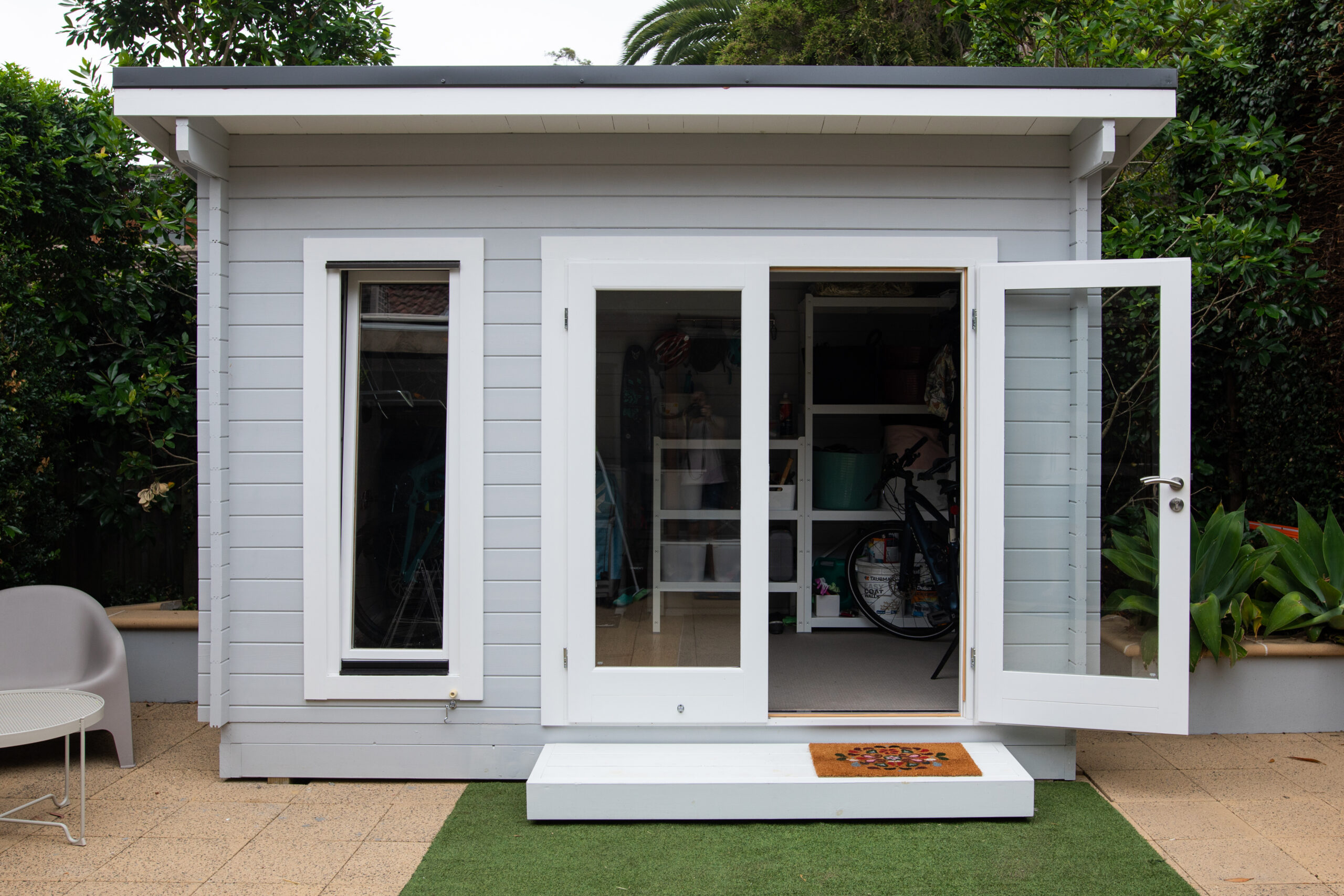
How granny flat finance works in Australia
There are three common ways to fund a granny flat:
- Home equity / loan top-up — draw on the equity in your existing home; often the simplest and cheapest path.
- Construction loan — funds released in stages against the build, suited to larger or custom granny flats.
- Personal or secured loan — for smaller prefab or kit granny flats, or where equity is limited.
Because the granny flat adds value to the land it sits on, lenders treat it as an improvement to real property — which is what makes it more financeable than a tiny home on wheels.
Comparing the three ways to fund a granny flat
Which of the three structures suits you best comes down to how much equity you already have, how the build is priced, and how much you want to borrow.
- Home equity / loan top-up. If you have enough equity in your existing home, topping up or redrawing on your current mortgage is usually the cheapest way to fund a granny flat, because it’s priced at a standard home-loan rate rather than a business or personal-lending rate. It also tends to be the simplest to arrange, since you’re generally extending a facility a lender already knows rather than starting a new application from scratch. The trade-off is that it increases the debt secured against your home, so it’s worth thinking through alongside your existing mortgage plan rather than in isolation.
- Construction loan. Funds are released in stages as the build progresses (for example: slab, frame, lock-up, completion), with the lender inspecting or requiring evidence at each stage before releasing the next portion. This suits larger or custom-designed granny flats where the total cost is higher and progress payments to the builder need to match the build timeline, rather than paying the full contract price upfront.
- Personal or secured loan. For smaller prefab or kit granny flats, or where you don’t have enough usable equity, a personal loan or a loan secured against another asset can fill the gap. Rates are typically higher than a home-equity top-up, since the lender isn’t taking the same security position, but approval can be faster and more straightforward for a smaller build cost.
What lenders generally assess
Whichever structure you’re considering, lenders are typically looking at a similar set of factors:
- Available equity or deposit. For a home-equity top-up, this is the gap between your property’s current value and what you owe. For a construction or personal loan, it’s how much of the build cost you can cover yourself.
- Serviceability. Your income, expenses and existing debts, assessed against the new repayment — the same affordability test as any other home lending.
- The build itself. A fixed-price building contract with a licensed builder is generally viewed more favourably than an informal or owner-managed build, particularly for construction finance.
- Council and zoning approval. Most lenders want to see that the granny flat is (or will be) an approved secondary dwelling under your local council’s rules, not an unapproved structure — see our council approval guide for what that involves state by state.
- Property and security position. Because a granny flat is fixed to the land, lenders assess it as an improvement to the existing property rather than a separate financeable asset — which is what makes it easier to fund than a moveable tiny home, but also means the lender is looking at your whole property position, not just the granny flat build cost in isolation.
Documentation you’ll typically need
Requirements vary by lender and loan type, but most applications ask for: proof of identity and income (payslips or, for self-employed applicants, business financials); details of your existing mortgage and any other debts; a fixed-price building contract or quote for the granny flat; and, for a home-equity top-up, a recent statement showing your current loan balance. Having these ready before you apply is the most reliable way to speed up an assessment, whichever of the three structures ends up suiting you.
For a deeper side-by-side comparison of the equity-vs-loan decision specifically, see Granny Flat Loan vs Home Equity: The Smartest Way to Fund a Granny Flat.
How much does a granny flat cost — and how much can you borrow?
Granny flats in Australia typically cost $100,000–$200,000+, with Queensland builds starting around $95,000 and standard NSW builds commonly $160,000–$190,000. How much you can borrow depends on your available equity, serviceability and the build value. We work with lenders who understand secondary-dwelling finance, so the structure fits your situation rather than a one-size-fits-all box.
Granny flat finance FAQs
How can I finance a granny flat in Australia? Yes — a granny flat is usually financed in connection with the property it is built on rather than with a separate mortgage over the flat itself. Depending on the property, project and borrower, options can include a home-loan top-up or equity release, construction finance, or personal lending in some circumstances. The appropriate structure varies with the build, equity, income and lender requirements.
Can I use my home equity to build a granny flat? Often yes — if you have enough equity, a top-up or redraw on your existing mortgage is usually the cheapest way to fund a granny flat. Compare it against a separate construction or personal loan for your situation.
Can I get a granny flat loan with a low deposit? It’s possible depending on your equity, income and the lender. Talk to us about your options — lending is subject to approval, criteria, terms and fees.
Do I need council approval for a granny flat? Usually yes — most councils require approval, and rules vary by state and zone. Some states allow a faster complying-development pathway. Check our council approval guide before you commit.
Does a granny flat add value to your property? Typically yes — often $100,000–$200,000 — and, where local rules allow, it can earn rental income (in Queensland, granny flats have been rentable to anyone since 2022).
Is a granny flat or a tiny house the better buy? If you own land and want an appreciating, financeable, income-capable asset, a granny flat usually wins. If you value mobility and a lower entry price, a tiny house can suit.
Ready to price your granny flat?
Apply online in minutes or request a callback and we’ll match you to the right lender and structure. Prefer to talk? Call us on 1300 391 390.
Planning your budget? See our 2026 cost & finance guide for tiny, modular and granny-flat homes — build-cost ranges plus a repayment calculator.
Further reading
More on financing a granny flat in Australia:
- How to Finance a Granny Flat in Australia: Your Practical Guide
- Granny Flat Loan vs Home Equity: The Smartest Way to Fund a Granny Flat
- Tiny House vs Granny Flat: Cost, Finance and Which Is the Smarter Buy
Australian Credit Licence 506065 (Five Tees Pty Ltd) · panel of bank & non-bank lenders · specialists in non-standard housing · Australia-wide.
This page is general information only and does not constitute credit or financial advice. It does not take into account your personal objectives, financial situation or needs. Consider whether the information is appropriate for you and seek professional advice before acting. Little Home Loans is powered by Alpha390 Finance, which operates under ACL 506065 (Five Tees Pty Ltd). Lending is subject to approval, lending criteria, terms, conditions and fees.
Related granny flat guides
- How to finance a granny flat
- Granny flat loan vs home equity
- How much does a granny flat cost?
- Prefab granny flat finance
- Do you need council approval?
- Granny flat vs extension
- Tiny house vs granny flat
Check your granny flat finance options → or call 1300 391 390.
General information only. Little Home Loans arranges finance under Australian Credit Licence 506065 (Five Tees Pty Ltd). Lending is subject to approval, criteria, terms, conditions and fees.