Most people researching how to build a home start at the build. But there is a stage before that which trips up more first-time builders than anything else: paying for the land.
Land finance does not work quite like a home loan, because at the point you buy there is no dwelling on the block. That single fact changes what lenders will lend, how much deposit they expect, and sometimes how long they will let you sit on the block before you build.
This guide covers the five paths from bare land to finished house — what each one is, and where the risks sit.
The five ways land and construction get financed
| Path | What it is | Suits |
|---|---|---|
| 1. Vacant land loan | Finance to buy a block with no firm plan to build yet | Buyers securing a block now, deciding later |
| 2. Land now, build later | Land purchased on its own, with construction finance arranged separately down the track | Buyers who need time to finalise design, approvals or budget |
| 3. Combined land + construction loan | One facility, drawn in two stages — land settlement first, then progressive build drawdowns | Most people building a new home on a new block |
| 4. House-and-land package | Land and a build contract bought together, usually from a developer or builder | Buyers wanting a single, packaged process |
| 5. Construction-only finance | You already own the land; you are funding the build alone | Knockdown rebuilds, owner-builders, adding a second dwelling |
If you already own your block and you are at path 5, our guides to how construction loans work and knockdown rebuild finance are the more relevant starting points.
1. Vacant land loans
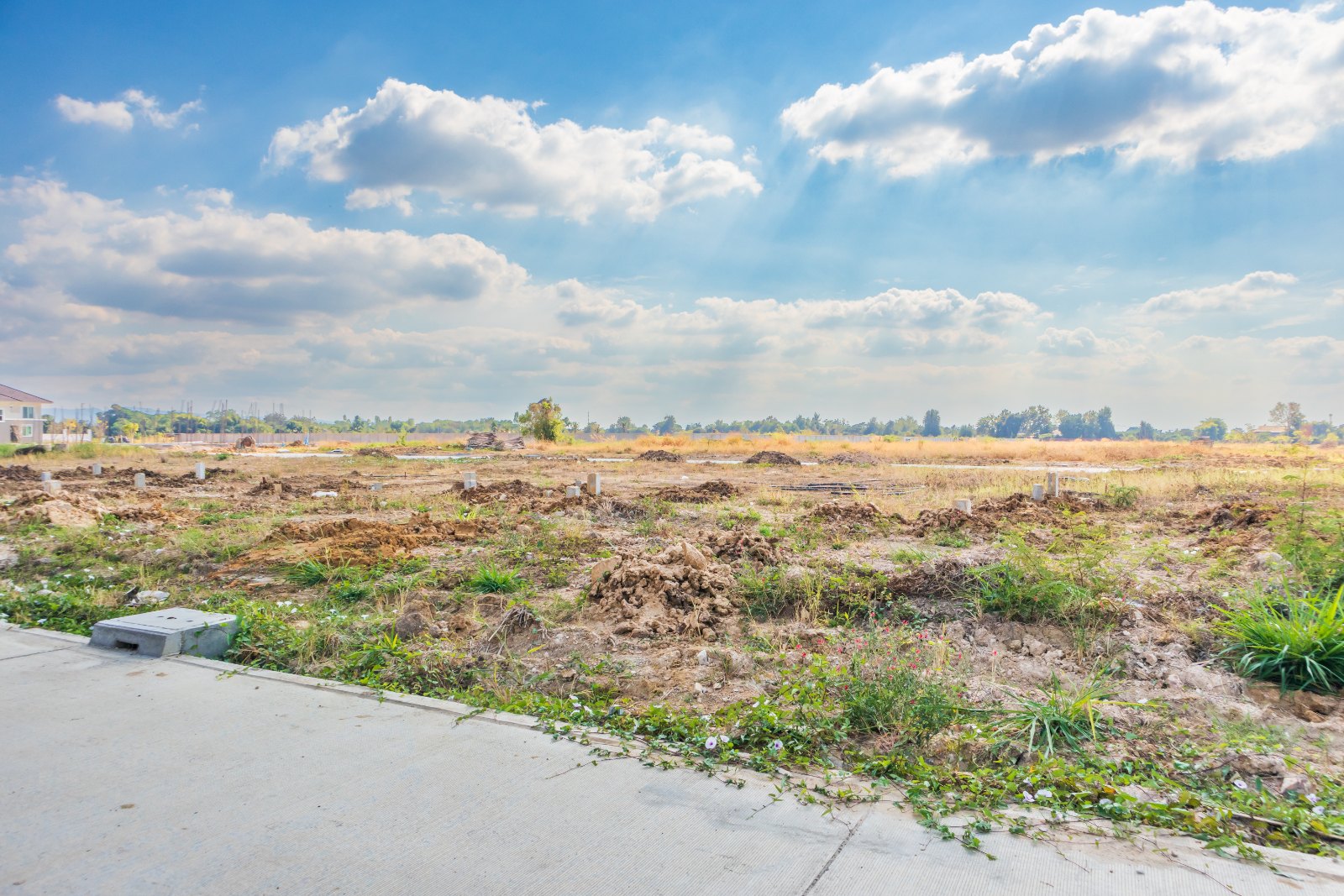
A vacant land loan funds the purchase of a block on its own.
For a deeper look at this stage on its own, see our guide to vacant land loans.
Because the security is bare land rather than a house, lenders generally treat it as a higher-risk proposition than a standard home loan. In practice that usually means a larger deposit expectation, and often a shorter list of lenders willing to do it at all.
Several other things commonly come into play:
- Size and zoning. Standard residential blocks are treated very differently to large rural or semi-rural holdings. Once a block passes a certain size or sits outside a residential zone, the lender pool narrows considerably.
- Services. Whether the block has power, water, sewer and legal access matters — both to the valuation and to whether it is considered readily buildable.
- Time limits. Some lenders expect construction to begin within a set period. It is worth asking the question before you settle rather than after.
Land loans are also usually principal and interest from day one, because there is no construction stage to sit interest-only through. That is a real cash-flow consideration if you are planning to hold the block for a year or two.
2. Land now, build later
Buying the land first and arranging the build separately gives you breathing room to finalise plans, get approvals through council, and firm up a builder price.
The trade-off is that you are carrying land repayments during a period when the block is producing nothing. You are also refinancing or applying again later for the construction component — and your borrowing capacity, the lending environment and your own circumstances may all have moved by then.
If you take this path, it is worth understanding what the construction stage will involve before you commit to the land, not after.
3. Combined land and construction loans
This is the most common structure for building a new home on a new block, and it is usually the cleanest.
You are approved once, for the total — land plus build — and the money is released in stages. Stage one is land settlement, where the lender releases the funds to settle the land purchase. Stage two onwards is progressive drawdowns: as the build hits each milestone, the lender releases the next payment directly to the builder.
Typical construction milestones are:
| Stage | Roughly what has been completed |
|---|---|
| Deposit / slab | Site works and the concrete slab or footings |
| Frame | Structural frame erected |
| Lock-up | External walls, roof, windows and doors in |
| Fixing | Internal fit-out — cabinetry, fixtures, plasterwork |
| Completion | Final works and handover |
You generally only pay interest on what has been drawn. In the early months, when only the land and slab have been funded, repayments are smaller — then they step up as more of the loan is released. Most lenders also allow interest-only during construction, reverting to principal and interest once the build is complete.
That drawdown structure is explained in more depth in how construction loans work, and what actually shapes your rate is covered in construction loan interest rates.
4. House-and-land packages
A house-and-land package bundles the block and the build contract, usually through a developer or project builder.
The key thing to check is whether the land is registered or unregistered. Registered land has been formally subdivided and titled — it can settle now, and construction can start. Unregistered land has not completed that process yet, so settlement waits on registration, and that timing is outside your control. Delays of many months are not unusual.
That matters for finance because loan approvals have expiry dates. If registration slides past your approval validity, you may have to re-apply — and be reassessed on current income, current rates and current lending policy. Anyone buying unregistered land should ask their broker directly how long their approval holds and what happens if registration is delayed.
5. Where alternative and non-standard homes fit
This is the part most general construction-loan guides skip, and it is where a lot of Little Home Loans clients actually sit.
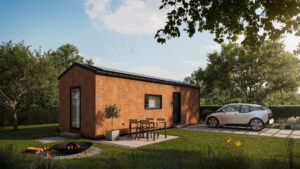
If what you are putting on the block is not a conventional site-built house — a modular or prefab home, a kit home, a tiny home, a transportable, or a granny flat as a second dwelling — the financing question changes.
The core issue is how much of the value ends up permanently fixed to the land. A conventional builder progressively adds value to your block at each stage, which is exactly what progressive drawdowns are designed for. A modular home is built off-site and delivered largely complete, which does not fit that milestone pattern neatly. And a dwelling that is not fixed to the land at all may not be treated as real property security in the first place.
There are workable paths for all of these, but they are not always the same product. Our specific guides:
What lenders typically look at
For the land component: the block size, zoning, access and services; the valuation; your deposit; and your capacity to service the debt while nothing is being built on it.
For the construction component: a fixed-price building contract with a licensed builder, council-approved plans, the builder insurances, and a valuation on completion — that is, what the finished property will be worth, not what the land is worth today.
The paperwork is heavier than a standard home loan, and it is front-loaded. Getting the contract and plans right before you apply removes most of the friction.
Budgeting for the whole thing
Land plus build is not the whole cost. Site costs vary enormously depending on slope, soil classification, rock, tree removal and how far services have to be run. Two identical houses on two blocks in the same street can differ substantially once site works are priced.
For cost context by build type, see how much does it cost to build a house, and for dual-occupancy projects, cost to build a duplex.
Working out how to fund a block and a build?
Little Home Loans specialises in finance for alternative and non-standard homes — modular, kit, tiny, transportable and granny flats — as well as conventional construction.
Start your application | Call 1300 391 390 | Contact us
Land and construction loan FAQs
Can I get a loan for vacant land?
Yes, though fewer lenders offer them than standard home loans and deposit expectations are typically higher, because bare land is considered higher-risk security. Zoning, block size, access and available services all affect what is possible.
What is the difference between a land loan and a construction loan?
A land loan funds the purchase of the block and is usually principal and interest from the start. A construction loan funds the build and is released progressively as the build hits each stage, with interest generally charged only on what has been drawn.
Can I get one loan for both the land and the build?
Yes — a combined land and construction loan is the most common structure for building on a new block. You are approved once for the total, with the land settled first and the build funded in progressive drawdowns.
What happens if my house-and-land package is on unregistered land?
Settlement cannot happen until the land is formally registered, and that timing sits with the developer. Because loan approvals expire, a long delay may mean re-applying and being reassessed under current conditions. Ask how long your approval holds before you sign.
Do construction loans work for modular or tiny homes?
Not always in the same way. Progressive drawdown suits a build where value is added to the land stage by stage. A modular home built off-site, or a dwelling not fixed to the land, may need a different structure — which is what we specialise in.
Planning to split the block first? Our guide to the cost to subdivide land in Australia sets out the cost categories and the official fee schedules we could verify for five states.
This article is general information only and does not constitute credit or financial advice. It does not take into account your objectives, financial situation or needs. Lender policies on land, construction and non-standard dwellings vary significantly and change over time. Little Home Loans is powered by Alpha390 Finance, which operates under ACL 506065 (Five Tees Pty Ltd). Lending is subject to approval, lending criteria, terms, conditions and fees.
Written and reviewed by the Finance Director at Little Home Loans