Queensland’s planning framework does not define “a tiny home”, and what you can do with one depends on how it is built and used. A tiny home fixed to the land for permanent living is treated differently from one on wheels used temporarily like a caravan. This guide explains how the Queensland Government’s planning framework describes those pathways, when an approval is likely to be needed, and how finance tends to treat each type. It is general information, not planning, building, legal or financial advice, and your local council or a private certifier decides what applies to your property. For the national picture see where can you put a tiny home, and for a comparison with another state see tiny homes in NSW, because the rules differ by state.
Short answer: do you need approval for a tiny home in Queensland?
It depends on the type. The Queensland Government’s planning department describes a tiny home on wheels that is registered as a caravan or trailer, used only for temporary accommodation and not connected to services, as a caravan rather than a dwelling — so local laws may apply rather than planning approval. A tiny home used for permanent on-site living, whether fixed or on wheels, as the only dwelling on the lot or as a secondary dwelling, may need no planning approval if it complies with the criteria in the Planning Regulation; otherwise planning approval may be required under the local government planning scheme. Either way, building approval and plumbing and drainage approval are generally needed for permanent residential use. Always confirm with your council or a certifier before you buy or build.
The two types of tiny home Queensland recognises
The state planning department describes two broad categories, and the rules that apply flow from which one you have:
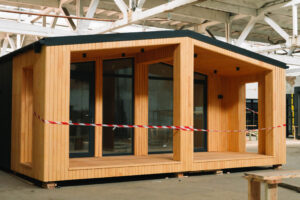
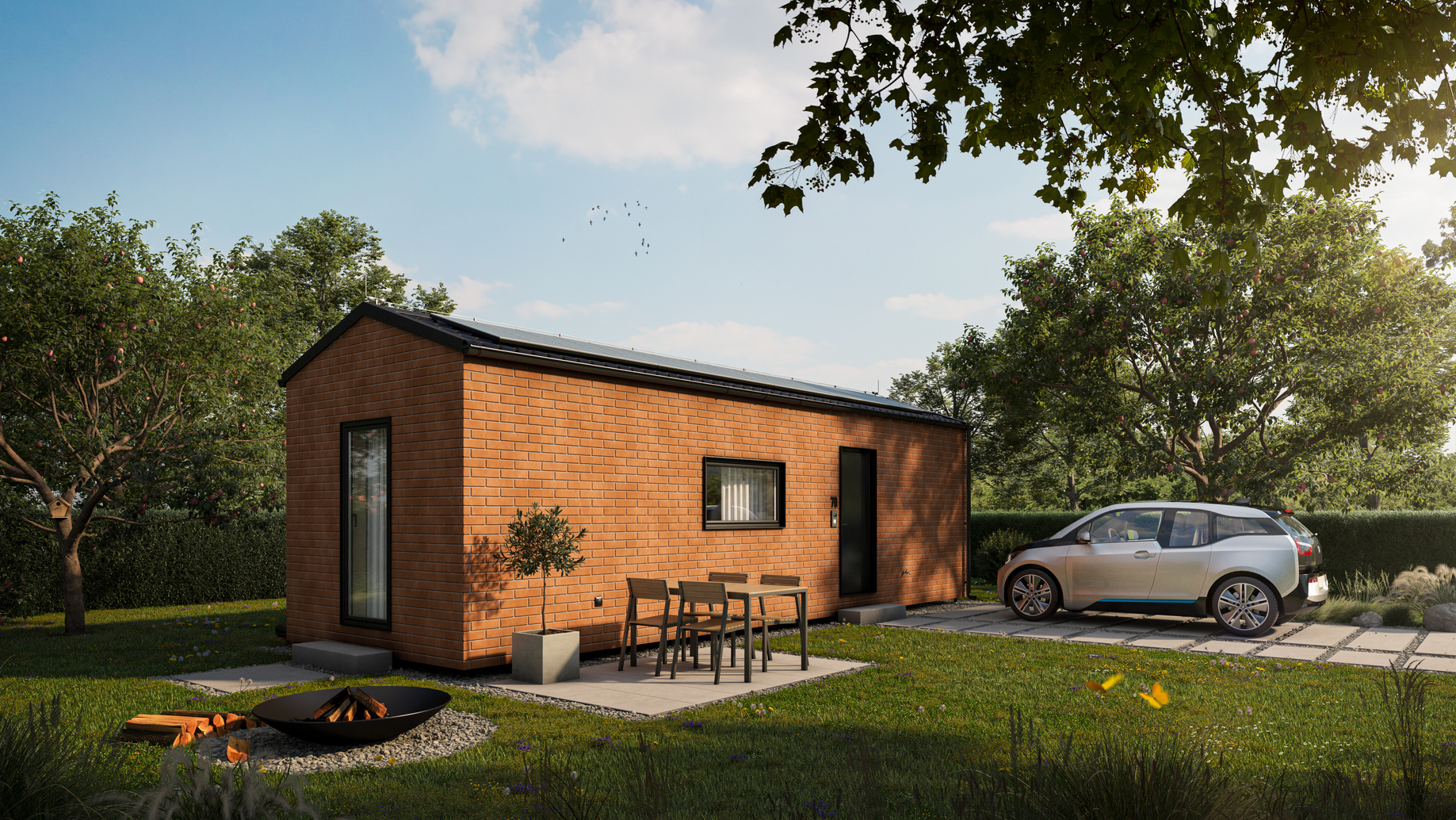
- Fixed tiny homes — built for permanent accommodation and fixed to the land. Where one is used, or is capable of being used, as a self-contained residence (with food preparation facilities, a bath or shower, a toilet, a wash basin and laundry facilities), it is considered a dwelling under the planning framework.
- Temporary-use tiny homes — typically on wheels. Where a tiny home is moveable, on wheels and not fixed to the land, it is generally regulated as a caravan rather than as a building or dwelling.
When an approval is likely to be required
The planning department’s guidance groups the common situations like this. Treat it as a starting point for the questions to put to your council, not as a decision about your block.
| How the tiny home is used | How it is generally treated |
|---|---|
| On wheels, registered as a caravan or trailer, temporary accommodation only, and not connected to services such as town water and sewer | Considered a caravan, not a dwelling. Local laws may apply. Caravans are regulated under the Transport Operations (Road Use Management) Act 1995 and may also be regulated by local government local laws under the Local Government Act 2009. |
| Fixed or on wheels, used for permanent on-site accommodation, as the only dwelling on the lot or as a secondary dwelling | If it complies with the criteria in the Planning Regulation, no planning approval is required; otherwise planning approval may be required under the local planning scheme. Building approval and plumbing and drainage approval may be required. |
| Other uses — for example rented as short-term accommodation, leased to a tenant, used as a home office or home-based business, or more than two tiny houses on one property | Planning approval may be required under the local planning scheme. Building approval and plumbing and drainage approval may also be required. |
All residential development requires building approval under the Building Act 1975 (including the Building Code of Australia) and plumbing and drainage approval under the Plumbing and Drainage Act 2018. Where a dwelling house meets the criteria in the Planning Regulation, it is assessed for building work by a private certifier rather than undergoing a separate planning assessment by the local government.
Secondary dwellings are encouraged where fixed
The planning department says tiny and small homes are considered suitable to be used as a secondary dwelling and are encouraged across the State, where they are fixed to the land as a permanent land use. A tiny home on a block that already has a house is often assessed as a secondary dwelling, and the land-use definitions that can apply under the Planning Regulation include dwelling house, secondary dwelling, dual occupancy, multiple dwelling and relocatable home park. For the related secondary-dwelling rules, see our guides to council approval for a granny flat and how big a granny flat can be.
Tiny homes on wheels: living in one on your land
A temporary tiny home that is on wheels and not fixed to the land is generally not regulated by the planning framework and is treated as a caravan. It is not required to be built to the Building Code of Australia or to obtain planning approval. The important caveat from the state guidance: a tiny home that does not meet the definition of a dwelling and does not have the appropriate building approvals — whether on wheels or not — is not considered suitable for permanent living, partly because caravan-style structures can differ from standard buildings on fire safety, ceiling heights, energy efficiency and accessibility. Some local governments have made local laws that allow a property owner to let someone live in a caravan or temporary tiny home in their backyard for certain periods; this is at each council’s discretion. Contact your local government to understand the rules for temporary tiny homes in your area.
Multiple tiny homes and rural land
Multiple permanent tiny homes on a single lot would generally be considered a multiple dwelling under the planning framework, and the suitability of the location — including its zoning — is assessed. Multiple dwellings as a permanent use are generally more suited to residential zones than rural zones. Rural land is often not connected to reticulated water and sewer, so multiple tiny homes for long-term use on a rural property is generally not envisaged. In South East Queensland, the Regional Landscape and Rural Production Area and Rural Living Area under ShapingSEQ are protected from inappropriate urban and rural residential development. If you are looking at rural land, our off-grid tiny home guide explains the servicing options, and the septic tank cost guide covers on-site wastewater.
Questions to ask your Queensland council or a certifier
- What is the zoning of the site, and is a dwelling or a secondary dwelling permitted there?
- Will the home be treated as a dwelling, a building or a caravan, based on how it is built and used?
- Does the home comply with the Planning Regulation criteria that would avoid a planning approval, or will the local scheme require one?
- What building, and plumbing and drainage, approvals are needed for permanent living?
- If it is on wheels, do any local laws allow it to be occupied on the land, and for how long?
- Can it be rented out, and what changes if it is?
- Do any overlays — bushfire, flood, heritage or environmental significance — apply to the property?
- How will the site connect to water, sewer or an on-site system, power and legal access?
Rules also differ for owner-builders; see owner-builder approvals.
How finance treats each type in Queensland
Finance depends on how a lender classifies what you are buying, and lenders set their own criteria. In general, a fixed dwelling on land you own is usually assessed differently from a home on wheels that is treated more like a vehicle or caravan, and some lenders will not finance certain types at all. Because the approval pathway can affect a lender’s view, having your council position clear can help. Whether a particular lender will finance your tiny home depends on the lender, the structure, your income and your credit history, and approval is not guaranteed. Our guides explain the options: tiny home loans, how to finance a tiny home, loans for tiny houses on wheels and can you get a loan for a tiny house. For what a build is likely to cost, see tiny house cost in Australia.
Frequently asked questions
Do I need council approval for a tiny home in Queensland?
It depends on the type and use. A registered tiny home on wheels used only temporarily and not connected to services is treated as a caravan, so local laws may apply rather than planning approval. A home used for permanent living may need no planning approval if it meets the Planning Regulation criteria, or may need approval under the local scheme; building and plumbing approvals generally apply. Check with your council.
Can I live in a tiny house on wheels in Queensland?
Some local governments allow a caravan or temporary tiny home to be occupied in a backyard for set periods, at the council’s discretion. A home without the appropriate building approvals is not considered suitable for permanent living. Ask your local council what applies.
Are tiny homes encouraged as granny flats in Queensland?
The state planning department says tiny and small homes are encouraged as secondary dwellings where fixed to the land as a permanent land use. A tiny home on a lot with an existing house is often assessed as a secondary dwelling, subject to zoning and the Planning Regulation.
Can I put several tiny homes on rural land in Queensland?
Multiple permanent tiny homes on one lot are generally treated as a multiple dwelling, which is more suited to residential zones than rural zones. Rural land often lacks reticulated water and sewer, so long-term multiple tiny homes on rural property are generally not envisaged. Check with your council.
Can I get finance for a tiny home in Queensland?
Often it is possible, but it depends on the type of home, the lender’s criteria and your circumstances. A broker can check which lenders suit your plan.
Who decides what applies to my property?
Your local council or a private certifier. Rules vary by council and property and change over time.
This article is general information only and does not constitute credit, financial, legal, building or planning advice. Planning and building requirements vary by council and property and change over time; confirm current requirements with your local council or a certifier. Lending is subject to approval, lending criteria, terms, conditions and fees. Little Home Loans is powered by Alpha390 Finance, which operates under Australian Credit Licence 506065 (Five Tees Pty Ltd).
Written and reviewed by the Finance Director at Little Home Loans. Source: Queensland Government, Tiny homes (planning.qld.gov.au/planning-issues-and-interests/tiny-homes), last updated 30 September 2024, accessed 28 October 2026.
Questions about financing a tiny or alternative home in Queensland? Call 1300 391 390 or speak to a broker.