Why would a major bank approve a mortgage for a property that currently exists as a stack of steel and timber in a factory three hundred kilometres away? For many Australian families, the dream of a sustainable, factory-built home often stalls when traditional lenders reject “non-standard” security. You’ve likely found that securing modular home financing australia wide feels like a battle against outdated banking policies that haven’t kept pace with modern innovation.
We understand that you want a home that reflects your lifestyle, not a cookie-cutter house that drains your bank account. It’s frustrating to deal with confusion over progress payments or the demand for massive deposits when all you want is to start your off-grid journey. This guide provides a clear path to loan approval by showing you how to bypass common hurdles and unlock flexible funding tailored to your unique build.
You’ll discover how to secure available First Home Owner Grants and explore schemes that allow for deposits as low as 5%. We also look at how to include off-grid solar and battery systems in your finance so your new home is ready for the Australian climate from the moment it lands on your block.
Key Takeaways
- Understand the “security gap” and why traditional lenders often hesitate to fund factory-built homes before they are permanently attached to your land.
- Learn the vital differences between construction loans and personal loans to identify the most effective modular home financing australia has to offer for your project size.
- Discover how to prepare a bulletproof application by organising builder contracts, council approvals, and site costs that specialized lenders actually want to see.
- Find out how to bundle essential “hidden” costs like septic systems, water tanks, and off-grid solar batteries into a single, manageable finance solution.
- Unlock access to a dedicated panel of lenders who value sustainable, unconventional housing and are ready to support your unique lifestyle dreams.
Understanding Modular Home Financing in Australia
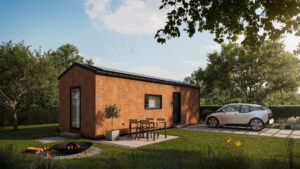
Choosing a modular home is a bold step toward a more sustainable and efficient lifestyle. Unlike a traditional build where every brick is laid on your block, modular homes are constructed in sections within a controlled factory environment. Once these modules are complete, they are transported to your site for final assembly and connection to services. This process, often referred to as Understanding Modular Construction, offers incredible precision and can reduce your overall build time by months.
However, this off-site method creates what we call the “Security Gap.” Most Australian banks are designed to lend against land and permanent structures. They feel comfortable when they can see a house physically attached to the earth. When your home is sitting on a factory floor as a collection of steel frames and timber, traditional lenders don’t see it as “real property” yet. They view it as “chattel,” which is similar to how they view a car or a boat. This is why securing modular home financing australia wide requires a more nuanced approach than a standard suburban mortgage.
In May 2026, the market is shifting in your favour. While traditional construction loan volumes have dropped by nearly 60% since the 2021 peak, modular housing is seeing a surge in interest. This is largely because prefabrication can lead to cost savings of up to 20% compared to on-site builds. Forward-thinking lenders, including some established financial institutions, are now beginning to offer more flexible progress payments that cover the factory construction phase. You no longer have to wait until the home is bolted to the ground to access your funds.
Modular vs. Traditional Builds: The Finance Friction
The primary friction point for lenders is the lack of physical collateral during the early stages. In a traditional build, a valuer visits the site to confirm the slab is poured or the roof is on. With modular builds, the value is created hundreds of kilometres away. Traditional banks often struggle to value these factory stages, leading to lower loan-to-value ratios (LVR) or higher deposit requirements. Specialized modular home financing australia solutions bridge this gap by recognizing the value of the manufacturing contract itself, rather than just the physical site progress.
The Role of Assessed Manufacturers
Your choice of builder is the most important factor in your loan approval. Lenders prefer “turnkey” contracts where the manufacturer manages everything from the factory build to the council approvals and site preparation. A reputable, “assessed” manufacturer gives the bank confidence that the project will be completed to Australian Standards. Most importantly, lenders will look for builder insolvency insurance. This protection ensures that if the manufacturer faces financial trouble, your investment is covered and your home can still be completed by another provider.
The 2026 Step-by-Step Guide to Securing Your Modular Loan
Securing a loan for your factory-built home doesn’t have to be a headache if you follow the right sequence. Your first move should be speaking with a specialised broker rather than a generic bank manager. Most local branches see a modular build as a high-risk “non-standard” project, but a broker with specific expertise knows exactly which lenders have the appetite for modular home financing australia wide. They’ll help you identify lenders who won’t blink at the mention of off-site assembly or progressive factory payments.
Next, you’ll need to gather your paperwork. Lenders require a Fixed Price Build Contract, but they also look closely at site-related costs like soil tests, septic systems, and foundations. According to the Housing Industry Association on modular construction, the industry is evolving, but banks still focus heavily on the “as if complete” valuation. This means a valuer assesses what the home will be worth once it’s permanently fixed to your land, even while it’s still being framed in a factory. Once the modules are installed and the final inspection is passed, your construction finance typically rolls into a permanent, principal and interest loan.
Pre-Approval: Your Secret Weapon
Never sign a build contract or pay a large non-refundable deposit without a “subject to finance” clause. Your borrowing capacity for these unique dwellings might differ from a standard home because lenders often apply stricter loan-to-value ratios to off-site projects. Pre-approval is the foundation of a stress-free modular build. It gives you the confidence to lock in your design and production slot without the fear of a last-minute bank rejection.
Navigating Council and Compliance
Lenders won’t release funds for the final stages until they see council approvals. In Brisbane, if you’re building a secondary dwelling, you must adhere to the 80m² Gross Floor Area limit and specific setback rules. You’ll need site-specific reports and engineering certificates to satisfy credit assessors that the home is a permanent, compliant structure. Managing the gap between factory completion and site installation is vital; your finance must be structured to handle the logistics of the transport phase. If you’re feeling overwhelmed by the paperwork, chatting with a specialised finance guide can help clarify your next steps.
Construction Loans vs. Personal Loans: Comparing Your Options
Choosing the right loan structure depends entirely on the scale and permanence of your project. If you’re building a large family residence, a traditional construction loan is usually the most cost-effective path. For smaller, transportable modules like granny flats or studios, a personal loan or asset finance might be the smarter choice. Understanding the nuances of modular home financing australia wide helps you avoid paying more in interest than you need to.
Lenders view permanent modular homes differently than movable ones. A construction loan uses the land and the finished house as security. This allows for lower variable interest rates, which as of May 2026, start from approximately 5.64% p.a. (comparison rate 5.65% p.a.). The trade-off is a stricter progress payment schedule. The bank will only release funds at specific milestones, such as when the modules are delivered and fixed to the foundations.
When to Choose a Construction Loan
This option is ideal for projects where the house is permanently fixed to land you own. It provides the long-term stability of a mortgage and allows you to borrow larger amounts. You can find more details on how this works for a house modular home in our comprehensive guide. While the paperwork is more intensive, the lower interest rates often justify the extra effort.
The Flexibility of Personal and Asset Finance
Personal loans and asset finance are excellent alternatives for a fabricated house that might be moved in the future. These loans often bypass the strict “on-site” security requirements because they aren’t always tied to the land value. Approval times are significantly faster, sometimes within 48 hours. However, you’ll generally face higher interest rates and shorter loan terms compared to a standard mortgage. If you’re considering this route, our ultimate guide to using a personal loan to buy a tiny home australia explains exactly how to navigate non-bank lending and find the right product for your unique build.
Your deposit requirements will vary based on the loan type and your eligibility for government schemes. While many lenders prefer a 20% deposit to avoid Lenders Mortgage Insurance (LMI), the First Home Guarantee currently allows eligible buyers to start with just a 5% deposit. If you qualify for the Queensland Government’s Boost to Buy scheme, you might even secure your modular home with as little as a 2% deposit. Matching your project to the right finance type ensures your dream stays affordable from day one.
Financing the Full Lifestyle: Off-Grid and Hidden Costs
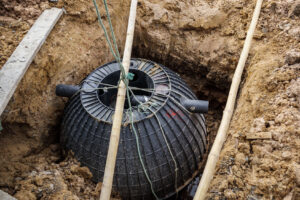
Many aspiring homeowners in South East Queensland focus solely on the price tag of the house module. They often forget the essential extras that transform a factory-built box into a fully functioning home on a Brisbane acreage. Septic systems, water tanks, and driveways can add tens of thousands to your final bill. If your modular home financing australia plan doesn’t account for these infrastructure costs from the start, your project could stall before the first module even leaves the factory floor.
Traditional mortgages often create a funding gap because they exclude “chattel” items from the primary valuation. A bank valuer might look at a A$25,000 high-spec solar array and assign it zero value because it’s technically a removable asset. This leaves you scrambling for cash to cover the very features that make modular living sustainable. Consolidating these infrastructure costs into a single, manageable finance plan is the only way to ensure your dream home is actually liveable on day one.
Solar and Battery Storage Loans
You can now add sustainable power to your build through dedicated off-grid solar loans. Instead of paying a quarterly electricity bill to a retailer, you’re investing that money back into your own infrastructure. The return on investment is immediate; your monthly loan repayments simply replace a utility cost that would otherwise rise every year. Green finance incentives from specialized lenders can lower your overall interest costs by rewarding your choice to build a low-impact, energy-efficient home.
Managing Site Preparation Costs
Site preparation is frequently the number one reason modular projects hit a financial wall. You must fund the civil works, including foundations, utility connections, and access roads, before the home can be installed. For those exploring kit homes australia wide, these costs are often managed separately from the home purchase itself. Budgeting for soil tests and council-mandated bushfire or flood reports early prevents out-of-pocket surprises that can derail your construction timeline.
Ready to bundle your build and battery into one simple payment? Apply for your tailored modular loan today and unlock the full potential of your off-grid lifestyle.
Unlocking Your Dream with Little Home Loans
Generic bank managers often look at modular plans with hesitation because they don’t fit the standard suburban mortgage mould. They see “risk” where we see a sustainable future. At Little Home Loans, we’re dedicated guides who understand that your home is about more than just four walls; it’s about unlocking a specific way of life. By focusing on specialised modular home financing australia wide, we ensure your application lands on the desk of a lender who actually values off-site innovation. You shouldn’t have to explain the concept of a factory-built home to your lender; you deserve a partner who already speaks the language.
We handle the technical heavy lifting, from managing credit scoring nuances to negotiating complex progress payment schedules with manufacturers. This means you can spend your time focusing on choosing your floorplan, finishes, and off-grid features. Finance Made Simple isn’t just a slogan; it’s our promise to demystify the banking process and provide a calm, steady path to approval. We treat your “big” Aussie dreams with the boutique attention they deserve, ensuring you never feel like just another number in a massive banking queue.
Our Partnership with Alpha390 Finance
Our partnership with Alpha390 Finance is a strategic advantage for your build. This collaboration allows us to tap into deep industry connections and access flexible loan products that aren’t available through traditional retail banking channels. We perform an expert assessment of your unique borrower profile, looking beyond just a credit score to understand the full potential of your sustainable project. This allows us to bridge the gap between rigid “standard” lending and the thriving alternative housing market. Whether you’re building a secondary dwelling in Brisbane or a remote off-grid retreat, we find the specific modular home financing australia solution that fits your budget.
Ready to Start Your Modular Journey?
The most successful modular projects start with a financial consultation long before the first steel frame is cut. With the Queensland First Home Owner Grant currently sitting at $30,000 for contracts signed by 30 June 2026, timing is absolutely critical for your budget. Getting your finance sorted early means you can lock in builder production slots and navigate Brisbane City Council approvals with total peace of mind. We guide you through every milestone, from the very first enquiry until the day your modules are delivered and settled on your block.
Get started with a specialised modular home finance assessment today.
Step Into Your Sustainable Future
Your journey to a factory-built home doesn’t have to end with a bank rejection. By understanding the “security gap” and identifying lenders with a genuine appetite for innovation, you’ve already taken the hardest step toward your new lifestyle. It’s vital to remember that timing matters; securing your A$30,000 Queensland grant before the 30 June 2026 cut-off can fundamentally change your project’s feasibility. Bundling your off-grid solar and site preparation into a single plan ensures your sustainable lifestyle starts the moment your modules land on-site.
Little Home Loans bridges the gap between your big aspirations and rigid banking rules. Our strategic partnership with Alpha390 Finance gives you access to a wide range of flexible Australian lenders who understand off-grid and alternative housing. We specialise in the niche details that generic brokers overlook, making modular home financing australia wide feel simple and secure. We’re here to handle the heavy financial lifting while you focus on the excitement of your new build.
Unlock your modular home dream with a tailored finance solution today
Frequently Asked Questions
Can I get a standard home loan for a modular house in Australia?
You can secure a standard mortgage only once the modular home is permanently fixed to your land and a final certificate of occupancy is issued. During the factory phase, most Australian banks require a specialised construction loan that allows for progressive payments. This ensures the lender has security as the value of the asset increases off-site before it arrives at your block.
How much deposit do I need for a modular home loan?
You typically need a 20% deposit to avoid Lenders Mortgage Insurance (LMI), though some specialised schemes allow for much less. Eligible buyers can access the First Home Guarantee with a 5% deposit, while the Queensland Boost to Buy scheme offers options with as little as a 2% deposit. These low-deposit paths make modular home financing australia wide far more accessible for first-time owners.
What happens if the modular builder goes bust during the build?
Builder insolvency insurance is your primary protection if a manufacturer faces financial collapse during your project. This insurance is a mandatory requirement for most lenders before they approve modular home financing australia projects. It provides the funds necessary to complete your home with a different builder; ensuring your investment and your future residence remain secure even in uncertain times.
Can I finance a modular home on a leasehold or rented land?
Traditional mortgages are generally unavailable for homes on rented or leasehold land because the bank cannot take security over the land itself. In these scenarios, a personal loan or asset finance is the most effective solution. These products don’t require the home to be permanently fixed to owned land, making them ideal for transportable modules or relocatable units on family property.
Is it harder to get finance for an off-grid modular home?
Financing an off-grid home is only difficult if you use a lender that doesn’t understand sustainable technology. While traditional valuers might ignore the cost of solar arrays, specialised green loans recognise the value and long-term savings of energy-efficient infrastructure. We bundle these costs into your primary finance plan so you aren’t forced to pay for expensive battery systems out of your own pocket.
Do I need to pay the builder in stages or all at once?
You pay the builder in stages through progress payments rather than a single lump sum at the end. A typical schedule includes five or six milestones, such as the deposit, frame completion, and final installation on-site. This structure protects you by ensuring the lender only releases funds once specific work is completed and verified by an inspector or valuer at each stage.
Can I get a First Home Buyer Grant for a modular home?
You can definitely claim the First Home Owner Grant (FHOG) for a new modular home in Queensland. For contracts signed between 20 November 2023 and 30 June 2026, eligible buyers receive a A$30,000 grant. To qualify, the total value of your new home and land must be less than A$750,000; providing a significant boost to your initial construction budget.
What is the maximum loan term for modular home financing?
The maximum loan term is usually 30 years if you are using a traditional construction loan that converts to a standard mortgage. If your project is better suited to a personal loan to buy a tiny home australia, the term is typically much shorter, ranging from five to seven years. Choosing the right term depends on your monthly budget and how quickly you want to own your home outright.