What if the very banks that claim to support a “greener future” are the ones standing between you and your self-sufficient sanctuary? You’ve likely spent months scouting the perfect bush block, only to be told that securing off-grid home loans australia is “too risky” because your property lacks a town power connection. It’s a common hurdle, but your desire to step away from rising utility costs and urban congestion shouldn’t be sidelined by a “no” from a cold, clinical institution that doesn’t understand your vision.
We’ll help you find a clear path to finance both your dwelling and your essential energy infrastructure. This guide explores the latest 2026 government incentives, like the $252 per kWh battery rebate, and explains how to access specialised “green” interest rates that sit well below standard personal loan figures. You’ll discover how to package your modular build and solar tech into a bespoke financial plan, using everything from asset finance to tailored tiny home loans, to make your sustainable lifestyle a practical reality. We’ll show you how to navigate lender requirements so you can focus on building your dream rather than chasing paperwork.
Key Takeaways
- Understand why traditional Aussie lenders often hesitate with non-standard security and how to successfully present your self-sufficient property to the right institutions.
- Discover how to strategically use a mix of asset finance and modular home loans to fund both your dwelling and your essential standalone solar infrastructure.
- Learn how to navigate the finance checklist, including the specific proof required for council zoning, water self-sufficiency, and waste management systems.
- Identify and avoid common budget blowouts by accounting for hidden costs and understanding how Lenders Mortgage Insurance impacts your borrowing capacity.
- Find out how a specialist broker can unlock access to off-grid home loans australia that are tailored to your unique lifestyle rather than a bank’s rigid template.
What is an Off-Grid Home Loan and Why are They Different?
Securing a loan for a home that isn’t connected to the grid is a different kettle of fish compared to a standard suburban mortgage. While a typical home relies on town power, water, and sewerage, an off-grid property is a self-contained ecosystem. Understanding what it means to be off-grid is essential for any borrower; it involves taking full responsibility for your own utility production and waste management. In the eyes of a lender, this independence introduces unique variables that a standard “cookie-cutter” loan isn’t designed to handle.
By 2026, the Australian finance market has seen a massive shift. Sustainable living has moved from the fringes into a recognised finance category. However, most mainstream banks still struggle to categorise these projects. This is where specialised off-grid home loans australia come into play. They aren’t just about the four walls of your house. Instead, they look at the three pillars of your project: the land you’re building on, the structure itself, and the technology, like solar arrays and battery storage, that makes the whole thing work. We see these as integrated assets, not separate headaches.
The Challenge of “Security” in Off-Grid Lending
Traditional lenders are obsessed with “security,” which is their way of asking if they can easily sell your house if you stop making payments. They often worry that a home without town water or power has a limited pool of buyers. To qualify for many financial products, a dwelling must be deemed “habitable” by strict bank standards. This includes having a permanent kitchen, a bathroom, and a reliable energy source. Additionally, your property’s Bushfire Attack Level (BAL) rating plays a huge role. If your dream block is in a high-risk zone, some lenders might back away, making it vital to work with experts who understand rural land zoning and alternative security requirements.
Fixed vs. Mobile: How Portability Changes the Loan Type
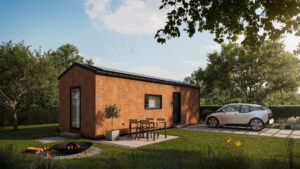
The way you secure funding depends heavily on whether your home is staying put or hitting the road. If you are building a permanent, off-grid house on titled land, you’ll likely look at modular home loans. These are structured to account for the unique nature of off-site construction and the off-grid tech involved. On the other hand, if your sustainable dream is a tiny house on wheels, you’ll move toward asset finance or personal loans. These products don’t usually require the land as security, giving you the freedom to park on a leased block or move as your lifestyle changes. Choosing the right path starts with knowing your long-term goals for the property and how you plan to occupy the land.
Types of Off-Grid Home Loans Available in Australia
Finding the right way to fund your sustainable build depends on the nature of your project. There isn’t a one size fits all approach, because a fixed modular home requires a different financial structure than a tiny house on wheels. By 2026, the market for off-grid home loans australia has matured, offering several distinct paths. You might choose a specialised green mortgage for a permanent build, or opt for asset finance if your dwelling is mobile. Each option carries its own set of interest rates and security requirements, so it’s about matching the loan to your specific lifestyle goals.
Asset finance is often the unsung hero for off-grid enthusiasts. While traditional banks might hesitate to lend against a “non-standard” structure, asset finance allows you to use the dwelling itself, or even your standalone solar array, as security. This is particularly useful for tiny homes where the bank doesn’t need to take a mortgage over the land. For smaller retrofits or system upgrades, personal loans offer the most flexibility, though they often come with slightly higher interest rates than secured products. Weighing up these options involves looking at the total cost of the loan and how much deposit you have ready to go.
Green Home Loans and Clean Energy Incentives
The Clean Energy Finance Corporation (CEFC) has a massive influence on the Australian lending landscape. They provide capital to private lenders, allowing them to offer “Green Loans” with interest rates typically 1% to 3% lower than standard products. For example, if you are building a new off-grid home with a 7-star NatHERS rating, you could access variable rates as low as 5.63% p.a. through specialised providers. You will need to provide energy audits and detailed architectural plans to prove your home meets these high efficiency standards. These government financing programs are designed to reward homeowners who reduce their environmental footprint.
Financing the “Power Plant”: Solar and Battery Loans
Your energy system is the heart of your home, and it’s often best treated as a separate asset. Many Australians are now utilising off-grid solar loans to cover the high upfront costs of high-capacity arrays and storage. As of May 2026, federal rebates for batteries sit at approximately $252 per usable kWh, which significantly lowers the net price of systems like the Tesla Powerwall 3. Funding your battery storage separately ensures you have the 24/7 reliability needed for true independence without draining your construction budget. If you’re unsure which path fits your project, speaking with a specialist about tailored tiny home loans can help clarify your borrowing power.
Evaluating Your Off-Grid Project: The Finance Checklist
Success in the off-grid space isn’t just about finding the right bush block; it’s about proving to a lender that your project is a viable long-term asset. While the dream is to live independently, the financial reality is that your property must still meet specific Australian standards to qualify for funding. When applying for off-grid home loans australia, you need to demonstrate that your independent lifestyle is backed by professional engineering and legal compliance. Lenders are particularly interested in your Loan-to-Value Ratio (LVR), which can vary significantly depending on your land size. For example, some specialised lenders may offer up to 95% LVR for properties up to 10 hectares, but this often decreases as the land size grows or the location becomes more remote.
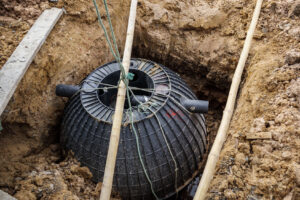
Your choice of tradespeople is just as critical as your choice of tech. Using licensed Aussie trades for your solar and plumbing installations isn’t just a safety requirement; it’s a finance one. Most lenders will refuse to release funds if the work isn’t performed by a certified professional. This ensures the dwelling remains a saleable security if you ever decide to move on. You’ll also need to prove your infrastructure can handle the demands of daily life. This means providing evidence of water self-sufficiency through tank capacity calculations and showing a waste management plan that meets local health department standards.
Council Approvals and Legal Compliance
Living “off-the-grid” should never be confused with living “off-the-law.” Every permanent structure in Australia must adhere to the National Construction Code, and your lender will require proof of council approval before they settle your loan. This includes specific permits for greywater systems and composting toilets, which can sometimes be a sticking point for conservative banks. To ease the process, show your lender that you’ve consulted with local council planners early. Aligning your sustainable goals with the Household Energy Upgrades Fund can also help, as government-backed initiatives often signal to lenders that your energy-efficient tech is a sound investment. For a practical look at the power, water and waste systems councils and lenders ask about, see our guide to an off-grid tiny home in Australia.
The “Off-Grid Pack”: What Lenders Need to See
When you sit down with a specialist, you should have an “Off-Grid Pack” ready to go. This bundle of documents bridges the gap between your vision and the bank’s requirements. It should include detailed, itemised quotes for your solar arrays, battery storage, and water catchment systems. You also need a site plan that clearly shows access for emergency services, such as fire trucks, which is a non-negotiable requirement for obtaining building insurance. Don’t forget the basics: your income stability and credit health are still the foundation of any application. By presenting a professional, tech-heavy pack, you demonstrate that your sustainable home is a sophisticated, high-value project rather than a makeshift setup.
Common Pitfalls in Off-Grid Financing and How to Avoid Them
Stepping away from the traditional power grid is a bold move, but financial blind spots can quickly turn your sustainable dream into a stressful headache. Many Australians stumble when applying for off-grid home loans australia because they treat the process like a standard suburban purchase. One of the biggest traps is significantly underestimating the total tiny home loan costs Australia. It isn’t just the price of the dwelling you need to consider. You must also account for specialised delivery, council permit fees, and the substantial upfront cost of a robust solar and battery system that can handle your peak loads.
Another common error is assuming a “Big Four” bank will offer a standard mortgage for a mobile dwelling. If your home is on wheels, it’s generally not considered real estate security by traditional institutions. You should also prepare for Lenders Mortgage Insurance (LMI) if your deposit is under 20%. While LMI is a familiar concept in the city, some lenders apply stricter rules or higher premiums for unconventional properties in remote areas. Don’t overlook the “unseen” costs of your land either. Clearing a site and ensuring it meets strict bushfire-proofing (BAL) requirements can add thousands to your initial outlay, and lenders often want to see these costs covered before they approve your funding.
The “Resale Risk” Myth vs. Reality
Traditional banks often worry about the “resale risk” of off-grid homes. They fear the market is too small or that the lack of town utilities makes the property hard to sell. In reality, the demand for sustainable, self-sufficient housing is surging across Australia. High-quality infrastructure actually makes your property more attractive to future buyers who want to escape rising utility prices and urban congestion. Providing data on local sales of similar “green” properties can help prove to your lender that your asset is growing in value just as fast as a traditional residential home.
Hidden Costs of Going Off-Grid
You need to plan for what some call the “Convenience Tax.” While you won’t have monthly power bills, you will need a maintenance reserve. Solar batteries generally need replacing every 10 to 15 years, and water filtration systems require regular servicing to stay effective. Insurance is another factor to watch. Premiums for off-grid homes in high-risk environmental zones can be higher than average due to fire or flood risks. Factoring these ongoing costs into your long-term budget is essential for a stress-free transition to independent living. Ready to sidestep these traps and secure your funding? Talk to our experts about a tailored finance plan today.
Why a Specialist Broker is Your Best Mate for Off-Grid Finance
Securing off-grid home loans australia involves more than just filling out a form and hoping for the best. It’s about finding a partner who understands that your sustainable home is an investment in a specific way of life. Most general mortgage brokers are used to standard brick-and-mortar homes in established suburbs. When they see a project that lacks a connection to the local power line, they often don’t know which lender to approach. A specialist broker has direct access to niche lenders who actively seek out the modular home financing Australia market. We know which banks value energy efficiency and which ones are comfortable with alternative security types.
Our partnership with Alpha390 Finance gives us the broad market power needed to find these specialised products. We combine this large-scale reach with a boutique, friendly touch to ensure your loan structure fits your unique lifestyle. Whether you need to bundle your solar tech into a single payment or require a specific interest-only period during the build, we advocate for a plan that works for you, not the bank’s rigid template. We take the complexity of off-grid home loans australia and turn it into a clear, manageable path toward your independence.
Personalised Service vs. Big Bank Algorithms
Algorithms don’t understand the value of a high-spec battery system or the logic behind a composting toilet. When you work with us, you’re speaking to a human who actually “gets” off-grid living. We don’t just pass your paperwork along; we build a case for your project. By highlighting the strengths of your sustainable build, such as its low ongoing running costs and high-quality infrastructure, we present you as a low-risk, high-value borrower. We can customise your repayments to suit your new, lower-cost lifestyle, ensuring your finance is as sustainable as your home.
Your Next Steps to Off-Grid Independence
The journey to self-sufficiency starts with a bit of planning and the right advice. Organising an initial consultation allows us to review your project specs, from your land zoning to your builder’s credentials. We’ll help you secure a pre-approval so you can shop for your block or your dwelling with absolute confidence. This puts you in a much stronger position when negotiating with vendors, as they’ll know your funding is already sorted. Ready to start? Contact our team today to discuss your off-grid vision.
Your Path to True Energy Independence
Building a life away from the rising costs and constraints of the traditional grid is no longer a fringe dream; it’s a strategic move toward a more resilient future. You now have the tools to navigate the complexities of land zoning, infrastructure costs, and government rebates like the 2026 battery incentives. By choosing the right financial path, whether that’s through modular home loans or specialised asset finance, you can ensure your project is built on a solid foundation from day one.
Securing off-grid home loans australia doesn’t have to be a battle against clinical bank algorithms. Our team brings specialised expertise in alternative housing finance and maintains a deep connection to the sustainable living subculture. We provide you with access to a wide panel of niche Aussie lenders who value your vision as much as we do. Our supportive, lifestyle-driven approach ensures that your financing is as bespoke as the home you’re building. Start your off-grid journey with a free specialist consultation and take the first step toward your self-sufficient sanctuary. Your sustainable future is closer than you think.
Frequently Asked Questions
Can I get a home loan for a property with no town power?
Yes, securing a loan for a property without town power is entirely possible through specialised lenders or dedicated green loan products. While many traditional banks view a lack of grid connection as a risk to resale value, niche providers recognise the growing demand for sustainable living. We help you present your project as a high-quality asset, ensuring your self-sufficient setup meets the habitability standards required for approval.
Do off-grid home loans have higher interest rates?
Not necessarily, as many sustainable builds actually qualify for lower interest rates through green finance initiatives. If your property achieves a high NatHERS rating, you could access rates that are 1% to 3% lower than standard personal loans. These off-grid home loans australia are designed to reward energy efficiency, making your long-term lifestyle choice more affordable than a traditional suburban mortgage.
Is it harder to get a loan for a tiny house on wheels than a fixed home?
It isn’t necessarily harder, but the loan structure is fundamentally different. A fixed home is typically financed via a mortgage, whereas a tiny house on wheels is usually funded through asset finance or a personal loan. This is because lenders cannot take a mortgage over a mobile structure. Choosing the right path depends on whether you intend to stay on one block or keep your options open.
Can I include my solar and battery system in my home loan?
You can bundle your energy infrastructure into your total borrowing amount using modular home loans or specialised solar finance. This allows you to cover the upfront costs of high-capacity solar arrays and battery storage systems from the start. Including these costs in your primary funding plan ensures your home is fully functional and self-sufficient the moment you move in.
What is the minimum deposit required for an off-grid home loan?
A 20% deposit is standard to avoid Lenders Mortgage Insurance, but some niche lenders may accept as little as 5% to 10% for the right project. Your required deposit often depends on the size of your land and its zoning. Properties over 10 hectares or those in remote locations may require a larger equity contribution to offset the lender’s perceived risk.
Are there government grants for off-grid homes in 2026?
Yes, several significant incentives remain active in 2026, including the federal Cheaper Home Batteries Program. As of May 2026, this rebate provides approximately $252 per usable kWh of battery capacity. You can also still access the Small-scale Renewable Energy Scheme (SRES), which offers an upfront discount on solar panel installations based on your system size and location.
Do I need council approval to get an off-grid loan?
For any permanent dwelling, council approval is a non-negotiable requirement for securing finance. Lenders need to see that your home complies with the National Construction Code and has approved waste management and water systems in place. While the off-grid lifestyle is about independence, staying within legal building frameworks is essential for protecting your investment and ensuring loan settlement.
How does a broker help with off-grid financing?
A broker acts as your advocate, connecting you with niche lenders who understand and validate unconventional housing choices. We help you prepare a professional off-grid pack that highlights your project’s strengths, such as its low running costs and high-quality tech. By leveraging our industry connections, we bypass the rigid algorithms of big banks to find a bespoke finance solution that fits your vision.