The biggest hurdle to your new build isn’t the council or the weather; it’s a banking system that still thinks it’s 1995. Your local bank manager likely sees a house modular home as a “non-standard” risk, but the reality is that your modern build isn’t the problem; their rigid, 20th-century lending criteria is. It’s a common roadblock where traditional lenders confuse high-quality modular designs with basic kit homes, leading to a quick “no” before you’ve even started. You’ve probably already felt the frustration of being told your dream doesn’t fit the standard mortgage box, especially when trying to manage factory progress payments that don’t align with old-school bank schedules.
We agree that it’s time for a more supportive approach that celebrates your choice of a smarter, more sustainable way to live. This ultimate 2026 guide will show you how to unlock the finance you need by connecting with specialised lenders who actually understand modular assets. You’ll gain a clear roadmap that takes you from the initial design phase through to delivery on your block. We’ll explore how to secure a loan with the flexible terms your project deserves, making the path to your new Aussie lifestyle as simple as the build itself.
Key Takeaways
- Understand the crucial distinctions between modular, prefab, and kit builds to ensure you apply for the right financial products from the start.
- Learn how to overcome the “security gap” that causes traditional banks to hesitate when a home is built off-site rather than on your land.
- Master the specific progress payment structures required for a house modular home to keep your project moving without personal financial strain.
- Follow a clear roadmap to secure specialised pre-approval and identify manufacturers that Australian lenders already trust and support.
What Exactly is a Modern House Modular Home?
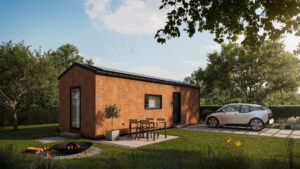
A house modular home is a sophisticated architectural solution where your dwelling is constructed in sections, or modules, within a weather-protected factory before being transported to your block. This isn’t just a “pre-made” building. It’s a high-quality structure built to the same National Construction Code standards as any traditional brick-and-mortar residence. If you are curious about what is a modular building?, it’s essentially a structure built off-site that offers superior precision because every joint and fitting is completed in a controlled environment. By 2026, this “off-site” advantage has become the gold standard for quality control, as it eliminates the risks of timber warping in the rain or materials being damaged by the harsh Aussie sun during the build phase.
It is easy to get caught up in the industry lingo, but the distinctions are vital for your finance application. In the Australian market, a modular home consists of complete 3D sections. This differs from “prefab,” which is a broader term covering everything from flat-pack panels to pre-cast concrete. “Kit homes” are another category entirely, usually requiring you to organise the assembly yourself on-site. We’ve seen a 22% surge in modular adoption over the last two years because homeowners are looking for a smarter way to build that avoids the labour shortages currently hampering the traditional construction sector.
Modular vs. Traditional On-Site Construction
The primary reason Aussies are switching to modular is the sheer efficiency of the process. While a standard site-built home might take 12 to 18 months to complete, a house modular home can often be ready for move-in within 12 to 20 weeks. This happens because your builder can prepare the footings on your land while the house is being manufactured simultaneously in the factory. Sustainability is another major drawcard; factory settings allow for precise material cutting that reduces timber and steel waste by approximately 30% compared to traditional building skips. Perhaps most importantly, you’ll often find more cost certainty here. Controlled environments mean fewer weather delays and “unforeseen” variations, allowing builders to offer fixed-price contracts that lenders find much more attractive.
Types of Modular Structures in Australia
- Bespoke Architectural Homes: These are high-end, permanent residences designed for families who want a unique, modern aesthetic on rural or coastal blocks.
- Secondary Dwellings and Granny Flats: Data from 2024 indicates that these units now make up roughly 25% of the modular market in New South Wales, providing a quick way to generate rental income or house extended family.
- Commercial and Remote Applications: Modular units are the go-to choice for tourism cabins or remote worker accommodation where bringing a full construction crew to a distant location is too expensive.
Why Choose a Modular Home for Your Next Project?
Opting for a house modular home represents a shift toward efficiency that traditional builds simply can’t match. The most significant advantage lies in the parallel workflow. While your local tradies are preparing the footings and plumbing on your block, your home is already being framed and fitted out in a secure facility. This overlap can shave months off your timeline. Because the modules are built to survive being craned onto a truck and driven across the country, they often possess a structural integrity that exceeds standard site-built dwellings. You aren’t just getting a home faster; you’re getting one that is engineered to be exceptionally robust.
Environmental stewardship is another driving force behind the modular movement in 2026. Traditional construction sites are notorious for noise pollution and significant soil compaction. In contrast, modular delivery involves a “touch the earth lightly” approach that preserves your natural landscape. A 2024 report by Master Builders Australia highlighted that factory-based construction reduces on-site waste by up to 40%, as offcuts are recycled or repurposed within the production line rather than ending up in a skip. This precision makes your project more sustainable from day one.
Flexibility is the final piece of the puzzle. Life changes, and your home should be able to change with it. Many modern modular designs allow you to add a new bedroom or a home office module years after the initial install. This “plug-and-play” capability is far less invasive than a traditional renovation, which often requires you to move out for months. If you’re ready to explore how these benefits align with your budget, you can chat with a specialist broker who understands the value of these modern assets.
Cost-Effectiveness and Financial Benefits
Efficiency in the factory translates directly to savings in your pocket. Centralised labour means builders don’t spend hours travelling between sites, which keeps costs predictable. You also bypass the dreaded “weather variation” clauses that plague traditional contracts; a rainy week in Melbourne won’t stop work in a weather-protected factory. Shorter build times directly reduce the amount of interest you pay on your construction loan, as you aren’t carrying a large debt while waiting months for a roof. This reduced interest period can save you thousands of dollars before you even move in.
Quality Control and Precision Engineering
- Material Choices: You can choose between high-tensile steel frames for termite-prone regions in Queensland or treated timber frames for superior thermal performance in cooler climates like Tasmania.
- Standardised Inclusions: Because manufacturers buy fixtures in bulk, you often get premium stone benchtops or double-glazed windows as standard features that would be expensive upgrades elsewhere.
- Factory Lock-Up: Reaching the “lock-up” stage in a factory means your cabinetry and flooring are installed in a dust-free, climate-controlled zone, ensuring a level of finish that is difficult to achieve on a windy, dusty building site.
The Modular Finance Gap: Why Traditional Banks Hesitate
Traditional banks are fundamentally built on the concept of “land as security.” When you choose a house modular home, your asset exists as a series of components in a factory rather than a structure bolted to your block. This creates a significant legal hurdle for conservative lenders. They worry about their ability to recover funds if the project stalls before the modules reach your land. It is a disconnect where modern construction speed meets slow, 20th-century lending logic, often resulting in a flat “no” from local branches that don’t have the specialised policy to handle off-site assets.
The friction usually intensifies during the payment phase. Most modular builders require funds to secure materials like high-tensile steel or specialised glazing before the first module is even framed. Standard construction mortgages are designed to release money only after an inspector sees a “slab” or “frame” physically on your property. This leaves a “finance gap” where the builder needs payment to continue, but the bank won’t release a cent until the home is delivered. Bridging this gap requires a lender who recognises factory-based milestones as valid security, a concept many high-street banks still find too risky to touch.
Understanding Lender Risk with Modular Assets
Lenders are primarily concerned with what happens if a builder faces financial trouble mid-build. With construction sector insolvencies rising by 18% in the 2023-24 financial year according to ASIC data, banks have tightened their belts even further. If a manufacturer closes their doors while your modules are half-finished in their facility, the bank cannot easily “repossess” a half-built room on private property. To mitigate this, specialised lenders often look for “accredited manufacturers” who have undergone rigorous financial health checks. They might also use a “chattel mortgage” for the initial build phase, which then converts into a traditional home loan once the modules are permanently fixed to your site.
How to Overcome Valuation Issues
Valuers often struggle with modular projects because they can’t find “comparable sales” of similar factory-built homes in the immediate area. To get around this, you must provide an “as-if-complete” valuation. This report estimates the final market value once the house modular home is fully installed, landscaped, and connected to all services. Providing your valuer with high-resolution 3D renders, detailed engineering specifications, and a copy of the manufacturer’s accreditation can help them justify a higher valuation. This documentation is the bridge that helps a valuer see a high-quality architectural asset instead of just a “transportable” building. If you’re also considering a broader range of precision-built options, our guide to the fabricated house and modern prefab living in Australia explores how these structures are valued and financed in today’s market.
Finance Options for Your House Modular Home
Securing the right funding for a house modular home requires moving beyond standard off-the-shelf mortgage products. Because the build process is unique, your finance needs to be equally tailored. For those interested in how specialised lenders operate, Morgan Financial provides an excellent example of a dedicated mortgage firm that prioritises client needs through expert guidance. It’s about finding a solution that matches the rhythm of factory construction rather than fighting against it.
Specialised construction loans are the most common choice for permanent residences. Unlike a standard bank loan that only pays out when a roof is on, these products are designed to handle factory-based milestones. We work with lenders who recognise “off-site” progress, allowing the builder to access funds as they reach specific fabrication stages. If you already own your land outright, equity release is another powerful tool. By tapping into the value of your existing property, you can fund a modular build without the stress of a traditional construction loan application. This is often the fastest way to get your project moving without the bank micromanaging every factory inspection.
Personal loans also play a vital role, especially for secondary dwellings or granny flats. If your modular project is priced under $100,000, a high-limit personal loan can offer a simpler application process with fewer strings attached regarding the construction method. While the interest rates are slightly higher than a mortgage, the lack of valuation hurdles and the speed of approval make it a popular choice for Aussies looking to add a rental unit to their backyard quickly.
Construction Loans vs. Asset Finance
Choosing between a mortgage and asset finance often depends on how permanent your structure is. For a large, multi-module house modular home fixed to a concrete slab, a residential construction loan is usually the best fit as it offers lower interest rates over a longer term. However, if you are looking at smaller, transportable units, asset finance might be the smarter play. This treats the home as a high-value piece of equipment, similar to how you would finance a luxury caravan or a commercial vehicle. This path is particularly useful if you’re leasing the land or building on a family member’s block. For those exploring compact living options, our guide on tiny home finance Australia provides a deep dive into these flexible lending structures.
Financing the ‘Extras’: Solar and Off-Grid
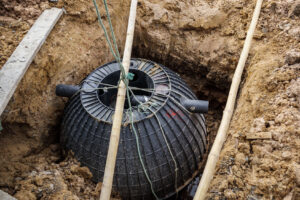
Your modular project often includes more than just the walls and roof. In 2026, roughly 65% of new modular builds in regional Australia include some form of sustainable infrastructure. You can bundle these costs into your primary loan rather than paying for them out of pocket. Integrating off-grid solar loans into your finance package allows you to fund battery storage and septic systems from day one. This makes financial sense; the long-term ROI on a self-sufficient home is significant, with many owners reporting a 100% reduction in quarterly power bills. To see which option fits your dream best, apply for a pre-approval today and get a clear picture of your borrowing power.
Your Roadmap to Modular Home Ownership
Turning your vision for a house modular home into a reality requires a clear, logical sequence of events. Unlike a traditional build where you might jump straight into site works, the modular path prioritises preparation and financial alignment. By following this roadmap, you ensure that every stage of your project is backed by the right funding and the right approvals, avoiding the delays that often plague unplanned projects. It’s about moving from a dream to a delivery date with total confidence.
- Step 1: Determine your budget and secure specialised pre-approval. Don’t wait until you’ve fallen in love with a floor plan. Get your finance assessed by a broker who understands modular progress payments first.
- Step 2: Choose a manufacturer that lenders are comfortable with. As we discussed earlier, working with a builder who has already passed lender audits makes your application significantly smoother.
- Step 3: Finalise your design and obtain necessary council permits. This stage involves getting your Development Application (DA) or Complying Development Certificate (CDC) sorted so the bank can issue a final loan offer.
- Step 4: Execute the loan documents and start the factory build. Once the paperwork is signed, your builder can order materials and slot your modules into the production line.
- Step 5: Site preparation, delivery, and final inspection. While your home is being finished in the factory, your site is prepared. The modules are then delivered, joined, and connected to services for a final walkthrough.
Preparing for Council and Compliance
Navigating the administrative side of a factory build is a vital step in your journey. You’ll need a Certificate of Occupancy once the home is installed; this is the official document that proves your dwelling meets all Australian safety and health standards. Compliance also means meeting energy efficiency targets. Since the 2024 National Construction Code updates, most new builds must achieve a 7-star energy rating. In New South Wales, this is managed through the BASIX system. Lenders look for these approvals because they confirm the asset is a permanent, high-quality residence. Remember, if your house modular home is permanently fixed to the ground on engineered footings, you’re much more likely to secure the lower interest rates associated with standard residential mortgages.
How Little Home Loans Simplifies the Process
We believe that innovative housing shouldn’t be held back by old-school lending. Our team takes a boutique approach to every application, looking at the unique merits of your project rather than just ticking boxes in a spreadsheet. Through our partnership with Alpha390 Finance, we access a specialized panel of lenders who are ready to support the modular industry. We provide a tailored assessment of your plans and your chosen manufacturer, ensuring that the finance structure matches your build schedule perfectly. We’re here to act as your knowledgeable friend in the finance space, making the complex feel simple. If you’re ready to take the first step, you can organise your modular home finance with the experts today and start planning your move-in day.
Unlock Your Modern Aussie Lifestyle
The path to owning a house modular home in 2026 is no longer a financial mystery. You now understand that while traditional banks might hesitate at the factory gates, specialised lenders see the immense value in your sustainable, precision-engineered project. By aligning your build with a manufacturer that has passed rigorous lender audits and securing an “as-if-complete” valuation, you’ve already cleared the biggest hurdles to approval. It’s about choosing a financial toolkit that is as modern as your construction method.
At Little Home Loans, we are dedicated specialists in non-traditional construction finance who believe in your unique vision. Through our strategic partnership with Alpha390 Finance, we give you direct access to a flexible panel of lenders who support off-grid and sustainable living projects. We have the technical know-how to ensure your progress payments flow smoothly from the factory floor to your final site inspection. Your dream of a smarter, more efficient way to live shouldn’t be stalled by rigid, old-school banking rules.
Start your modular home journey with a specialised finance quote today. We are ready to help you unlock the possibilities and get you into your new home sooner.
Common Questions About Modular Finance
Can I get a standard 30-year mortgage for a modular home?
You can absolutely secure a standard 30-year mortgage for a house modular home as long as it is permanently fixed to a concrete slab or engineered footings on land you own. Lenders treat these as standard residential assets once they are “stuck” to the ground. If the home remains transportable or on a temporary chassis, you will likely need to explore shorter-term asset finance or personal loan options instead.
Do I need a larger deposit for a modular home loan?
Most specialised lenders require a 20% deposit to avoid Lenders Mortgage Insurance (LMI), which is consistent with traditional builds. However, because some banks perceive “non-standard” construction as a higher risk, they might cap your Loan-to-Value Ratio at 80%. Having a clear 20% deposit ready ensures you have access to a wider panel of flexible lenders who understand the modular market and won’t reject your application based on the construction method.
Are modular homes cheaper to insure than traditional houses?
Insurance premiums for modular homes are generally comparable to traditional brick-and-mortar houses. Because these homes are built to strict National Construction Code standards in controlled environments, they often have fewer structural defects that lead to claims. You must ensure your policy specifically covers the “transit” phase when the modules are being moved from the factory to your site, as this is a unique risk traditional houses don’t face.
What happens if my modular home is on wheels rather than a slab?
If your home stays on wheels, banks classify it as a movable asset rather than a permanent dwelling. This means you won’t qualify for a standard mortgage; instead, you’ll use asset finance or a personal loan. These products typically have shorter terms, often 7 to 10 years, and slightly higher interest rates because they aren’t secured by the land itself. It’s a popular choice for those building on leased land or family blocks.
Can I use the First Home Owners Grant for a modular home?
You can use the First Home Owners Grant (FHOG) for a house modular home provided it is a brand-new residence and will be your primary place of residence. Each Australian state has different eligibility thresholds. For example, the 2024 Queensland FHOG offers specific support for new builds that meet the “dwelling” definition. The home must be permanently fixed to the land to qualify for these government incentives in most jurisdictions.
How do progress payments work for a factory-built house?
Progress payments for modular builds are released at factory milestones rather than on-site stages. Typically, these include a deposit, a frame stage, a lock-up stage in the factory, and a final payment upon delivery and installation. Specialised brokers coordinate with the lender to ensure funds are released when the builder reaches these specific fabrication points. This ensures the builder can buy materials like steel and cabinetry without you having to pay out of pocket.
Is it possible to finance a modular home for an off-grid location?
Financing a modular home for an off-grid lifestyle is entirely possible and increasingly popular in 2026. You can often bundle the costs of solar arrays, battery storage, and water treatment systems into your primary construction loan. Lenders look favourably on these sustainable additions because they reduce your ongoing cost of living. This improved cash flow technically enhances your ability to service the loan over the long term.
What documents do I need to provide for a modular home loan application?
You’ll need standard income evidence like payslips and tax returns, but modular loans require extra project-specific paperwork. This includes a fixed-price contract from an approved manufacturer, council-approved plans or a CDC, and a detailed specifications list. Lenders also require a “transit insurance” certificate. This document ensures the asset is protected while it’s being moved to your property, which is a critical requirement for loan settlement. If you’re weighing up your construction options, our complete guide to owning a fabricated house in Australia covers the key differences between prefab styles and what each means for your loan application.