Quick answer: there is no single national price for demolishing a house, because the job is priced on the size and construction of the building, whether asbestos is present, how easily machinery can get to the site, what has to be disconnected first, and where the debris goes. The most widely cited Australian guide currently puts a full house demolition in a broad band of roughly $12,000 to $50,000, with asbestos removal, permits and site conditions moving a job within (or beyond) that band. This article explains what sits behind those figures and how to get a quote that actually reflects your site. If you are demolishing in order to rebuild on the same block, the whole-project picture and how it is financed is in knockdown rebuild finance and costs.
Demolition is priced on the site, not the postcode
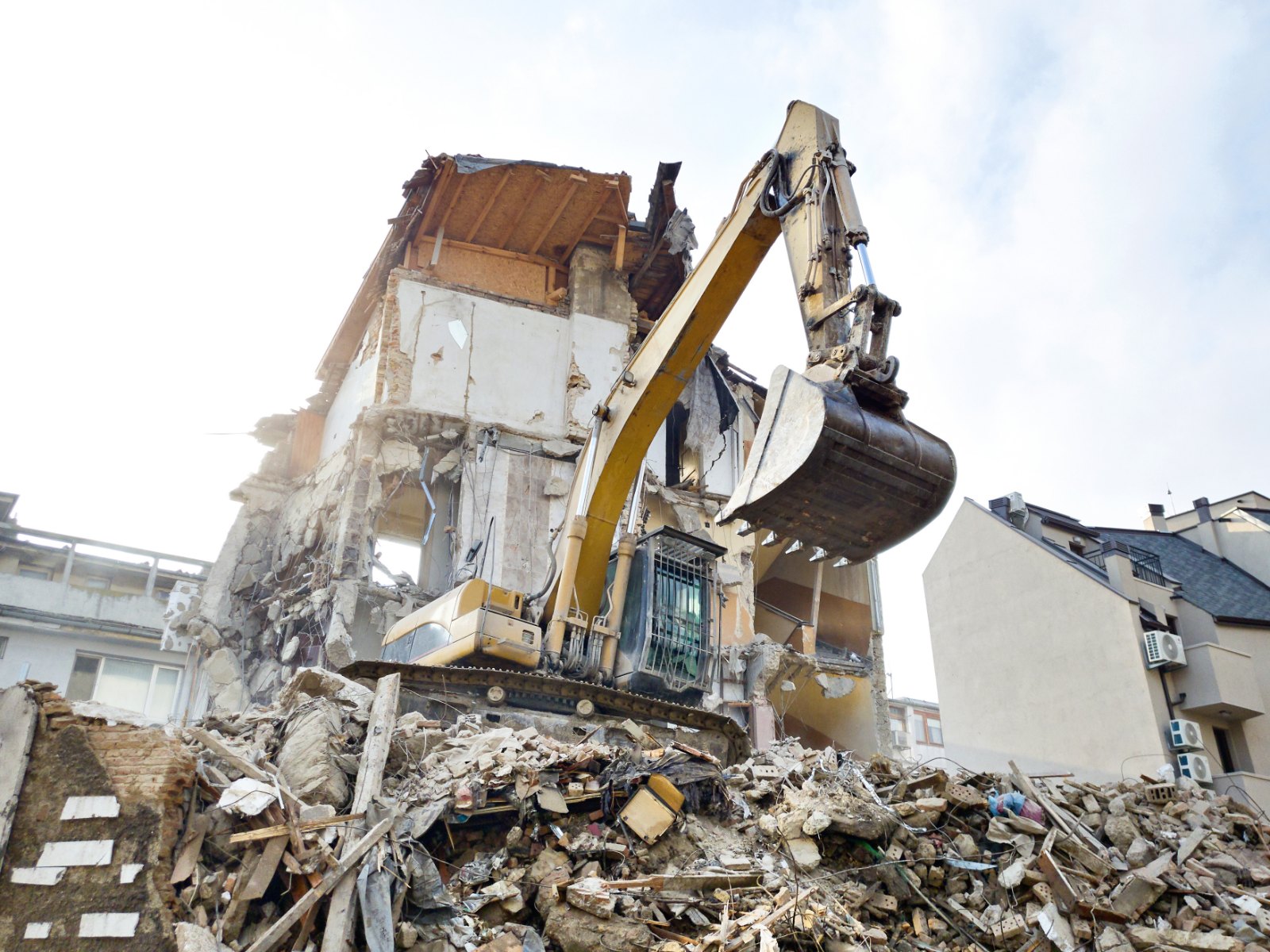
Two houses of the same size in the same suburb can attract quite different demolition quotes. The reason is that most of the cost is not the act of knocking the building down; it is everything around it. A contractor is pricing labour and machinery time, the disconnection of services, the safe handling of any hazardous material, the transport and tipping of every tonne of rubble, permits, and whatever the site makes awkward: a steep block, a narrow driveway, a neighbour’s wall close to the boundary, or mature trees that have to be protected or removed. That is why per-square-metre figures are only a starting point and why every reputable contractor will want to inspect the site before quoting.
What published Australian figures show
The Yellow Pages cost guide to demolishing a house (last updated May 2026) publishes the following ranges. They are the publisher’s estimates, and the publisher’s own note is that they were sourced at the time the guide was written and should only be used as an estimate.
| Item | Published range | Basis stated by the publisher |
|---|---|---|
| Full house demolition | $12,000 to $50,000 | Typical range; “average” cited around $17,000 |
| Demolition per square metre | $40 to $150 per m² | Standard demolition, without hazardous materials |
| Asbestos removal (added to the above) | $2,500 to $15,000 or more | Depends on type, quantity, location and disposal fees |
| Asbestos removal per square metre | $30 to $150 per m² | Professional removal |
| Demolition permit | $350 to $700 | Typical council permit; varies by council |
| Salvage offset | $800 to $12,000 recouped | Where a contractor salvages and sells steel, bricks or timber |
The width of those bands is the point. A small, single-storey fibro or timber cottage on a flat, accessible block with no asbestos sits at the bottom; a large brick two-storey home with asbestos sheeting, a slab to break up and tight access sits at the top or above it.
What actually drives the cost
Size and construction
Floor area sets the baseline, but construction type changes the effort per square metre. Lightweight timber or fibro comes down quickly; double brick, concrete slabs, retaining walls and in-ground pools take more machine time and produce heavier, more expensive rubble to remove.
Asbestos and other hazardous materials
This is the single biggest variable. Homes built or renovated from roughly the 1920s to the 1990s frequently contain asbestos in eaves, wall sheeting, wet-area linings, roofing and fencing. It must be identified, removed by licensed operators under strict safety procedures and disposed of at an approved facility before mechanical demolition starts. The published figures treat asbestos removal as an addition to the base demolition price, not something included in it. Lead paint and mould can add further handling requirements.
Access and site conditions
An excavator that can drive straight onto a flat block is the cheapest scenario. Sloping sites, narrow frontages, overhead power lines, shared driveways and neighbouring structures on the boundary all add time, smaller machinery or hand demolition, and sometimes protective works.
Services disconnection
Electricity, gas, water, sewer and telecommunications have to be disconnected or capped before demolition, and some of that work is done by the utility or a licensed trade rather than the demolisher. It is a real cost and a real lead time.
Debris removal and tipping
Every tonne of rubble is transported and tipped, and tipping fees vary by state and by material. Contractors who separate and recycle concrete, brick, steel and timber can reduce this, and the published guide notes salvage can partly offset the job.
Permits, notifications and pre-demolition requirements
Councils require a demolition permit or approval, and depending on the state and the property there may be additional requirements: a pest treatment before demolition, an arborist assessment for protected trees, heritage or overlay checks, and notification to neighbours or the state safety regulator for asbestos work. The permit fee itself is minor next to the cost of discovering a heritage overlay after you have signed a contract.
Demolish-only, or knockdown-rebuild?
If the purpose of demolishing is to build again on the same land, the demolition is one line in a larger budget, and the way it is financed changes. A standalone demolition is usually paid from savings or a small personal facility. A knockdown-rebuild is usually financed as a construction loan, where the lender values the finished home, releases funds in stages, and expects to see the demolition cost inside the total project figure. The two paths are compared in knockdown rebuild finance, and the build side of the budget is covered in how much it costs to build a house. If the existing house is worth keeping and the problem is the site or the level, house raising and extension are the alternatives people usually weigh against demolition.
Getting a demolition quote that means something
- Commission an asbestos and hazardous materials inspection first. A quote given without one is a guess with a variation clause attached.
- Ask for an itemised quote: labour and machinery, asbestos removal, services disconnection, permits, debris removal and tipping, site clearance and any make-good to boundaries or footpaths.
- Confirm what “site cleared” means: slab removed or left, trees removed or retained, fences, driveways and footings.
- Check licensing and insurance: a demolition licence where the state requires one, an asbestos removal licence of the right class, and public liability cover.
- Get more than one quote on the same scope. Differences usually come from what is excluded, not from the rate.
- Allow lead time for permits, disconnections and neighbour notifications. The demolition itself is typically days; the approvals are weeks.
How people pay for a demolition
For a standalone demolition, most owners use savings, redraw or a small personal facility. Where the demolition is the first stage of a rebuild, it is usually included in the construction loan and drawn as the first progress payment. Little Home Loans refers finance enquiries to Alpha390 Finance, which can explain how a construction lender treats demolition within a knockdown-rebuild and what documents the lender will want to see. Call 1300 391 390, start an enquiry, or contact us.
Source
Figures in this article are taken from the Yellow Pages cost guide How much does it cost to demolish a house? [2026] (last updated May 2026). They are published estimates and should be treated as indicative only; your own site will be priced on its own conditions.
Related guides
- Knockdown rebuild finance and costs
- How much does it cost to build a house?
- How construction loans work
- House raising cost · House extension cost
- Cost to subdivide land
House demolition: FAQs
How much does it cost to demolish a house in Australia?
The most widely cited published guide gives a typical range of $12,000 to $50,000 for a full house demolition, with asbestos removal added on top where it applies. The actual figure depends on size, construction, hazardous materials, site access and disposal.
Is demolition priced per square metre?
Contractors often use a per-square-metre figure as a starting point; the published range for standard demolition without hazardous materials is $40 to $150 per square metre. It is a rough guide only, and the final quote is set after a site inspection.
How much does asbestos add to demolition cost?
The published guide puts asbestos removal at an additional $2,500 to $15,000 or more, depending on the type and quantity of asbestos, where it is in the building and local disposal fees. An inspection before quoting is essential.
Do I need a permit to demolish a house?
Yes. Councils require a demolition permit or approval, typically a few hundred dollars, and there may be further requirements such as pest treatment, tree assessments, heritage checks and asbestos notifications depending on the state and the property.
How long does a house demolition take?
The demolition itself usually takes days rather than weeks. Permits, service disconnections and asbestos removal happen beforehand and set the real timeline.
Can demolition be included in a construction loan?
Usually, where the demolition is part of a knockdown-rebuild on the same land. The lender assesses the whole project and the demolition is typically drawn as the first stage. A standalone demolition with no build to follow is generally not financed that way.
Little Home Loans refers finance enquiries to Alpha390 Finance.
Written and reviewed by the team at Little Home Loans.
This article is general information only and does not constitute credit, financial, building or legal advice. Costs shown are published examples from a named third party for illustration only and will differ for your site. Finance enquiries are referred to Alpha390 Finance, which operates under Australian Credit Licence 506065 (Five Tees Pty Ltd). Lending is subject to approval, lending criteria, terms, conditions and fees.