A bathroom is the smallest room in most houses and one of the most expensive to renovate relative to its size. It is a small space that needs waterproofing, plumbing, electrical work, tiling and a long list of fittings — and most of those trades have to come in a particular order.
That is why bathroom quotes vary so much, and why a single average number is close to useless on its own. What is more useful is understanding the range, what moves you along it, and what sits outside the quote entirely.
This guide works from one published Australian cost guide and is clear about where every figure comes from.
The range one published guide puts on it
Three Birds Renovations, an Australian renovation company that publishes an annual cost guide, states in its 2026 guide (published 7 January 2026) that a bathroom renovation in Australia can cost anywhere from $8,000 for a small cosmetic refresh through to $35,000+ for a high-end, luxury bathroom — and notes it can be considerably more than that at the top end.
Rather than a single average, the more useful figures from that guide are the ones that tell you how a bathroom budget behaves:
| What the guide publishes | Figure |
|---|---|
| Overall range, cosmetic refresh to high-end | $8,000 to $35,000+ |
| Share of the budget that goes to labour | 40% to 50% |
| Council building permit fees, basic bathroom renovation | $500 to $1,000 |
| Contingency the guide recommends holding back | 10% to 20% |
Source: Three Birds Renovations, How Much Does a Bathroom Renovation Cost in Australia in 2026 (published 7 January 2026), read 11 September 2026. Indicative guide figures for Australia as a whole — not quotes.
That table is worth more than an average, because it tells you where a bathroom budget actually goes and what to hold back. The same guide is explicit that the only way to know your number is a detailed quote from a builder.
Where the money actually goes
Understanding the split matters more than the headline number, because it tells you which decisions move your budget and which do not.
Labour is the biggest single block. The same guide states that labour costs can account for 40% to 50% of your total budget. On a bathroom that is not surprising — a full renovation typically needs a builder, plumber, electrician, tiler, waterproofer and painter, and each of them has to attend in sequence. You can change your tap finish for a few hundred dollars. You cannot change how many trades a bathroom needs.
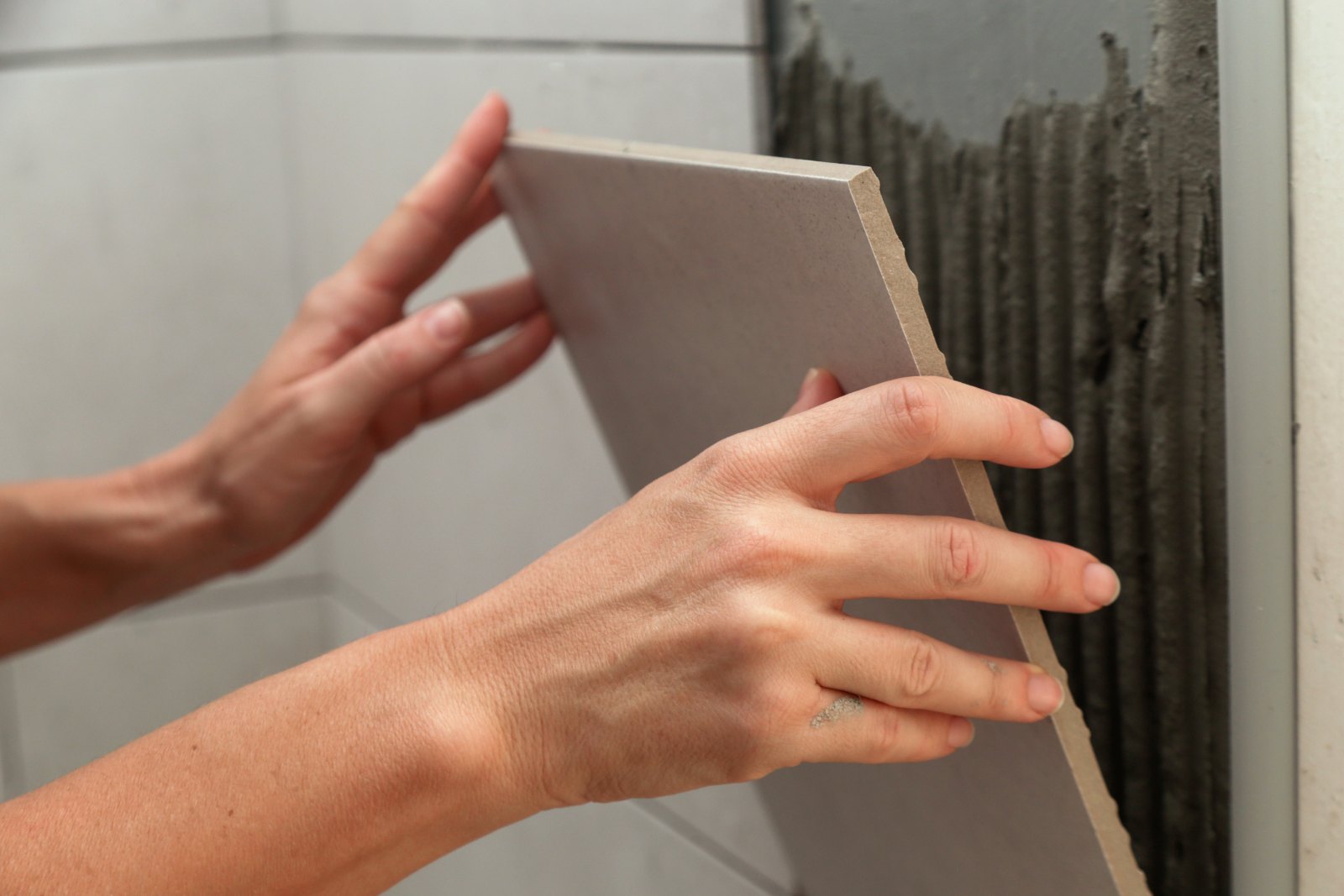
Tiles carry a hidden cost that is not the tile price. The guide makes the point that layout patterns and cuts require more time from the tiler — so an intricate tile design costs more in labour, not just in materials. Two bathrooms with identical tile budgets can have very different tiling bills.
Fittings are numerous for such a small room. Bath, shower screen, vanity, mirror, toilet, tapware, towel rails, and the rest. Individually modest, collectively significant, and the quality band you choose applies across all of them at once.
Plumbing and electrical depend on whether things move. Keeping the toilet, shower and vanity where they are is a materially different job from relocating them.
Luxury extras compound. Underfloor heating, heated towel rails, custom-coloured tapware, custom joinery and designer lighting are each an addition — and they tend to be chosen together rather than singly.
The costs that sit outside the renovation quote
Council approval and permits
The guide notes that if you are renovating only a bathroom, you may not need a permit from your local council — but that it is worth a phone call to check. Straight replacement of fixtures, re-tiling, painting and new fittings will often not require one. Structural changes, relocating plumbing, adding electrical work and waterproofing are the areas where you may find permission is required.
Where a permit is needed, the guide puts council building permit fees at $500 to $1,000 for a basic bathroom renovation, with more extensive work running into the thousands. Requirements differ between councils and states, so this is a question to answer for your address rather than in general.
A contingency
The guide recommends setting aside an extra 10% to 20% for unexpected surprises. In bathrooms specifically this is well-founded advice: you do not know what is behind the tiles until the tiles come off, and water damage, old plumbing and non-compliant waterproofing are common discoveries.
Living without a bathroom
Rarely in a quote and rarely in a budget. If the house has one bathroom, a renovation of several weeks has a real cost — whether that is alternative accommodation or simply disruption.
How a bathroom renovation is usually funded
A bathroom sits at the smaller end of the renovation spectrum, which changes the funding picture compared with a knockdown rebuild or a second storey.
- Savings — at the budget end of the range, many bathrooms are funded outright, and that avoids interest entirely.
- A personal loan — unsecured, generally faster to arrange, and suited to a defined, one-off cost. Interest rates are generally higher than secured lending.
- A home loan increase or equity release — for owners with available equity, often the lower-rate path, though it depends on your position and your lender.
- A construction-style loan with progress payments — generally aimed at larger structural work rather than a cosmetic bathroom, and usually more process than a single-room renovation warrants. See how construction loans work.
Which of these suits depends on the size of the job, your equity position, and whether the work is cosmetic or structural. Our guide to renovation loans covers the four funding routes and, importantly, the cosmetic-versus-structural line that usually determines which one applies.
Check your finance options · 1300 391 390 · Contact us
A note on getting quotes
Because the range is so wide, quotes are the only thing that resolves it. When you compare them, check they are describing the same job:
- Is waterproofing included, and is it certified?
- Are fittings supplied by the builder or by you (a PC sum or allowance is not a fixed price)?
- Is the make-good — patching, painting, floor transitions — included?
- Is removal and disposal of the old bathroom in there?
- What happens if something is found behind the walls?
Two quotes that differ by thousands often differ because one of them includes something the other has left for you to arrange. If your project is growing beyond one room, our guides to kitchen renovation cost, house extension cost and second storey addition cost cover the next steps up.
Bathroom renovation cost FAQs
How much does a bathroom renovation cost in Australia?
One published 2026 Australian cost guide (Three Birds Renovations) puts the range at $8,000 for a small cosmetic refresh through to $35,000+ for a high-end bathroom, and notes it can run well above that at the top end. Where you land inside that range depends mostly on the size of the room, whether the plumbing moves, and the quality band of the fittings. These are indicative national guide figures, not quotes — the same guide is clear that only a detailed builder quote gives you your number.
What is the most expensive part of a bathroom renovation?
Labour. The guide referenced above states that labour can account for 40% to 50% of the total budget. A bathroom needs a builder, plumber, electrician, tiler, waterproofer and painter, and that trade count does not reduce just because the room is small.
Do I need council approval to renovate a bathroom?
It depends on the work and on your council. The guide notes that a bathroom-only renovation may not need a permit, and that swapping fixtures, re-tiling and painting often will not — but structural changes, relocating plumbing, electrical work and waterproofing are areas where permission may be required. Where a permit is needed, the guide puts basic bathroom renovation council fees at $500 to $1,000. Check with your own council.
How much contingency should I allow?
The guide recommends 10% to 20% on top of the budget. Bathrooms make a strong case for the upper end, because what is behind the tiles is unknown until demolition.
Can I borrow to renovate a bathroom?
Yes, and there is more than one route — savings, a personal loan, a home loan increase or equity release, or for larger structural work a construction-style loan with progress payments. Which one suits depends on the size of the job, your equity and whether the work is cosmetic or structural. Lending is subject to approval and lender criteria.
Check your finance options · 1300 391 390 · Contact us
Written and reviewed by the team at Little Home Loans
This article is general information only and does not take into account your objectives, financial situation or needs. Cost figures are indicative guide figures published by the source named in this article and are not quotes — obtain detailed quotes from licensed builders for your own project. Little Home Loans is an information platform; finance enquiries are referred to our finance partner, which operates under Australian Credit Licence 506065 (Five Tees Pty Ltd). Lending is subject to approval, lending criteria, terms, conditions and fees.