Did you know that demand for tiny homes in Queensland surged by a staggering 373% leading into 2026? It’s no secret that the traditional Australian property market feels increasingly out of reach, leaving many to look for smarter, more flexible ways to live. You’ve likely considered wheelie rooms as a clever solution to bypass the rent trap or add a teenage retreat, only to find that big banks often treat these movable structures with total confusion. It is frustrating when your vision for a simpler life is met with a “no” because your home happens to have wheels.
We’re here to help you turn that “no” into a clear path forward. This guide will show you how to choose the right portable unit and, crucially, how to secure the specialised finance that traditional mortgages just can’t cover. We’ll explore the latest 2026 council regulations, clarify the difference between a studio and a full-time residence, and explain which personal loans or asset finance products actually fit your budget. By the end, you’ll have the confidence to stop dreaming and start setting up your own backyard sanctuary.
Key Takeaways
- Discover why wheelie rooms are becoming the go-to choice for Aussies looking to add space without the cost or stress of a permanent renovation.
- Learn how to navigate the “movable hurdle” by understanding why banks classify these units as assets rather than traditional real estate.
- Compare the benefits of secured asset finance versus personal loans to see which financial path gets your project moving faster.
- Unlock the potential for secondary income by using your portable unit as a high-yield rental or a professional, detached home office.
- Find out how a specialised boutique lender can help you bypass the rigid requirements of big banks to fund your unconventional home.
What are Wheelie Rooms and why are they taking over Aussie backyards?
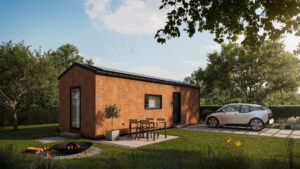
Australians are rethinking what it means to own a home. With property prices remaining a significant hurdle, wheelie rooms have emerged as a high-quality, practical alternative for those needing extra space without the permanence of a traditional build. These aren’t just modified shipping containers or flimsy sheds; they are architecturally designed, portable modular units built onto heavy-duty engineered trailers. This shift is a key part of the tiny house movement, where people prioritise flexibility and financial freedom over massive mortgages.
Unlike a standard caravan designed for short holidays, these rooms are constructed to residential building standards. They offer the comfort of a granny flat but with one major advantage: they aren’t fixed to the ground. Because they sit on wheels, they are legally classified as caravans in every Australian state as of May 2026. This classification often bypasses the need for complex building permits in many council areas. Every unit is Aussie-made and features a galvanised steel chassis to ensure it survives our tough conditions. Most importantly for your future plans, they come with a VIN registration. This makes them a unique, trackable asset that specialised lenders can actually recognise as security for a loan.
The different models: 4m, 6m, and 8m explained
You can choose from several sizes to suit your specific needs. The 4m pod is a brilliant choice for a backyard office or a quiet extra bedroom. For those eyeing full-time living or a high-yield Airbnb rental, the 6m and 8m models offer the space needed for a full kitchen and bathroom. Every unit is designed with “plug-and-play” connections. This means you can hook up your electrical and plumbing to existing site services just like a caravan, avoiding the massive site preparation fees usually tied to a new build.
Durability and the Australian climate
Australia’s environment is famously unforgiving. These units use 100% rot-proof materials to ensure they stand up to termites and moisture. Thick insulation in the walls and roof provides year-round comfort, keeping the interior cool under the summer sun and snug in winter. This robust construction is vital for Australia-wide delivery, ensuring the unit remains structurally sound after a long journey across the outback or down the coast. When you invest in wheelie rooms, you are choosing a structure that is built to handle the heat, the rain, and the road.
The lifestyle benefits: From home offices to rental income
Imagine adding a master suite or a professional studio to your property without the dust, noise, and budget blowouts of a traditional extension. Choosing wheelie rooms allows you to bypass the renovation nightmare entirely. These units arrive ready to go, providing an immediate solution for growing families or those needing a dedicated workspace away from the main house. It’s a seamless way to keep your parents close as they age or give your adult children the independence they crave while still living at home.
The true genius of this approach lies in its portability. If you decide to sell your property and move to a new suburb, you don’t have to leave your investment behind. You can simply hitch it up and take it with you. This protection of your capital is something a fixed granny flat simply cannot offer. Because these units often fall under specific movable dwelling regulations, they provide a level of flexibility that traditional real estate lacks. You are essentially investing in an asset that moves with your life stages.
Maximising your property’s potential
Adding a portable room instantly increases the functional value of your land. Whether it’s a quiet office to separate your work life from your home life or a guest wing for visiting friends, you are creating usable square meterage without the permanent footprint. This “movable” nature means your property remains adaptable. You can reposition the unit to catch the morning sun or move it aside if you eventually decide to put in a pool. It is about making your land work harder for you today while keeping your options open for tomorrow.
Wheelie Rooms as an investment strategy
From a financial perspective, the numbers tell a compelling story. The demand for alternative housing is skyrocketing, with Queensland alone seeing a 373% surge in tiny home interest as of March 2026. This makes wheelie rooms a savvy investment choice for generating secondary income. When you compare the tiny home loan costs australia against the massive overheads of buying a traditional investment property, the entry point is significantly more accessible.
There are also potential tax advantages if the unit is used strictly for business purposes, such as a registered home office or a short-term rental venture. Many Aussie homeowners are already using these units as high-yield Airbnb rentals to help pay down their primary mortgage faster. If you are ready to see how the numbers stack up for your backyard, exploring your financing options is the first step toward unlocking that new income stream.
The ‘Movable’ Hurdle: Why standard home loans often fall short
You’ve likely found the perfect unit, but when you walk into a Big Four branch, you’re met with a blank stare. It’s a common story for Aussie homeowners. Traditional lenders are built for houses bolted to the ground. When you mention wheelie rooms, they immediately look for a land title and a concrete slab. Since your new room sits on an engineered trailer, it simply doesn’t fit their rigid mortgage criteria. Banks view these structures as “chattel” or movable assets. It’s the same category as a car or a boat, which means a standard 30-year residential mortgage is usually off the table.
This rejection isn’t a reflection of your financial health; it’s a limitation of the bank’s software. Most branch managers don’t have a “portable room” button to press. They see a lack of permanent foundations and see risk. To overcome this, you need a lender that understands the value of the unit itself. This is where the trailer’s Vehicle Identification Number (VIN) and registration become vital. These identifiers turn a “portable box” into a trackable, legal asset that can be used as security for a loan.
Asset vs. Real Estate: The technical difference
The core issue is security. If a bank lends you money for a house, they hold the land as collateral. Because a Wheelie Room is mobile, the risk profile changes for the lender. They worry you could simply hitch it up and drive away. To mitigate this, specialised lenders rely on the trailer’s VIN. This registration is your best friend in the finance process. It proves the unit exists as a legal entity, allowing it to be used as security for a specific type of asset loan rather than a traditional mortgage. It is a subtle but critical distinction that determines which doors will open for you.
Overcoming the ‘Caravan’ stigma in finance
There is a lingering misconception in the banking world that anything on wheels is a flimsy holiday caravan. You know your unit is built to residential standards with steel frames and high-grade insulation, but a standard bank manager might not. This is where the presentation of your project matters. You aren’t just buying a trailer; you are investing in a high-quality modular dwelling that is 100% rot-proof and built for longevity.
Working with a specialist broker who understands tiny home finance australia is the most effective way to bypass this stigma. They know which lenders have an appetite for movable assets and how to frame your application. They can highlight the build quality and the “plug-and-play” logistics, showing the lender that this is a durable, valuable asset. They also help you budget for the “extras” like electrical and plumbing connections to your main house, ensuring your funding covers the entire project from delivery to the first night’s sleep.
Finance options for your Wheelie Room project
Securing the funds for your new space requires a shift in how you view traditional lending. While a manufacturer might give you a price list, the real work begins with matching that price to a sustainable loan structure. Choosing wheelie rooms means you are investing in a movable asset, which opens up specific financial pathways that differ from a standard 30-year mortgage. You need to consider the total project cost, including delivery and site levelling, to ensure your funding covers every detail from the factory floor to your backyard.
For many homeowners, the most cost-effective route is tapping into existing home equity. If you already own property, a redraw or a top-up on your current mortgage often provides the lowest interest rates. However, if you prefer to keep your home loan separate, specialised products like asset finance or personal loans offer tailored solutions that respect the unique nature of portable dwellings. Budgeting for “extras” is vital; don’t forget to account for the electrical lead-in and plumbing connections that turn a portable unit into a functional home.
Secured Asset Finance (Chattel Mortgages)
If you are eyeing the larger 8m models, secured asset finance is often the most powerful tool in your kit. This type of loan uses the unit itself as security, much like a car loan. Because the lender has a claim on the asset via its VIN, they are often willing to offer higher borrowing amounts and more competitive interest rates than an unsecured product. Loan terms typically range from five to seven years, making the monthly repayments manageable while you build equity in your portable home. It is a professional way to fund a significant lifestyle upgrade without risking your primary residence.
Personal Loans for smaller units
When speed and simplicity are your priorities, a personal loan to buy a tiny home australia might be the perfect fit. This is particularly effective for 4m studios or home offices where the total cost is lower. The application process is usually much faster, and because the loan is unsecured, you don’t necessarily need to use the unit as collateral. Lenders will focus heavily on your credit score and income stability. It is a flexible option that allows you to get your wheelie rooms project off the ground quickly, often with the funds landing in your account within days of approval.
Ready to find the right fit for your budget? You can apply for a pre-approval today to see exactly how much you can borrow for your backyard project.
How Little Home Loans makes your portable dream a reality
Little Home Loans isn’t your typical high-street bank. We’ve built our reputation on being a boutique partner that understands the nuances of alternative living. While a manufacturer’s team is focused on the build, we specialise in the complex credit policies that often trip up traditional lenders. Our partnership with Alpha390 Finance gives you access to a wide panel of lenders, ensuring we find the specific product that aligns with your lifestyle goals and budget. We’ve seen first-hand how the right funding structure can turn a backyard vision into a tangible asset.
We act as your supportive guide throughout the entire process. You focus on choosing the right floorplan and colours for your wheelie rooms, while we take care of the heavy lifting. From the moment you send your initial enquiry through to final settlement and delivery, we handle the paperwork and the back-and-forth with the bank. It’s about making a potentially stressful financial journey feel secure and straightforward. We believe that unconventional housing shouldn’t mean second-rate service.
Our specialised brokerage process
Our specialised brokerage process starts with a deep dive into your unique situation. We don’t believe in a one-size-fits-all approach. Our expertise in modular home financing australia allows us to navigate the specific requirements of movable assets with precision. Our “small” name is a deliberate choice; it reflects our commitment to personal, boutique service that delivers big results for our clients. We see the potential in your project that larger institutions might overlook, and we have the professional connections to make it happen.
Ready to get moving?
The demand for wheelie rooms is moving fast, and build slots can fill up months in advance. Having your finance sorted before you visit a workshop puts you in the strongest possible position. It means you can sign a contract with confidence the moment you find your dream unit. Getting a pre-approval is the smartest first step you can take to avoid missing out on the perfect site or delivery date. Your path to affordable backyard living is closer than you think. Start your Wheelie Room finance journey with us today and let’s make that portable dream a reality.
Your backyard sanctuary is within reach
Choosing a portable lifestyle doesn’t mean you have to settle for less. As you’ve seen, wheelie rooms offer a high-quality, durable solution for adding space without the permanence or cost of a traditional build. By understanding the distinction between real estate and movable assets, you can navigate the regulatory landscape with confidence. You now know that while big banks might hesitate, specialised financial pathways are available to help you secure the unit you want on terms that fit your budget.
Our team at Little Home Loans is dedicated to turning these unconventional housing dreams into a practical reality. With our deep expertise in non-traditional asset finance and personalised service from Aussie-based brokers, we bridge the gap that traditional lenders leave behind. Through our partnership with Alpha390 Finance, we provide access to flexible loan options tailored specifically for movable dwellings. Don’t let rigid bank policies stand in the way of your new home office, guest wing, or rental venture. Get your Wheelie Room finance pre-approved today and take the first step toward a more flexible way of living. We are ready to help you unlock the full potential of your property.
Frequently Asked Questions
Do I need council approval for a Wheelie Room on my property?
You generally don’t need a building permit because these units are legally classified as caravans in every Australian state as of May 2026. This classification makes wheelie rooms much easier to place in your backyard compared to a permanent granny flat. However, you must check with your local council regarding their specific rules for long-term occupation. While the structure itself might not need a permit, some councils have restrictions on how long someone can live in a movable dwelling on a residential lot.
Can I get a 30-year mortgage for a Wheelie Room?
No, you cannot get a standard 30-year residential mortgage for these units. Banks view a portable room as a movable asset, or “chattel,” rather than permanent real estate. Because it isn’t bolted to the ground, it doesn’t fit the criteria for a traditional home loan. Instead, you’ll typically use asset finance or a personal loan, which usually features shorter terms ranging from five to seven years.
What is the typical interest rate for a portable room loan?
Interest rates in 2026 depend on whether the loan is secured against the unit or unsecured. For secured caravan or RV-style loans, rates typically range from 6% to 10%. If you choose an unsecured personal loan, you might see rates between 7% and 14%. Your final rate will depend on your credit score, income stability, and the specific lender’s policy at the time of your application.
Do Wheelie Rooms come with a VIN and registration?
Yes, every unit must be registered as a trailer and come with a unique Vehicle Identification Number (VIN). This is a legal requirement to meet Australian Design Rules for road legality. Having a VIN is also essential for the finance process. It allows specialised lenders to identify the unit as a specific piece of collateral, making it much easier to secure a loan against the asset itself.
Can I use a Wheelie Room as a full-time residence in Australia?
Permanent residential occupation is generally not permitted by most Australian councils on standard residential lots as of May 2026. While they are perfect for home offices, studios, or guest accommodation, using one as a primary full-time residence can be tricky. Some areas, like the Surf Coast Shire in Victoria, are currently running pilot programs to trial tiny home living, so it’s vital to research the specific rules in your local area.
Is it possible to finance the delivery and setup costs as well?
Yes, you can often include the delivery and initial setup costs in your total loan amount. When we help you organise finance for wheelie rooms, we encourage you to look at the total project cost. This includes the transport from the factory and the “plug-and-play” connections for electrical and plumbing. Including these extras in your loan ensures you have the funds ready to make the unit functional from day one.
What happens to the loan if I decide to sell the Wheelie Room later?
If you decide to sell your unit, you will need to pay out the remaining balance of the loan at the time of the sale. Because these are movable assets, they can be sold and transported to a new owner’s property quite easily. Once the loan is settled, the lender releases their security interest on the VIN, allowing you to transfer the registration to the new owner without any encumbrances.
How much deposit do I usually need for this type of asset finance?
Deposit requirements vary, but many specialised lenders offer low-deposit options for borrowers with strong credit profiles. While some products allow for no-deposit finance, having a deposit of 10% to 20% can often help you secure a lower interest rate. We assess your unique financial situation to find a lender whose deposit requirements align with your current savings and your long-term budget goals.