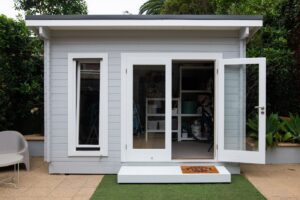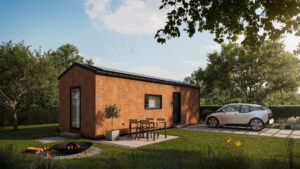
Flat pack homes have moved a long way from garden sheds and cabins. Today they are a fast, cost-controlled way to build everything from a compact granny flat to a full family home — delivered as pre-cut, pre-engineered components you (or a builder) assemble on site. The appeal is obvious: less waste, a fixed materials cost, and a build timeline measured in weeks rather than many months.
The catch is finance. Because a flat pack home does not follow the standard bank-valuation-on-a-finished-house model, mainstream lenders often struggle with them. This guide covers what flat pack homes cost, the main types, how they differ from kit and modular homes, and how to actually finance one.
What is a flat pack home?
A flat pack home arrives as a kit of pre-manufactured parts — wall frames, roofing, cladding, sometimes windows and fittings — packed flat for transport and assembled on your site. Some are simple owner-build cabins; others are architect-designed, fully certified dwellings that are indistinguishable from a conventional build once finished.
Flat pack vs kit vs modular — what is the difference?
These terms overlap, which is where a lot of buyers (and lenders) get confused:
| Type | How it is built | Typical use |
|---|---|---|
| Flat pack home | Pre-cut components shipped flat, assembled on site | Cabins, granny flats, homes; often owner-build friendly |
| Kit home | A more complete package of materials and plans | Full homes; see our kit home finance page |
| Modular / prefab | Built in volumetric sections in a factory, craned in | Full homes delivered near-complete; see modular home finance |
The line between flat pack and kit is blurry — the practical question for finance is how complete the delivered product is and whether it is fixed to the land.
What do flat pack homes cost in Australia?
Prices vary enormously with size, finish and how much you assemble yourself. As a general guide:
| Type | Indicative price range* |
|---|---|
| Small cabin / studio (under 30m²) | $15,000 – $45,000 |
| Granny flat / 1–2 bedroom (30–60m²) | $45,000 – $120,000 |
| Family home kit (90–150m²) | $120,000 – $250,000+ |
*Indicative supply/kit costs only — they usually exclude site works, foundations, connections, delivery and certification, which can add substantially. Always get a full turnkey quote.
How to finance a flat pack home
The right finance depends on one key question: will the home be fixed to land you own?
- Fixed to your land (on title): you may be able to use a construction or renovation loan, or draw on equity in the land. Lenders will want council approval, a fixed-price build contract and progress stages.
- Movable, or you do not own the land yet: a standard home loan usually will not fit. This is where specialist alternative-housing finance comes in — structured around the dwelling rather than a traditional land-and-house valuation.
Because flat pack, kit and modular homes fall outside standard lending, working with a broker who understands non-standard construction saves a lot of knocked-back applications. Start with our modular and prefab home finance options, or if you are leaning toward a full kit build, our kit home finance page.
Is a flat pack home right for you?
They suit buyers who want speed, cost certainty and a smaller footprint — and who are comfortable managing (or contracting) an assembly build. If that is you, the biggest early win is lining up finance before you pay a deposit to a supplier, so you know exactly what you can spend.
Talk to us
We help Australians finance the homes the big banks find too hard — flat pack, kit, modular, tiny and off-grid. Call 1300 391 390, get in touch, or apply online to see your options.
Finance is arranged through our licensed partner network.
Frequently asked questions
Can you get a home loan for a flat pack home?
Sometimes, if the home is fixed to land you own and meets council and construction-loan requirements. If it is movable or you do not yet own the land, a standard home loan usually will not fit and you will need specialist alternative-housing finance.
Are flat pack homes cheaper than building normally?
The kit itself is usually cheaper and more cost-certain than a conventional build, but site works, foundations, connections, delivery and certification add to the total. Compare full turnkey costs, not just the kit price.
What is the difference between a flat pack home and a kit home?
A flat pack home ships as pre-cut components packed flat for assembly; a kit home is generally a more complete package of materials and plans. The terms overlap — for finance, what matters is how complete the delivered dwelling is and whether it is fixed to land.
How long does a flat pack home take to build?
Assembly is fast — often a few weeks once on site — but the full timeline includes design, council approval, site preparation and connections, which can add months depending on your block and local council.
Do banks lend on flat pack homes?
Mainstream banks are often cautious because flat pack homes do not fit standard valuation models. A broker who specialises in modular and non-standard construction can match you with lenders who understand them.
Written and reviewed by the Finance Director at Little Home Loans.
This article is general information only and does not constitute credit or financial advice. Little Home Loans arranges finance through licensed partners operating under Australian Credit Licence 506065 (Five Tees Pty Ltd). Lending is subject to approval, lending criteria, terms, conditions and fees.