
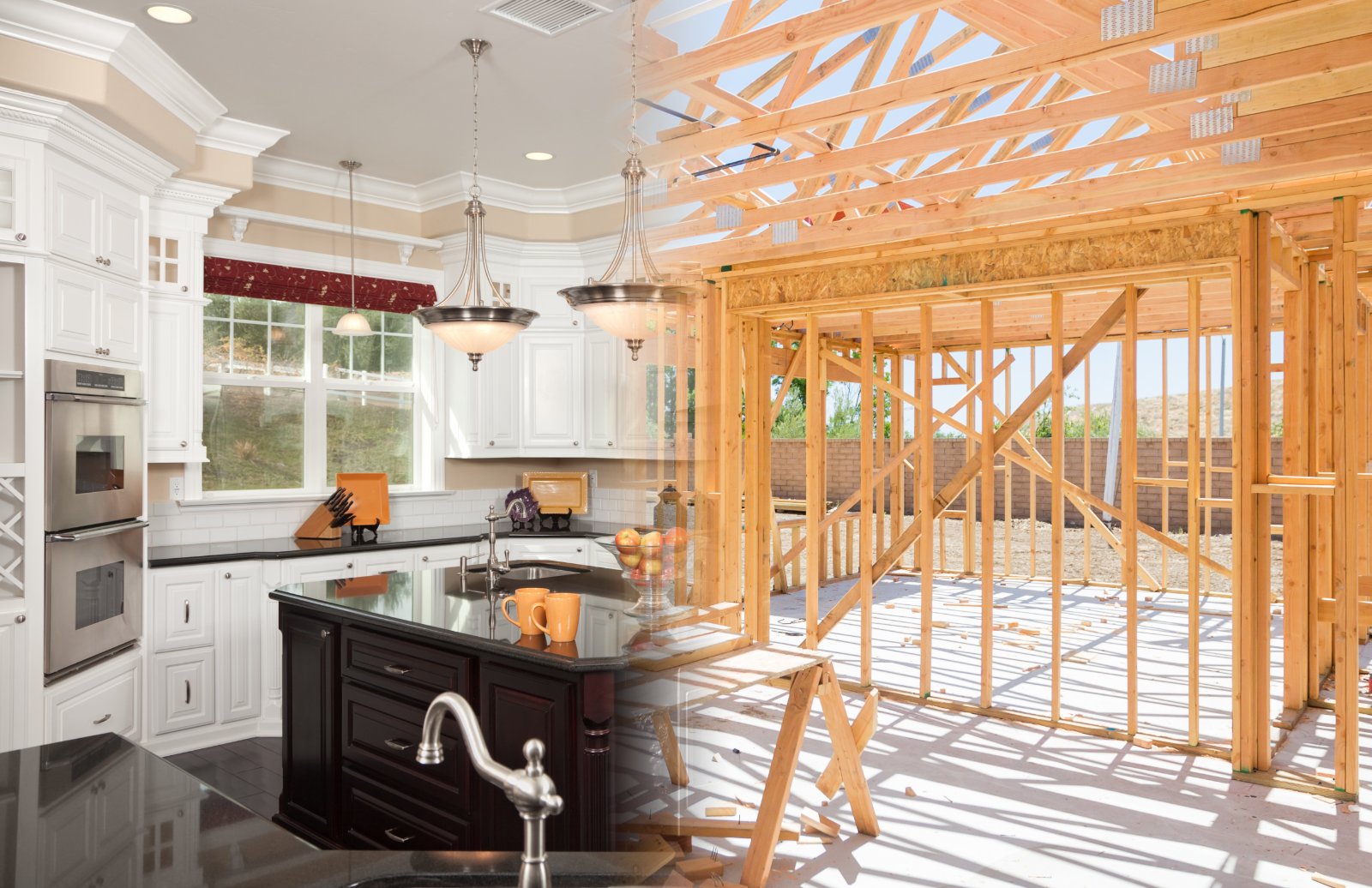
“Renovation loan” is a category, not a product. When people search it, they are usually asking one question — what’s the cheapest sensible way to pay for this work? — and the honest answer depends almost entirely on the size of the job.
A new kitchen and a bathroom is a different financing problem from lifting the roof, adding two bedrooms and re-stumping the house. One is a straightforward cash-flow question. The other is a construction loan with progress payments, council approval and a fixed-price building contract behind it.
This guide sets out the four realistic ways Australians fund renovations, what separates them, and where the line falls between “borrow against what you already own” and “this is a construction project now”.
The four ways to fund a renovation
| What it is | Best suited to | Money released | Needs a builder’s contract? | |
|---|---|---|---|---|
| Equity release / loan increase | Increasing your existing home loan against the equity you already hold | Cosmetic and moderate work; owners with solid equity | Lump sum, up front | Usually no |
| Construction loan | A purpose-built loan drawn down in stages as the build progresses | Structural work, extensions, major reconfiguration | Progressively, in stages | Yes |
| Personal loan | An unsecured loan, not tied to the property | Small, fast jobs; owners with limited equity | Lump sum, up front | No |
| Redraw or offset funds | Using money you have already paid into your own loan | Any size, if the money is genuinely there | Immediate | No |
Most renovations are funded by the first or the second. The dividing line is not the dollar figure — it’s whether you are changing the structure of the house.
The line that actually decides it: cosmetic vs structural
This is the distinction lenders care about, and it is the one that changes which product you can have.
Cosmetic renovation — you are improving what’s already there. New kitchen, new bathroom, flooring, painting, landscaping, replacing fittings. The building’s footprint and structure don’t change.
Structural renovation — you are altering the building. Removing or adding load-bearing walls, extending the footprint, adding a second storey, re-roofing structurally, re-stumping, changing the floor plan in ways that require certified plans and council or private-certifier approval.
Why it matters: cosmetic work can usually be funded with a lump sum against equity, because the lender’s security — the house — remains intact and habitable throughout. Structural work generally pushes you into construction lending, because the lender is now funding a half-finished building and needs staged control over the money.
If you are weighing up whether to renovate at all, the two comparisons worth making first are granny flat vs extension — which adds more usable value for the spend — and knockdown rebuild, which is often cheaper than a deep structural renovation of an old house once you price the unknowns.
How a renovation construction loan works
If your project is structural, the mechanics are the same as any construction loan:
- Approval is based on the “as if complete” valuation — what the property will be worth once the work is finished, not what it’s worth today.
- Funds are released in progress payments as each stage is completed and inspected, rather than as a single lump sum.
- You generally pay interest only on the amount drawn down so far, which keeps repayments lower during the build.
- A fixed-price contract with a licensed builder is normally required, along with council or certifier approval and full plans.
- On completion the loan converts to a standard home loan, usually principal and interest.
That fifth point is where renovation lending is genuinely different from a straight home-loan increase: your repayment structure changes twice over the life of the project.
If you plan to manage the build yourself rather than engage a head contractor, that is a different lending category again with tighter conditions — see owner-builder finance and owner builder insurance.
Equity release — the simpler path, and its limits
For cosmetic and moderate work, increasing your existing loan is usually the cleanest route. There is no builder’s contract to satisfy, no progress-payment schedule, and the money is yours to spend as the job requires.
The constraints are worth stating plainly:
- You need the equity. Lenders assess how much of the property’s value you already own, and there is a ceiling — you cannot borrow against equity you don’t have.
- It’s assessed as new borrowing. Income, expenses and existing commitments are all reassessed. An equity release is not automatic just because the equity exists.
- It doesn’t suit staged spending. You take the full amount and pay interest on all of it from day one, even if the builder won’t need the last third for four months.
- A revaluation may be required, and the number that comes back is the lender’s, not yours.
The comparison between borrowing against equity and taking a purpose-built loan is set out in more detail in granny flat loan vs home equity — the logic is the same for any renovation.
Personal loans — fast, unsecured, and a specific tool
A personal loan is not secured against the property, which means no valuation, no builder’s contract and a much faster path to funds. For a small cosmetic job by an owner with little equity, it is sometimes the only realistic option.
The trade-off is straightforward and should not be glossed over: unsecured borrowing generally costs more than secured borrowing, over a shorter term. It is a good tool for a small, defined job with a clear end date. It is a poor tool for funding a structural renovation in instalments.
What lenders look at
Whichever route you take, the assessment covers broadly the same ground:
- Income and serviceability — can you meet the repayments, assessed with a buffer
- Equity and LVR — how much of the property you already own
- The scope of work — cosmetic or structural, and whether approvals are in place
- The builder — licensed, insured, and contracted at a fixed price, for construction lending
- The end valuation — what the property is worth once complete
- Contingency — whether you have a margin for the things that always come up
That last one is the practical advice most worth taking. Renovations of older houses uncover problems — wiring, plumbing, stumps, asbestos, rot — and a project financed to the last dollar has no room to absorb them. Build a contingency into the borrowing, not just into the hope.
Does the renovation add more than it costs?
Not always, and it is worth being honest about that before borrowing.
Cosmetic work in the right rooms tends to return well because it is cheap relative to the perceived improvement. Deep structural work on an old house frequently does not — by the time you have paid for approvals, engineering, a builder’s margin and the surprises behind the walls, you can spend more than a comparable new build costs.
That is precisely why knockdown rebuild finance is worth pricing as an alternative on any older house needing structural work, and why our cost to build a house guide is a useful sanity check on a renovation quote. If the renovation is approaching the cost of building, you are no longer making a renovation decision.
The short version
- Cosmetic work → equity release, redraw, or a personal loan. Lump sum, no builder’s contract.
- Structural work → construction loan. Progress payments, fixed-price contract, approvals, “as if complete” valuation.
- The dividing line is whether the structure changes, not the dollar figure.
- Construction lending means interest only on what’s drawn, converting to a standard loan on completion.
- Build in a contingency — old houses always have something behind the wall.
- If the renovation cost approaches a rebuild cost, price the rebuild too.
Not sure whether your project is a loan increase or a construction loan?
That’s usually the first thing worth getting right — it changes the product, the paperwork and the timeline. We’ll work through the scope with you before you commit to anything.
Check My Options → or call 1300 391 390
Australian Credit Licence 506065 (Five Tees Pty Ltd) · Australia-wide · No obligation
Renovation loans: frequently asked questions
What is a renovation loan?
“Renovation loan” describes any borrowing used to fund home improvements rather than a single product. In practice it means one of four things: increasing your existing home loan against equity, a construction loan drawn down in stages, an unsecured personal loan, or using redraw and offset funds you have already paid in.
Can I get a renovation loan without equity?
Usually only through an unsecured personal loan, which is not secured against the property and therefore does not depend on equity. Both equity release and construction lending are assessed against the property’s value, so limited equity restricts how much can be borrowed that way.
Do I need a construction loan to renovate?
It depends on whether the work is structural. Cosmetic renovations — kitchens, bathrooms, flooring, painting — can usually be funded with a lump sum against equity. Structural work such as extensions, second storeys, removing load-bearing walls or re-stumping generally requires a construction loan with staged progress payments.
How are renovation construction loans paid out?
In progress payments released as each stage of the build is completed and inspected, rather than as a single lump sum. You generally pay interest only on the amount drawn down so far, and the loan converts to a standard home loan once the work is complete.
Do I need council approval for a renovation loan?
For structural work, lenders generally require council or private-certifier approval along with plans and a fixed-price building contract before releasing funds. Cosmetic work that doesn’t alter the structure usually doesn’t need approval, and the lending is simpler as a result.
Is it cheaper to renovate or knock down and rebuild?
It depends on the age and condition of the house and the depth of the work. Deep structural renovation of an older home can approach or exceed the cost of a new build once approvals, engineering, builder’s margin and unforeseen repairs are counted. On any older house needing structural work, it is worth pricing both before committing.
Funding a pool? Our guide to pool finance walks through the routes a swimming pool can be funded and which one tends to fit.
Written and reviewed by the Finance Director at Little Home Loans
This article is general information only and does not constitute credit or financial advice. Little Home Loans is powered by Alpha390 Finance, which operates under ACL 506065 (Five Tees Pty Ltd). Lending is subject to approval, lending criteria, terms, conditions and fees.
Raising an existing house is a renovation project with its own cost drivers — see house raising cost in Australia.
Renovation costs vary widely by room and scope. For the room most people start with, see what published guides put on a kitchen renovation cost and what drives the difference between quotes.
Planning a single room? Our bathroom renovation cost guide sets out the published range, the labour share and the contingency to hold back.