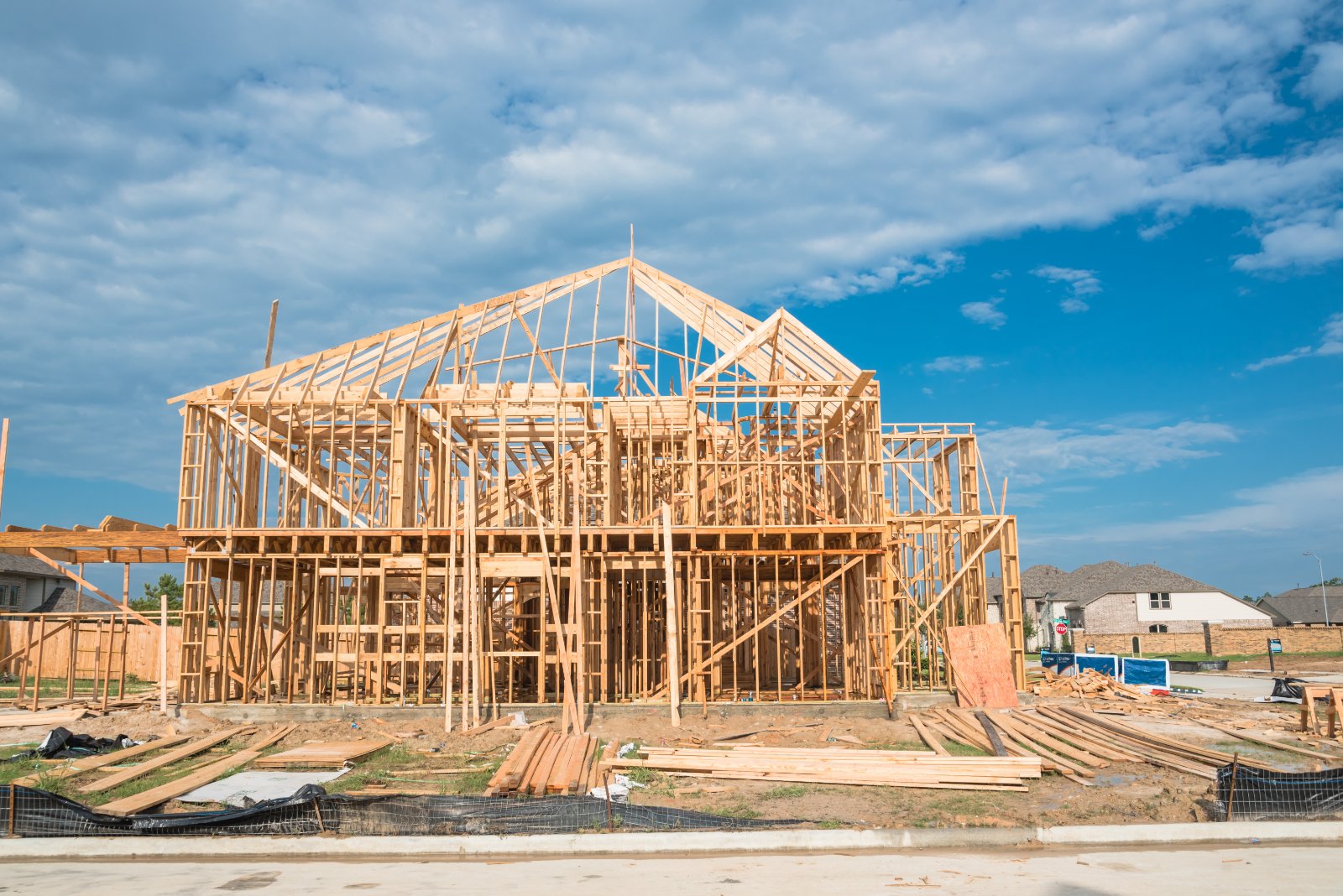
A knockdown rebuild means demolishing your existing house and building a brand-new home on the same block — keeping the land and location you already love, without the cost and stamp duty of buying elsewhere. It’s become one of the most popular ways to get a modern, efficient home in an established suburb. This guide covers what a knockdown rebuild typically costs and how the finance works.
Knockdown rebuild cost at a glance
There is no single national price for a knockdown rebuild. The total is the sum of several costs: demolishing the old house, preparing the site, approvals, the new build, somewhere to live meanwhile, and a buffer for surprises. Published Australian guides put demolition alone at roughly $12,000 to $50,000 (Yellow Pages, updated May 2026), and the new build is almost always the biggest line. The table below shows each component with its published range and publisher. These are third-party estimates, not quotes.
Why choose a knockdown rebuild?
You keep your street, block and orientation, avoid stamp duty on a new land purchase, and end up with a home built to current standards — better energy efficiency, layout and lower maintenance than renovating an ageing house. It often works out more cost-effective than a major renovation once you factor in what a full reno really costs.
What a knockdown rebuild costs
Total cost = demolition + the new build + the “in-between” costs people forget. The figures below are published ranges from named sources, with source and date. They are not quotes or market averages, actual costs vary materially by location, site and demolition conditions, specification and inclusions, and builder, and several of these figures are Sydney-specific, so they are not a national average.
| Cost component | What it covers | Published range and source | Who typically pays, and when |
|---|---|---|---|
| Demolition | Demolition, site clearing and tipping | $12,000–$50,000 for a full house, with an average of around $17,000; $40–$150 per m² without hazardous materials (Yellow Pages, updated May 2026). A Sydney builder publishes $10,000–$20,000 (Buildana, updated Sep 2026). | You, to the demolisher, before the build starts. Usually outside the builder’s contract. |
| Asbestos testing and removal | Identifying and safely removing asbestos before demolition | Adds roughly $2,500–$15,000 or more (Yellow Pages, May 2026). A Sydney builder publishes $5,000–$25,000 depending on extent (Buildana, Sep 2026). | You, before demolition. Larger quantities generally need a licensed removalist. |
| Service disconnection and reconnection | Disconnecting, then reconnecting, power, water, sewer, gas and NBN | $1,000–$5,000 allowance (Homebuilds.com.au, 2026); $3,000–$6,000 in Sydney (Buildana, Sep 2026). | You, before demolition. Reconnection may or may not be in the build contract. |
| Survey, soil test and design engineering | Survey, soil report, structural and energy-rating design | $8,000–$14,000 for geotech, survey, BASIX and structural design in Sydney; engineered footings for reactive clay $12,000–$25,000 (Buildana, Sep 2026). | You or your builder, before or as part of the contract. |
| Approvals and fees | Demolition permit, then planning and building approval and certifier fees | Demolition permit $350–$700 (Yellow Pages, May 2026); demolition approval about $1,200–$3,000 (Homebuilds.com.au, 2026); Sydney complying development $5,000–$9,000 or development application $9,000–$16,000 (Buildana, Sep 2026). Scope differs between publishers. | You, or your builder if the contract says so, before construction. |
| The new build | Volume or custom home, by size and inclusions | $2,200–$2,650 per m² for medium-standard construction in Sydney (Buildana, Sep 2026). See cost to build a house for how build type changes the price. | You, in stages under the contract, funded by your construction loan. |
| Temporary accommodation | Rent and storage during demolition and the build | Twelve months of rent: about $38,200 in Brisbane, $33,300 in Melbourne and $43,700 in Sydney (Homebuilds.com.au, 2026). Storage quotes vary. | You, monthly throughout. Often not included in the build loan, so check with your lender. |
| Driveway, fencing and landscaping | External works builders commonly exclude | $30,000–$80,000 in Sydney (Buildana, Sep 2026). | You, usually near the end of the build. |
| Contingency | A buffer for variations and site surprises | No fixed published figure. See the contingency section below. | You, from your own reserves or as agreed with your lender. |
*Published ranges, checked 30 September 2026. Third-party estimates only, not a quote or a market average. Confirm current costs with your builder, certifier and council.
Rebuilding as a dual occupancy changes the numbers again — if you are weighing that option, see our guide to the cost to build a duplex.
The demolition line itself — what drives it, what asbestos and permits add, and how to get a quote that reflects your site — is broken down in house demolition cost in Australia.
Demolition, asbestos and site preparation: what moves the number
Demolition price depends on the size and construction of the house, access, tipping fees and salvage. Asbestos is the biggest swing factor in an older home. Queensland’s workplace regulator says asbestos must be removed before demolition starts so far as reasonably practicable, and that more than 10 m² of non-friable asbestos requires a Class A or Class B licensed removalist (WorkSafe Queensland). Rules differ by state. The demolition guide linked above covers permits and pricing in more detail. Site conditions add more: one Sydney publisher lists a steep slope at an extra $30,000–$80,000 and rock at $15,000–$50,000 (Buildana, Sep 2026), so get a soil test and survey early.
What is usually in the builder’s contract, and what is not
A fixed-price contract commonly covers footings or slab to the specified soil class, frame, roof, cladding, windows, standard fittings and standard services. It often excludes demolition, rock removal, deep piering, retaining walls, council fees, service connections, driveways, fencing, landscaping and post-signing variations. Ask every builder for a written inclusions and exclusions schedule so you can compare quotes like for like.
Illustrative cost example (not a quote)
Illustration only: one Sydney publisher’s 2026 ranges (Buildana, updated Sep 2026) for a medium-specification brick veneer home of 200–250 m², rounded. Not a quote, an average or a prediction for your block.
| Item | Low (rounded) | High (rounded) |
|---|---|---|
| Demolition | $10,000 | $20,000 |
| Service disconnection | $3,000 | $6,000 |
| Geotech, survey, BASIX and structural design | $8,000 | $14,000 |
| Approval (complying development pathway) | $5,000 | $9,000 |
| Engineered footings (reactive clay) | $12,000 | $25,000 |
| Construction (200–250 m²) | $491,000 | $663,000 |
| Driveway, fencing and landscaping | $30,000 | $80,000 |
| Subtotal | about $559,000 | about $817,000 |
The subtotal excludes asbestos removal (the same publisher lists $5,000–$25,000 if present), temporary accommodation, council contributions, construction interest and a contingency. The point is the shape of the budget: the build is the biggest line, but the surrounding costs are large on their own.
How much contingency should you allow?
We have not found an authoritative published contingency percentage for knockdown rebuilds, so we do not quote one. Ask your builder which items are provisional sums (the ones most likely to change), ask your certifier and engineer what could change once the old house is gone, and factor in the house’s age and the soil and asbestos results. As simple arithmetic, every 5% of a $600,000 contract is $30,000. Lenders typically fund against the contract price rather than a contingency, so you may need to hold your buffer as cash or available equity. It is worth asking about this early.
Knockdown rebuild vs renovating vs buying elsewhere
- Knockdown rebuild suits an old, poorly laid-out or costly-to-fix house on a block and street you love. It means demolition plus a full build, usually funded by a staged land and construction loan, and you will need somewhere else to live.
- Renovate or extend suits a sound structure that needs space or updating, often funded with a renovation loan or equity. See house extension cost and second-storey addition cost.
- Buy elsewhere is the shortest route, but you give up your location and design control.
- Add a secondary dwelling gives extra space without demolishing, under different rules. See how much a granny flat costs in Australia.
Compare written quotes for a rebuild and a renovation on your actual house before deciding.
How knockdown rebuild finance works
Most knockdown rebuilds are funded with a construction loan, which releases money in stages as the build progresses rather than all at once. A typical structure:
- Land already owned — your existing block (and any equity in it) usually forms the security, which can reduce or remove the deposit you’d need for a land-plus-build purchase.
- Progressive drawdowns — funds release at set stages (demolition/slab, frame, lock-up, fixing, completion), and you generally pay interest only on what’s drawn during construction.
- Converts to a normal home loan — once the build is finished, the loan rolls into standard principal-and-interest repayments.
Because you already own the land, a knockdown rebuild can be one of the more finance-friendly ways to build — lenders like the existing equity. Rates and structure vary; see construction loan interest rates.
What happens to your existing home loan?
Your mortgage does not disappear when the house is demolished, because the land is still the security. Depending on the lender, it may be refinanced into the construction facility or run alongside it, and lenders may assess both together. Structures vary, so confirm this first.
How staged drawdowns typically work
Unlike a purchase, which settles in one payment, a construction loan releases funds in stages as work is completed, and the lender usually checks progress first. Typical stages, varying by lender and contract:
| Stage | Typical trigger | What the lender usually checks |
|---|---|---|
| Deposit or start | Contract signed and approvals in place | Signed fixed-price contract, approvals, builder’s licence and insurance. The builder’s deposit may need to come from your own funds. |
| Base or slab | Site prepared and footings or slab completed | Progress claim from the builder, evidence the work is complete, sometimes a progress inspection or valuation. |
| Frame | Frame and roof structure up | Progress claim and confirmation the stage matches the contract. |
| Lock-up | Roof, external walls, windows and doors in place | Progress claim; the work completed so far against the contract. |
| Fixing or fit-out | Internal linings, cabinetry and fittings | Progress claim and evidence of completion. |
| Completion | Final inspection and occupancy or completion certificate | Completion certificate and final claim; the loan then converts to standard repayments. |
In NSW, for example, government guidance says progress payments on contracts over $20,000 must relate to work actually done, and that the maximum deposit a builder can ask for is 10 percent of the contract price (NSW Government). Other states have their own rules, for example the QBCC in Queensland.
Interest-only during construction
During the build you generally pay interest only on the amount drawn so far, so repayments grow as more is released. ASIC’s MoneySmart notes that interest-only loans may be useful for short-term loans such as a construction loan, and also that they build no equity during the interest-only period and can lead to higher repayments afterwards (MoneySmart). See MoneySmart’s construction loan definition and construction loan interest rates.
How lenders assess a knockdown rebuild
Many lenders look at a knockdown rebuild differently from a standard purchase, because they are lending against a home that does not yet exist. Typically, a lender may assess:
- Your existing loan and land value — the balance owing and the value of the block.
- The build contract — the fixed price, the stages, the inclusions and the builder’s track record and licence.
- A valuation “as if complete” — an estimate of what the finished home and land may be worth, which many lenders use when setting the loan-to-value ratio.
- Your income and expenses — including your current housing costs and, if you are renting during the build, that rent as well.
Policies, rates, loan-to-value limits and approval times vary widely between lenders, and any offer is subject to approval. If you are an owner-builder, the assessment differs again, so see our owner-builder finance and owner-builder approvals guides.
Want to see how a knockdown rebuild might be structured for you? Start an enquiry online, call 1300 391 390, or get in touch.
What if costs go over budget?
If the price rises after signing, through variations, provisional sums or site surprises, the extra usually comes from your own funds unless your lender agrees to increase the loan, which is not guaranteed. A fixed-price contract, a clear inclusions schedule and a cash buffer are the practical defences. Check with your lender before agreeing to significant variations.
Documents lenders typically ask for
Having paperwork ready shortens the process. Requirements vary by lender, but a knockdown rebuild application commonly includes:
- A signed fixed-price building contract with a full inclusions and exclusions schedule
- Building plans and specifications, and the council or private certifier approval
- The builder’s licence details and evidence of the required home warranty or building insurance
- A detailed builder’s quote or cost breakdown
- Your current mortgage statements and title details for the land
- Proof of income (payslips or tax returns) and recent account statements
- Identification, plus details of your debts and living expenses
Common knockdown rebuild mistakes to avoid
- Budgeting only for the build. Demolition, site costs, approvals and external works add up on their own.
- Skipping the soil test and survey. Surprise footings, slope or rock can change the price.
- Assuming there is no asbestos. In an older home, get it checked first.
- Forgetting where you will live. A year or more of rent is a real cost.
- Comparing quotes with different inclusions. A lower price may just exclude more.
- Underestimating variations. Post-signing changes are a common source of overruns.
- Leaving finance to the end. Talk to a broker before you sign, so the loan matches the contract.
The knockdown rebuild process
- Check your block is suitable (council overlays, easements, slope, access).
- Choose a builder and design that fits the site.
- Arrange finance and pre-approval based on land equity + build cost.
- Demolition and site prep.
- Progressive build with staged drawdowns.
- Completion, final inspection, and the loan converts to a standard home loan.
Approvals depend on your state and council. A rebuild typically needs approval to demolish and to build, through your council or a private certifier. For official starting points, see the NSW Planning Portal pages on complying development certificates and the development application process, the Queensland Building and Construction Commission’s home owner hub, and Consumer Affairs Victoria’s building and renovating guidance. Approval steps and timeframes vary, so confirm the pathway for your address early.
Talk to us about financing your rebuild
Little Home Loans helps owner-occupiers and owner-builders finance new and non-standard builds across Australia. Enquire online, call 1300 391 390, or get in touch to talk through your options.
Related guides
How do construction loans work? · Land and construction loans · Construction loan interest rates · House demolition cost · Cost to build a house · Renovation loans · House extension cost · Second-storey addition cost · Cost to build a townhouse · Owner-builder finance · Owner-builder approvals · Modular & prefab home finance.
Knockdown rebuild — FAQs
How much does a knockdown rebuild cost in Australia?
It depends on your city, block and home size, so there is no single figure. Published guides put demolition at roughly $12,000 to $50,000, with the new build the largest cost, plus site work, approvals, rent and a buffer. Use the ranges on this page as a starting point, and get written quotes.
Is a knockdown rebuild cheaper than renovating?
It often is once a renovation becomes structural. A full reno of an old home can approach rebuild cost while leaving old bones; a rebuild gives you a new home to current standards. Compare quotes for both on your specific house before you decide.
Do I need a big deposit for a knockdown rebuild?
Not always. Because you already own the land, the equity in your block can serve as security, which may reduce the cash deposit you’d otherwise need. Your borrowing capacity and the build cost still apply, and you may need cash for demolition, rent and the builder’s initial deposit.
How long does a knockdown rebuild take?
Allow time for design, approvals and demolition before the build even starts. From knockdown to completion is commonly several months to around a year, and sometimes longer, depending on the home, builder and council. Ask your builder and certifier for realistic timeframes for your site.
What loan do I use for a knockdown rebuild?
Most people use a construction loan, which releases funds in stages as the build progresses and typically charges interest only on the drawn amount during construction, then converts to a standard home loan on completion. Structures and lending criteria vary between lenders, so it is worth comparing options.
What happens to my existing mortgage during a knockdown rebuild?
Your existing loan is still secured on the land, so it does not simply disappear. Depending on the lender, it may be refinanced into the construction loan or run alongside it. Lenders typically assess your existing balance, the build contract and your income together, so confirm the structure before you start.
What happens if my knockdown rebuild goes over budget?
Extra costs usually come from your own funds unless your lender agrees to increase the loan, which is not guaranteed. A fixed-price contract, a clear inclusions schedule and a cash buffer help. Speak to your lender before agreeing to significant variations, as they may need to reassess the loan.
Can I do a knockdown rebuild as an owner-builder?
Yes, subject to your state’s owner-builder rules and lender criteria, and some lenders apply extra conditions. Approvals and insurance requirements differ by state, so check your state regulator and speak to a broker about how the finance differs before you commit to the build.
Cost sources (third-party estimates, checked 30 September 2026): Yellow Pages (updated May 2026), Homebuilds.com.au (2026) and Buildana (updated September 2026). Other sources are linked where cited.
Written and reviewed by the Finance Director at Little Home Loans.
This article is general information only and does not constitute credit or financial advice. Little Home Loans is powered by Alpha390 Finance, which operates under ACL 506065 (Five Tees Pty Ltd). Lending is subject to approval, lending criteria, terms, conditions and fees.
Not sure whether to rebuild or lift what you have? See house raising cost in Australia — what the lift involves, what drives the price, and how raising compares with a knockdown rebuild.