What if the only thing standing between you and your dream of owning one of the many bespoke Aussie tiny houses isn’t your savings account, but a traditional bank’s outdated checklist? You’ve likely felt the sting of a quick rejection just because your future home has wheels or doesn’t fit the standard mortgage mould. It’s a common hurdle for many Australians who find themselves caught between the excitement of a minimalist lifestyle and the confusing grey areas of local council zoning. We understand that being told your home isn’t a real asset by a big bank can be incredibly disheartening when you’re simply trying to build a sustainable future.
This guide will show you that securing your slice of freedom is entirely possible through specialised loan options designed for unique dwellings. You’ll discover the real-world financial pathways and tailored lending solutions that make these homes accessible for almost every budget. We’re going to break down the essential differences between personal and asset finance while providing a clear roadmap to navigate off-grid infrastructure costs and complex regulations. It’s time to turn that small-space dream into a practical, funded reality.
Key Takeaways
- Unlock the strategic financial benefits of small-space living and see why tiny homes have become a mainstream solution for navigating the 2026 Australian property market.
- Distinguish between movable assets and fixed-site improvements to identify which specialised loan structure aligns with your specific dwelling type.
- Explore real-world ownership pathways for aussie tiny houses, including low-deposit options for solo buyers and dedicated asset finance for off-grid family projects.
- Identify the hidden expenses beyond the initial build price, from logistical delivery challenges to the essential costs of solar and water infrastructure.
- Learn how a specialist broker simplifies the path to settlement, providing the niche expertise required to turn your unconventional housing dream into a secure reality.
The Rise of Aussie Tiny Houses: Why the Financial Landscape is Shifting in 2026
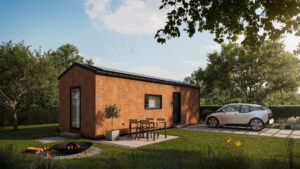
Australia’s property market in 2026 presents a challenging reality for many. With median house prices in major hubs like Sydney and Melbourne consistently sitting above the A$1.1 million mark, the tiny house movement has transitioned from a niche architectural trend into a mainstream financial strategy. Aussie tiny houses now represent a sophisticated alternative for those looking to bypass the traditional 30-year debt cycle. These dwellings have evolved far beyond simple “granny flats” to become high-end, architecturally designed mobile homes that offer luxury and sustainability in a compact footprint.
Traditional “Big Four” banks often struggle to keep pace with this innovation. Most residential mortgages are designed for fixed structures on permanent foundations. Because many tiny homes are built on trailers or modular frames, they often fail the rigid security criteria required for a standard home loan. This gap in the market is exactly why specialized brokerage has become essential. We focus on understanding the unique value of these builds, helping you secure the funding that traditional lenders might overlook. Our mission is to ensure your path to homeownership is clear and supported, making finance made simple for every minimalist dreamer.
The Economic Shift Toward Minimalist Living
The financial appeal of downsizing is backed by stark data. While a standard suburban mortgage might require a A$200,000 deposit and decades of interest, a premium aussie tiny house typically costs between A$90,000 and A$160,000 in the current 2026 market. This price point allows you to achieve total ownership in a fraction of the time. The rise of remote work has further fuelled this demand; recent 2025 employment data shows that 42% of Australian professionals now work from home at least three days a week. This flexibility allows you to park your dream home in regional areas where land is more affordable, trading a heavy mortgage for a lifestyle of freedom and flexibility.
The Regulatory Evolution
Australian councils are gradually adapting to the tiny living revolution. In early 2026, several key shires in New South Wales and Victoria updated their local environmental plans to better define these structures. The legal distinction between a “permanent dwelling” and a “caravan” is the most critical factor for your project. If your home is classified as a vehicle because it remains on wheels, your borrowing options will differ significantly from a modular home fixed to the ground. Your choice of location directly dictates your choice of finance. We help you decode these local regulations so you can choose a site and a loan structure that work in perfect harmony.
Decoding Asset Types: THOWs vs. Modular Homes in Australia
Choosing the right structure is the first step toward unlocking your dream lifestyle. In the world of aussie tiny houses, lenders don’t just see a home; they see a specific asset class. The way your home is built and where it sits determines the type of finance you can access. Generally, your choice falls into two categories: a movable vehicle or a fixed building. This distinction changes everything from your deposit size to your repayment terms.
Tiny Houses on Wheels (THOWs)
If your home sits on a trailer, lenders treat it as a movable asset. To secure a loan, your tiny home must comply with the Road Vehicle Standards laws. This ensures the asset is road-legal and can be insured easily. Lenders look for a Vehicle Identification Number (VIN) and a compliance plate that matches the trailer’s Gross Vehicle Mass (GVM). Staying within the 2.5-metre width and 4.3-metre height limit is vital for loan security. Tiny Houses on Wheels are depreciating assets that offer appreciating lifestyle value.
Because these aren’t fixed to land, you won’t get a traditional 30-year mortgage. Instead, many buyers use a chattel mortgage. This is a specialized loan where the tiny house itself acts as the security. It’s a popular choice because it offers lower interest rates than unsecured personal loans while keeping the process fast and flexible. You can often secure these loans for terms between five and seven years, making tiny home finance made simple and transparent.
Modular and Prefabricated Dwellings
When a tiny house is designed to be craned onto a permanent foundation, it’s classified as a modular or prefab home. Lenders view these as “fixed-site improvements.” If the dwelling meets the Class 1a building code standards, it’s legally a house, not a caravan. This classification is a game-changer for your borrowing power. It allows you to potentially wrap the cost of the structure, the concrete slab, and the service connections into a single construction loan.
- Site Costs: Financing usually covers the “turnkey” price, including plumbing and electrical hookups.
- Council Approval: You’ll need a Building Permit and often a Planning Permit from your local council.
- Owner-Builder Permits: If you’re managing the site works yourself, you’ll need a specific permit (like those issued by the VBA in Victoria) to satisfy the bank’s risk assessment.
Building a permanent modular home on your land can increase your property’s overall value. While the upfront costs for aussie tiny houses on foundations are higher due to council fees and site prep, the long-term financing options are often more aligned with traditional real estate. Whether you choose the freedom of wheels or the stability of a slab, matching your asset to the right loan product is the key to a stress-free build.
The Three Pathways to Ownership: Case Studies in Aussie Tiny House Finance
Unlocking the door to your dream lifestyle requires a finance strategy as unique as the home itself. Because aussie tiny houses don’t always fit the rigid boxes of traditional mortgages, we look at how different Australians are successfully securing their keys. These three profiles show that with the right specialized guidance, your path to a smaller footprint is closer than you think.
Pathway 1: The Personal Loan Route
Sarah, a solo professional in Brisbane, wanted to escape the A$650 weekly rent cycle. She opted for a A$75,000 personal loan to purchase a “lock-up” shell from a local builder. While unsecured personal loans often carry higher interest rates than mortgages, they offer rapid approval times and don’t require the lender to take a mortgage over the land. For Sarah, her weekly loan repayments of A$380 are significantly lower than her previous rent, allowing her to own her asset outright in five years. This route is ideal if you have a strong credit score and a steady income but lack a large deposit.
Pathway 2: Specialised Asset Finance
The Miller family dreamed of a sustainable, off-grid life in regional Victoria. They chose specialized asset finance, which uses the tiny house itself as security, much like a caravan or boat loan. This allowed them to bundle the cost of the home with high-end off-grid solar systems into a single monthly payment. In 2026, specialized asset finance rates for these dwellings typically range from 8.5% to 11.5%. By securing the loan against the unit, the Millers preserved their savings for land preparation and rainwater tanks.
Pathway 3: Leveraging Existing Equity
David and Jen used the equity in their suburban Sydney home to fund a secondary dwelling for Jen’s aging parents. By taking a “top-up” loan on their existing mortgage, they accessed funds at lower home loan rates. They navigated the NSW Government regulations for moveable dwellings to ensure the unit met local council standards for backyard placement. This strategy isn’t just for family; many investors use equity to install aussie tiny houses as short-stay rentals, potentially benefiting from negative gearing and depreciation schedules.
- A Detailed Quote: Lenders need to see a fixed-price contract from a reputable builder.
- Site Readiness: Showing you have a legal place to park the home increases your “trust score” with credit teams.
- Financial Transparency: Successful applicants usually provide two years of tax returns or consistent payslips to prove serviceability.
- Clear Exit Strategy: Whether it’s through rental income or savings, having a clear plan to clear the debt is vital.
The Total Cost of Ownership: Beyond the Build Price
Your journey toward a simpler life usually begins with a builder’s quote. While seeing a price tag of A$90,000 for a beautiful loft-style home is exciting, it’s only a fraction of the story. You’re not just buying a structure; you’re creating a lifestyle. This means you need to budget for the costs that turn a timber shell into a functional home. For many aussie tiny houses, the gap between the build price and the move-in cost can range from A$15,000 to A$40,000 depending on your site’s complexity.
Site preparation is your first major hurdle. You can’t simply park a 4.5-tonne house on raw grass and expect it to stay level. Ground levelling, gravel pads, or screw piers are essential to prevent your home from sinking or shifting. Depending on your soil type, these works often cost between A$2,500 and A$8,000. Don’t forget insurance. Specialised cover is non-negotiable because standard home policies won’t protect a structure on wheels during transit or on a non-traditional foundation.
Site Infrastructure and Off-Grid Costs
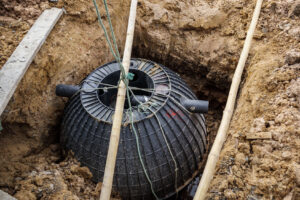
Living off the grid is a dream for many, but the technology carries a premium. A high-end solar package with 10kWh of lithium battery storage and a backup generator typically costs between A$18,000 and A$26,000. Connection costs vary based on your location, but you should plan for these common expenses:
- Plumber and electrician fees for trenching and utility hookups (A$3,000 – A$6,000).
- Council DA or permit fees, which can cost upwards of A$1,500 in administrative charges.
- Ongoing maintenance for the Australian climate, such as UV-protective timber staining every 24 months.
Delivery and Installation Logistics
Moving aussie tiny houses requires more than a standard tow bar. Professional heavy-vehicle transport is mandatory for homes weighing over 3.5 tonnes. Transport companies generally charge a base fee plus A$4.00 to A$6.00 per kilometre. If your site has narrow gates or steep inclines, you might need a crane. Crane hire in regional Australia often starts at A$1,800 for a half-day minimum. You’ll also need to ensure you have public liability insurance active the moment the house arrives. Finally, set aside A$1,500 for a “settling” fund. Tiny homes often experience minor cosmetic cracks or door misalignments after their first long road trip, and you’ll want the cash on hand to tidy things up quickly.
Ready to turn these numbers into a reality? We can help you calculate your total project costs and find a finance solution that covers your whole journey.
Organising Your Finance: How Little Home Loans Bridges the Gap
Securing a loan for your tiny home shouldn’t be more stressful than the build itself. While traditional banks often struggle to categorise aussie tiny houses, we’ve built our reputation on making these unique projects a reality. Most generalist mortgage brokers focus on standard bricks-and-mortar properties; they often lack the specific lender relationships required for assets on wheels or off-grid cabins. We bridge that gap by acting as your dedicated advocate in a niche market.
The Advantage of Specialised Brokerage
We speak the language of lenders and builders alike. When you describe your dream of a sustainable, minimalist lifestyle, we translate that into a structured financial application that meets strict credit criteria. Our strategic partnership with Alpha390 Finance provides us with broader market access, allowing us to tap into a panel of lenders who actually understand the value and longevity of the tiny house movement. This specialised knowledge is your best defence against a “computer says no” response from a high-street bank.
Applying for the wrong loan product can have lasting consequences for your financial future. Because we understand which lenders have an appetite for non-traditional assets, we only submit applications we’re confident in, which prevents the risk of multiple rejections leaving a permanent black mark on your credit file. Our goal is to get you a “yes” the first time, keeping your credit score healthy for years to come.
Ready to Go Tiny?
Preparation is the key to a fast approval. Before you make your first enquiry, it’s helpful to have your borrower profile ready to go. This allows our team to move quickly and secure your place in your builder’s construction queue. To get started, you’ll generally need to provide:
- Proof of Identity: A valid Australian driver’s licence or passport.
- Proof of Income: Your three most recent payslips or two years of tax returns if you’re self-employed.
- Builder Quote: A detailed breakdown of costs from your chosen aussie tiny houses manufacturer.
- Site Plan: A basic overview of where the home will be located, whether it’s on your own land or a long-term lease.
The timeline from your first call to settlement is often faster than a standard home loan. We typically provide an initial assessment within 24 to 48 hours. Once we’ve selected the right lender, full approval usually takes between 5 and 10 business days. Settlement then aligns with your builder’s requirements, ensuring the funds are ready exactly when your house is set for delivery.
Start your Aussie tiny house journey with a free assessment today and let us simplify the path to your new lifestyle.
Secure Your Future in a Tiny Home
Navigating the financial landscape for aussie tiny houses in 2026 requires more than just a savings plan; it takes a specialised strategy. You now understand how the distinction between a Tiny House on Wheels and a modular building dictates your loan options. You also recognise that factoring in off-grid infrastructure is essential for a realistic budget. While traditional banks might see a movable dwelling as a risk, we see it as your future. As part of the Alpha390 Finance group, Little Home Loans leverages years of asset finance expertise to bridge the gap that mainstream lenders ignore. We provide specialised access to a panel of lenders who support off-grid lifestyles and unique builds. Whether you need a tailored solution for a modular home or finance for a high-spec solar system, our team is ready to help you move in sooner. Your dream of a simpler, more intentional life is within reach with the right experts by your side.
Apply for Tiny Home Finance Now
We’re excited to help you unlock the door to your new small-space lifestyle.
Frequently Asked Questions
Can I get a traditional 30-year mortgage for an Aussie tiny house on wheels?
You typically can’t get a traditional 30-year mortgage for an Aussie tiny house on wheels because banks classify them as moveable assets rather than fixed real estate. Most people secure their dream through specialised personal loans or chattel mortgages with terms usually ranging from five to seven years. These tailored finance solutions allow you to start your small-space lifestyle without the decades-long commitment of a standard home loan.
How much deposit do I typically need for a tiny home loan in Australia?
You’ll generally need a deposit of 10% to 20% to secure financing for your aussie tiny houses. While some lenders offer low-deposit options for those with high credit scores, having a 20% deposit often helps you access more competitive interest rates. For a A$120,000 build, this means having A$24,000 ready to go to simplify your application process and lower your monthly repayments.
Is it possible to include the cost of solar panels and batteries in my loan?
Yes, you can definitely include the cost of solar panels and battery systems in your total loan amount. We understand that off-grid living is a priority for many, so we help you bundle these components into one easy monthly payment. Including these costs from the start ensures your tiny home is fully functional and sustainable from the day you move in, avoiding out-of-pocket expenses later.
Do I need council approval if my tiny house is on wheels?
Council approval requirements vary across Australia, but tiny houses on wheels are often treated similarly to caravans. In many regions, you can live in one on private land for up to 60 days without a permit, though some local governments in Victoria and New South Wales are currently updating these bylaws. You should always check with your specific local council to ensure your setup meets their current planning schemes and local laws.
Can I use the First Home Owner Grant (FHOG) for a tiny house?
You generally cannot use the First Home Owner Grant for a tiny house on wheels because the grant requires the home to be a fixed dwelling on land. Most State Revenue Office guidelines require a permanent foundation to qualify for the A$10,000 to A$30,000 grants available. If you’re building a modular home on a permanent foundation, you may be eligible depending on your state’s specific criteria and property value limits.
What happens if I want to move my tiny house—does the loan stay the same?
Your loan remains attached to the tiny house itself, so moving it to a new location won’t change your repayment structure or interest rate. You’ll need to notify your lender and your insurance provider of the new address to keep your coverage active and valid. This flexibility is one of the best parts of the tiny house lifestyle, allowing you to change your scenery without resetting your financial arrangements.
Are interest rates for tiny home loans higher than standard home loans?
Interest rates for tiny home loans are typically higher than standard residential mortgages because they’re viewed as higher-risk moveable assets. While a traditional mortgage might sit around 6%, a loan for a tiny house on wheels often ranges between 8% and 12% depending on your credit profile. These rates reflect the shorter loan terms and the fact that the loan isn’t secured against land, making them more like vehicle finance.
What is the maximum amount I can borrow for a modular or prefab home?
You can typically borrow up to A$150,000 for a modular or prefab home using specialised personal or construction loan products. Some lenders offer higher limits if you’re using existing land equity as security for the build. We focus on finding the right fit for your budget, ensuring you have the funds to complete your high-quality modular project without the stress of traditional bank hurdles.