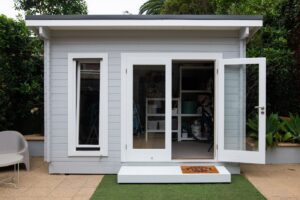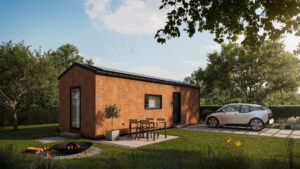
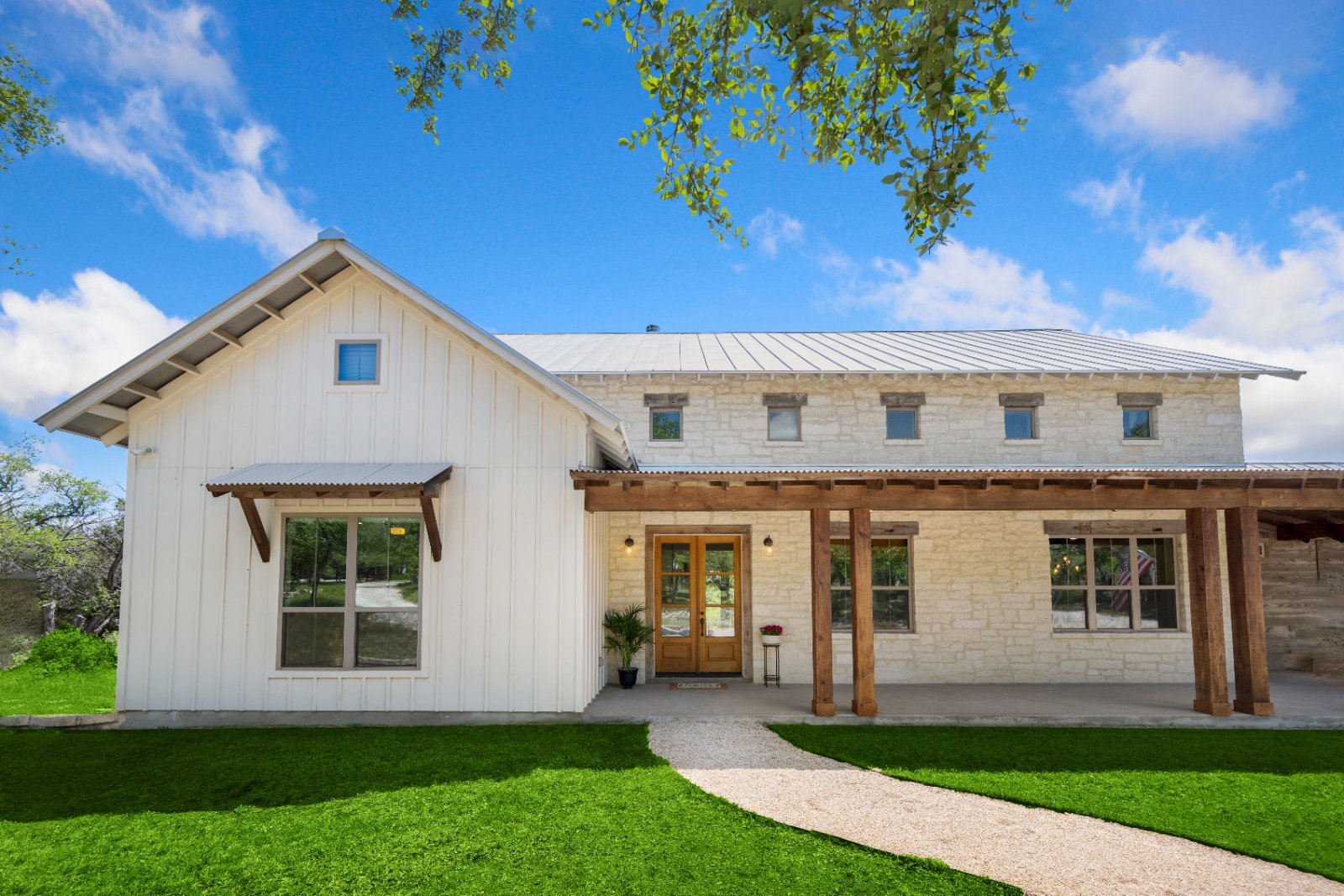
Barndominiums — “barndos” for short — have jumped from American acreage to Australian searches, and for good reason: a big, open, shed-style home that’s often quicker and cheaper to build than a traditional brick-and-tile house has obvious appeal on a rural block. But what exactly is a barndominium, what do they cost to build here, and — the question we get most — can you actually finance one in Australia? Here’s the plain-English rundown.
What is a barndominium?
A barndominium is a home built inside a barn-style shell — typically a post-frame or steel-framed structure — that combines living space with a workshop, garage or storage under the one roof. Think soaring ceilings, a wide-open floor plan, big roller doors at one end and a fully fitted-out home at the other. Some are pure residences styled like a barn; others genuinely split the building between a working shed and living quarters. The draw is space, durability, low maintenance and a build that can go up faster than conventional construction.
How much does a barndominium cost in Australia?
Cost varies widely with size, location, finish and whether you’re doing a bare shell or a turnkey home, but the shed-style approach can be more economical per square metre than traditional construction. As a rough guide:
| Stage | What’s included | Relative cost |
|---|---|---|
| Shed shell only | Frame, cladding, roof, slab — no internal fit-out | $ |
| Lock-up | Shell + doors, windows, weatherproofing | $$ |
| Turnkey barndo | Full internal fit-out — kitchen, bathrooms, flooring, services | $$$ |
The internal fit-out is where most of the money goes — the shed is the cheap part. You’ll also need to budget for site works, connections (power, water, septic), council approval and, on a rural block, possibly off-grid services. Always get itemised quotes from your builder and confirm what is and isn’t included.
Barndominium vs kit home vs modular
These categories overlap, which matters when it comes to finance:
- Kit home — a flat-packed set of components you (or a builder) assemble on site.
- Modular / prefab — built in sections off-site and craned into place.
- Barndominium — a barn/shed-style shell fitted out as a home; often owner-builder or post-frame construction.
A barndo can be delivered as a kit, built modular-style, or constructed conventionally on site — and the path you choose changes how lenders view it.
Shed home, shed house, barn home or barndominium — what is the difference?
Australians use several names for what looks like the same building, and they are not quite interchangeable.
- Shed home / shed house — the broadest Australian term: a home built inside a steel or post-frame shed structure. It covers a purpose-built shed dwelling and a working shed later converted to living space.
- Barndominium (“barndo”) — an American term with a narrower meaning: a shed-style building that deliberately combines living space with a workshop, garage or storage under one roof. Every barndo is a shed home; not every shed home is a barndo, because plenty are purely residential with no working bay.
- Barn home / barn house — usually describes the look rather than the construction: gable or gambrel barn styling, exposed trusses, tall openings. A barn home can be conventionally timber-framed and not a steel shed at all.
- American barn — a specific shed profile sold by Australian shed manufacturers (a tall central bay with lower awnings either side). It names the shed, not the dwelling; an American barn kit can become a shed home, but the term is not a housing category.
The distinction that actually decides your loan is none of the above. Whatever the building is called, councils and lenders care how it is classified under the National Construction Code — a habitable dwelling (Class 1a) or a non-habitable shed (Class 10a). A shed home approved only as a shed is very hard to finance as a home no matter what the brochure calls it. Get the classification right at approval stage and the finance conversation gets much simpler.
Can you finance a barndominium in Australia?
Often yes — but it usually isn’t a standard home loan. Because barndominiums can involve non-standard construction (post-frame, steel shell, shed classification) and sometimes owner-building, many mainstream lenders are cautious. That’s the gap specialist finance fills. Depending on your plans, a barndo might be funded through a construction loan, a kit-home or owner-builder facility, or non-standard construction finance. Key things lenders look at:
- Whether the build is classified as a habitable dwelling (Class 1) rather than just a shed (Class 10)
- Council approval and a fixed-price building contract (or an owner-builder pathway)
- The builder’s credentials and the construction method
- Your deposit, income and the finished valuation
Little Home Loans specialises in exactly these non-standard scenarios. Finance is arranged through our partner Alpha390 Finance, so a barndo, a relocatable home or an off-grid build gets looked at properly rather than dismissed as “too unusual”.
Pros and cons at a glance
| Pros | Cons |
|---|---|
| Space and open-plan flexibility | Non-standard construction can complicate finance |
| Often faster, lower-cost build | Council/classification hurdles (shed vs dwelling) |
| Durable, low-maintenance steel shell | Insulation and comfort need careful design |
| Live-and-work under one roof | Resale market is still emerging in Australia |
Thinking about building a barndo?
If you’re weighing up a barndominium, the finance is worth sorting early — it shapes what you can build. Start an enquiry online, call us on 1300 391 390, or get in touch and our team will talk through your options. Your enquiry is handled by the Alpha390 Finance broker team.
Barndominium FAQs
Are barndominiums legal in Australia?
Yes, provided the build meets your local council’s planning rules and the National Construction Code. The key is that the living portion is approved as a habitable dwelling (Class 1) rather than only as a shed (Class 10). Approvals vary by council and zone.
How much does a barndominium cost to build in Australia?
It depends heavily on size and finish. A bare shed shell is the cheap part; the internal fit-out, site works, services and approvals are where most of the budget goes. Get itemised builder quotes and factor in council, connections and any off-grid services.
Can I get a loan for a barndominium?
Often yes, but usually not as a standard home loan. Depending on the build it may be funded via a construction loan, kit-home or owner-builder facility, or non-standard construction finance. Specialist lenders are more comfortable with barn-style and shed-classified builds than many mainstream banks.
Is a barndominium cheaper than a normal house?
The shed shell is generally more economical per square metre than traditional construction, so a barndo can cost less to get to lock-up. Once you add a full internal fit-out and services, the total can approach a conventional home depending on your finishes.
What’s the difference between a barndominium and a kit home?
A kit home is a flat-packed set of components assembled on site; a barndominium is a barn/shed-style building fitted out as a home. A barndo can actually be delivered as a kit — the two overlap, and both count as non-standard construction for finance purposes.
Is a shed home the same as a barndominium?
Not exactly. A shed home is any house built inside a shed-style structure. A barndominium is the subset that deliberately combines living space with a workshop or garage under the same roof. In everyday Australian use the terms overlap heavily, and lenders treat both the same way — as non-standard construction.
Can you get a home loan for a shed house in Australia?
Often yes, but usually not as a standard home loan. The deciding factor is classification: if the living area is approved as a habitable dwelling (Class 1a) rather than only as a shed (Class 10a), specialist lenders will generally consider it via a construction, kit-home or owner-builder facility.
Written by the team at Little Home Loans. Finance support is provided by our partner Alpha390 Finance. This article is general information only and does not constitute credit or financial advice. Alpha390 Finance operates under Australian Credit Licence 506065 (Five Tees Pty Ltd). Lending is subject to approval, lending criteria, terms, conditions and fees.