Written and reviewed by the Finance Director at Little Home Loans
So you’ve fallen for the tiny home dream — less mortgage stress, a smaller footprint, maybe a patch of land out bush or a clever build in the backyard. The big question that usually follows is a practical one: how do you actually pay for it? The short answer is yes, you can finance a tiny home in Australia, but probably not the way you’d finance a regular house. This guide walks you through exactly how to finance a tiny home, why the standard home loan rarely fits, and the realistic routes that do.
Why a Standard Home Loan Usually Won’t Work
When people ask “do banks finance tiny homes?”, they’re often surprised by the answer. Most banks won’t write a traditional mortgage over a tiny home — especially a tiny home on wheels. A standard home loan is secured against real property: land, and the permanent dwelling fixed to it. The bank lends against an asset they can value, register a mortgage over, and sell if things go wrong.
A tiny home on a trailer doesn’t tick those boxes. It isn’t fixed to land, it can be towed away, and it usually doesn’t have a council-approved permanent address. From a lender’s perspective, there’s nothing for a mortgage to attach to. That’s the crux of the whole topic, and it leads us to the single most important distinction in tiny-home finance.
Fixed-to-Land vs On-Wheels: The Distinction That Changes Everything
Almost every financing question comes back to one thing: is your tiny home fixed to land, or is it on wheels?
Fixed-to-land (modular and prefab homes)
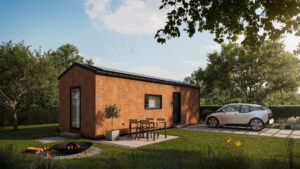
A modular or prefab tiny home that’s craned onto footings, connected to services and approved by council starts to look much more like a “real” house. Because it becomes part of the land, it can sometimes be financed with construction or progress-payment lending, or wrapped into a loan secured against the property. This is the path closest to a conventional mortgage.
On-wheels (the Australian classification quirk)
Here’s the uniquely Australian wrinkle. A tiny home built on a registered trailer is generally treated as a vehicle or chattel, not as real property. In the eyes of the law and most lenders, it sits in the same category as a caravan or RV — a movable asset, not land. That’s why a normal mortgage doesn’t apply: there’s no land title to secure the loan against. It’s not that lenders dislike tiny homes; it’s that the asset legally isn’t a house.
This classification shapes everything — the loan type, the term, and what you can borrow. Once you understand it, the rest of the picture makes sense. We dig deeper into the eligibility side in our guide to whether you can get a loan for a tiny house.
The Realistic Ways to Finance a Tiny Home
So who finances tiny homes, and how? Here are the routes that actually work in Australia.
1. Personal loan (unsecured)
A personal loan is the most common starting point, particularly for smaller builds. It isn’t tied to the home itself, so the wheels-versus-land issue doesn’t matter. You borrow a lump sum and repay it over a set term. The trade-off is that unsecured loans typically carry higher rates and shorter terms than secured lending, so the repayments can be steeper.
2. Secured / asset-backed finance for houses on wheels
This is where the chattel classification works in your favour. Because a tiny home on wheels is treated like a vehicle, it can often be financed with caravan or RV-style secured finance, where the home itself is the security. Wondering how to finance a tiny home on wheels? This is usually the most natural fit, and it’s a core part of what we arrange through our tiny home finance options.
3. Construction or progress finance for fixed modular builds
Can you finance a tiny home build? Yes — and for a fixed modular or prefab home, progress (construction) finance is often the right tool. The lender releases funds in stages as the build hits milestones, rather than handing over the full amount upfront. This suits buyers commissioning a builder to deliver a permanent, council-approved dwelling on their land.
4. Equity release or redraw (if you already own land)
If you own a home or land with available equity, you may be able to fund your tiny home by topping up your existing mortgage or using a redraw facility. You’re effectively borrowing against property you already own, which sidesteps the “the tiny home isn’t security” problem entirely. It’s a popular route for people adding a tiny home to an existing block.
5. Off-grid considerations
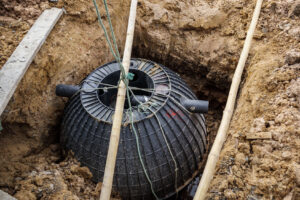
Off-grid tiny homes — solar, water tanks, composting systems — are very much financeable, but the off-grid setup can add to the total cost and may influence how a lender assesses the build. Factor the energy and water infrastructure into your budget from day one rather than treating it as an afterthought.
Not sure which dwelling type you’re really after? Our comparison of a tiny house vs granny flat can help you choose before you lock in a finance path.
Typical Price Bands (Examples Only)
To put the numbers in context, Australian tiny homes commonly land somewhere between $60,000 and $150,000, depending on size, finish, whether it’s on wheels or fixed, and how much off-grid kit you add. Treat those figures purely as illustrative examples — every build is different. For a proper breakdown, see our guide on how much a tiny house costs.
How Long Can You Finance a Tiny Home?
Loan terms vary by product. Because tiny homes are lower in value than a full house and are often financed as chattel or personal loans, terms are typically shorter than a 25 or 30-year mortgage — frequently in the range of a few years up to around seven, and sometimes longer for higher-value secured lending. A shorter term means higher repayments but less interest paid overall, so it’s worth modelling a few scenarios before you commit.
What Lenders Look At (and the Deposit Question)
Do you need a deposit to finance a tiny home? Not always, but having one helps. Lenders generally assess your borrowing the same way they would for any loan:
- Income and stability — can you comfortably service the repayments?
- Existing debts and expenses — your overall financial position.
- Credit history — your track record of repaying borrowed money.
- Deposit or equity — money down reduces the amount you borrow and can improve your options.
- The asset itself — for secured loans, what’s being financed and its value.
A deposit isn’t always mandatory, but contributing one usually widens your choices and reduces what you owe.
Steps to Get Tiny Home Finance
- Decide fixed or on-wheels. This determines your entire finance path, so settle it first.
- Pin down a realistic budget. Include the home, delivery, site works, services and any off-grid gear.
- Choose the likely loan type. Personal, secured/chattel, construction, or equity release.
- Check your borrowing position. Income, expenses, debts, credit and any deposit.
- Gather your documents. ID, income evidence, quotes or build contracts, and trailer/registration details if on wheels.
- Talk to a specialist. A lender who understands the tiny-home space can match you to the right product rather than forcing a square peg into a round hole.
When you’re ready to compare options, our tiny home loans page is the place to start.
Frequently Asked Questions
Can you finance a tiny home?
Yes, you can finance a tiny home in Australia. While a traditional mortgage usually won’t apply — especially for a home on wheels — there are real options including personal loans, secured caravan/RV-style finance, construction finance for fixed builds, and equity release if you already own property.
How do you finance a tiny home?
You finance a tiny home through a loan type that suits the dwelling. Homes on wheels are often funded with personal loans or secured chattel finance, fixed modular homes may use construction or progress finance, and owners with equity can release funds from an existing property to pay for the build.
Do banks finance tiny homes?
Most banks won’t offer a standard home loan for a tiny home, because a movable home on wheels isn’t real property to secure a mortgage against. However, many lenders finance tiny homes through other products such as personal loans, secured asset finance, or equity-based lending instead of a traditional mortgage.
Who finances tiny homes in Australia?
Tiny homes in Australia are typically financed by lenders offering personal loans, caravan and RV-style secured finance, construction finance and equity release. Specialist finance providers who understand the tiny-home space, like Little Home Loans, can help match your build to the most suitable product.
How long can you finance a tiny home?
Loan terms vary by product. Because tiny homes are lower in value and often financed as personal or chattel loans, terms are usually shorter than a typical 25–30 year mortgage — frequently a few years up to around seven, and sometimes longer for higher-value secured lending. Repayments rise as the term shortens.
You can estimate loan repayments across different terms, keeping in mind the structure available to you depends on the dwelling, how it is secured, your circumstances and lender policy.
Can you finance a tiny home on wheels?
Yes. A tiny home on wheels is generally treated as a vehicle or chattel rather than real property, so it can often be financed with caravan or RV-style secured finance, or with an unsecured personal loan. A traditional mortgage typically isn’t available because there’s no land title to secure it against.
Can you finance a tiny home build?
Yes, you can finance a tiny home build. For a fixed modular or prefab home, progress (construction) finance releases funds in stages as the build reaches milestones. For a build on wheels, a personal loan or secured asset finance is more common. The right path depends on whether the finished home is fixed to land.
Do you need a deposit to finance a tiny home?
A deposit isn’t always mandatory, but having one helps. Contributing a deposit or using existing equity reduces the amount you borrow and can widen your options. Lenders also assess your income, expenses, existing debts and credit history when deciding what you can borrow for a tiny home.
This article is general information only and does not constitute credit or financial advice. It does not take into account your personal objectives, financial situation or needs. Consider whether the information is appropriate for you and seek professional advice before acting. Little Home Loans is powered by Alpha390 Finance, which operates under ACL 506065 (Five Tees Pty Ltd). Lending is subject to approval, lending criteria, terms, conditions and fees.