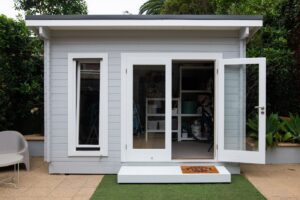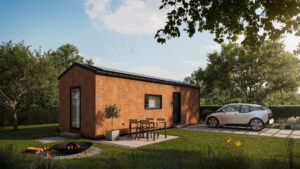
If you want more space, a rental income or an affordable first step onto the property ladder, two options keep coming up: a tiny house and a granny flat. They look similar from the outside, but financially they’re very different animals — and the difference that matters most is how (and whether) you can finance them.
Here’s how they compare on cost, financing and long-term value in 2025–26.
The fundamental difference
The cleanest way to understand these two is by whether they’re fixed to land:
- A granny flat is a secondary dwelling built on the same block as an existing house. It’s permanently attached to the land — and that single fact changes everything about how it’s valued, financed and taxed.
- A tiny house is usually built on a trailer (a “tiny house on wheels”, or THOW). It’s classified as a moveable dwelling, more like a caravan than a building, which makes it mobile and flexible but harder to finance the traditional way.
Keep that distinction in mind, because it drives every other comparison below.
What they cost
Both sit well below the price of a full home build, but the ranges differ:
Tiny house on wheels
- Typically $60,000–$160,000 depending on size, finish and whether it’s professionally built.
- Professionally built tiny homes run around $3,500–$5,500 per square metre; kit homes are cheaper for the structure but add up once finished.
- A DIY build is the cheapest path on paper but demands real building skills and often 12–24 months of work.
Granny flat
- Typically $100,000–$200,000+, with regional variation.
- Queensland builds can start from around $95,000, while standard NSW builds commonly land between $160,000 and $190,000.
On upfront cost, a tiny house usually wins. But upfront cost isn’t the whole picture — financing and resale tip the scales.
The financing reality (where most people get surprised)
This is the part that catches buyers off guard, and it’s the most important section for anyone weighing these two.
Granny flats are relatively easy to finance. Because they’re permanently fixed to land you already own, lenders treat them as an improvement to real property. You can typically fund one by drawing on your home equity, a construction loan, or a renovation/home loan top-up. The build adds to the value of the land it sits on, which gives the lender security.
Tiny houses on wheels are harder to finance the conventional way. Because a THOW is a moveable dwelling and isn’t attached to land, most banks won’t write a standard mortgage against it — there’s no real-property security to lend against. That doesn’t mean it can’t be financed; it means the type of finance is different. Tiny homes are more commonly funded through personal loans, caravan or moveable-dwelling finance, or specialist lending designed for alternative housing.
This is exactly the gap Little Home Loans exists to fill. A mainstream bank may say no to a tiny home simply because it doesn’t fit a standard mortgage box — but tiny home finance and tiny home loans structured for moveable dwellings can make the purchase work. If you’re leaning toward a fixed, factory-built option instead, our modular home financing page covers homes that are attached to land and can be financed more like a traditional build.
Resale and long-term value
- A granny flat generally adds to the value of your property — often in the order of $100,000–$200,000 — and, where local rules allow, can be rented out for ongoing income. In Queensland, for example, granny flats have been able to be rented to anyone since 2022, which has boosted their appeal as an income-producing asset.
- A tiny house on wheels is a depreciating asset more like a vehicle than a building. It holds flexibility — you can move it, take it with you, or place it on someone else’s land — but it doesn’t lift the value of land you don’t own, and it won’t usually appreciate the way fixed property does.
So the question becomes: are you buying mobility and a low entry price, or an asset that builds wealth and is easy to finance?
Which one suits you?
Choose a tiny house if you:
- Want the lowest upfront cost and value mobility.
- Don’t own land, or want to live on someone else’s block.
- Are comfortable with non-mortgage finance and a dwelling that won’t appreciate like property.
Choose a granny flat if you:
- Own a property with room to build.
- Want to add value and potentially earn rental income.
- Prefer straightforward financing through equity or a construction loan.
Mini-scenario: Sara owns a home in Brisbane and is choosing between a $120,000 tiny house for her adult son and a $130,000 granny flat in the backyard. The tiny house is a touch cheaper and could move with him later — but the granny flat can be financed against her existing equity, adds value to her property, and can be rented out down the track under Queensland’s rules. For a landowner, the slightly higher spend buys a financeable, appreciating asset. For someone without land, the tiny house’s mobility and lower entry cost would win.
There’s no universally “better” option — there’s the one that fits whether you own land, how you’ll finance it, and whether you’re optimising for flexibility or for long-term value.
Frequently asked questions
Is a tiny house cheaper than a granny flat?
Usually, yes, on upfront cost. A tiny house on wheels typically costs $60,000–$160,000, while a granny flat generally runs $100,000–$200,000+. But granny flats are easier to finance and tend to add value to your property, which can make them the better long-term value despite the higher initial price.
Can you get a loan for a tiny house in Australia?
Not usually through a standard home loan, because a tiny house on wheels isn’t fixed to land and banks have no real-property security. Tiny homes are more commonly financed through personal loans, moveable-dwelling/caravan finance, or specialist lenders for alternative housing.
Can you get a mortgage for a granny flat?
A granny flat is generally financed against the land it’s built on — using home equity, a construction loan or a home-loan top-up — rather than as a separate mortgage. Because it’s fixed to property, lenders treat it as an improvement to real estate.
Does a granny flat add value to your property?
Typically yes. A granny flat often adds in the order of $100,000–$200,000 to a property’s value and can provide rental income where local rules allow, which is a key reason buyers choose it over a moveable tiny home.
Which is the better investment, a tiny house or a granny flat?
For someone who owns land and wants an appreciating, financeable, income-capable asset, a granny flat is usually the stronger investment. For someone who values mobility, a lower entry price, or doesn’t own land, a tiny house can be the better fit — even though it doesn’t appreciate like fixed property.
Want the full numbers? Our complete guide to tiny house costs in Australia breaks down prices for DIY kits, on-wheels builds and turnkey homes — plus the site costs nobody mentions.
Further reading
Ready to fund a build? Compare your tiny home loan options and granny flat finance, or see how much a granny flat costs in Australia.
Written and reviewed by the Finance Director at Little Home Loans.
This article is general information only and does not constitute credit or financial advice. It does not take into account your personal objectives, financial situation or needs. Consider whether the information is appropriate for you and seek professional advice before acting. Little Home Loans is powered by Alpha390 Finance, which operates under ACL 506065 (Five Tees Pty Ltd). Lending is subject to approval, lending criteria, terms, conditions and fees.